Commodity Supplemental Food Program: Nutrition Benefits for Older Adults
The Commodity Supplemental Food Program helps low-income older adults access monthly food packages that support healthier, more balanced diets. For seniors facing tight budgets or nutrition challenges, it can be a simple but meaningful way to improve overall well-being.
By: Emilly Adams on July 28, 2026
As people age, eating well can become more complicated. Fixed incomes, reduced appetite, mobility challenges, chronic health conditions, and social isolation can all make it harder for older adults to get the nutrition they need. The Commodity Supplemental Food Program (CSFP) helps address this problem by providing monthly food packages designed to support healthy diets for low-income seniors.
For many older adults, CSFP is more than a food assistance program. It can mean better access to balanced meals, fewer skipped meals, and improved overall health. In this article, we’ll explore what the program is, how it works, and the nutrition benefits it can provide for older adults.
What Is the Commodity Supplemental Food Program?
The Commodity Supplemental Food Program is a federal nutrition assistance program that distributes monthly food packages to eligible older adults with low incomes. It is administered by the U.S. Department of Agriculture in partnership with state agencies and local organizations.
Unlike some food assistance programs that provide cash benefits or allow participants to choose groceries, CSFP offers a preselected package of nutritious foods. These foods are chosen to help supplement the diets of older adults and fill common nutrient gaps.
The program is specifically designed for seniors who may struggle to afford enough healthy food each month. While it does not provide all the food a person needs, it can make a meaningful difference in their diet and well-being.
Who Can Benefit from CSFP?
CSFP is intended for adults aged 60 and older who meet income eligibility requirements. In many areas, participants must also live in a state or county that participates in the program, since availability can vary by location.
Older adults may benefit from CSFP if they:
Live on a limited or fixed income
Have difficulty affording nutritious food
Experience food insecurity
Need extra support to maintain a healthy diet
Have trouble shopping regularly due to transportation or mobility issues
Because the program targets those most at risk of inadequate nutrition, it can be especially helpful for seniors managing health conditions that require steady access to healthy foods.
What Foods Are Included in the Food Package?
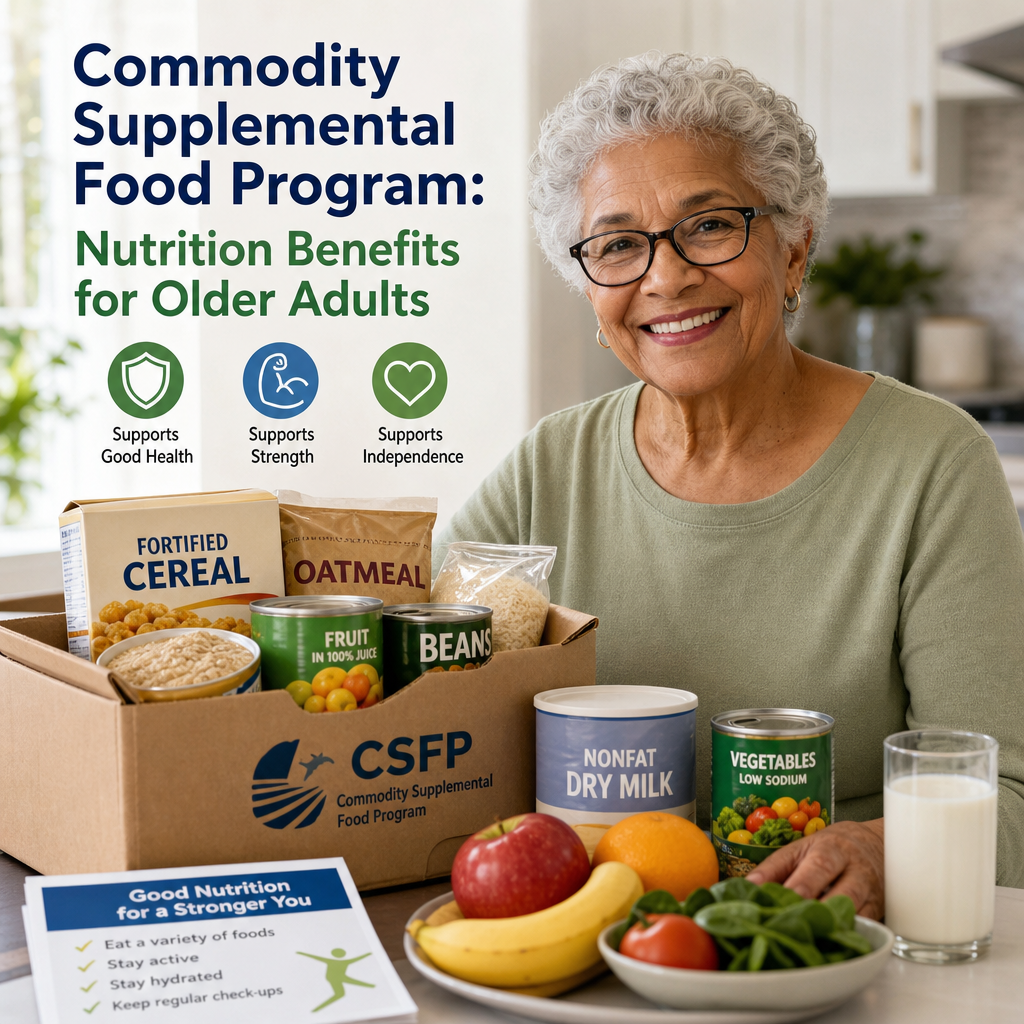
The monthly food package typically includes a mix of shelf-stable, nutrient-rich foods. Although exact items may vary by state, common foods often include:
Canned fruits and vegetables
Canned or dry beans
Peanut butter
Cheese
Milk or evaporated milk
Breakfast cereal
Rice or pasta
Oatmeal or other grains
Canned meat, poultry, or fish
Fruit juice
Fortified or whole-grain foods
These foods are selected because they offer important nutrients that older adults often need more of, including protein, fiber, calcium, vitamin D, iron, and potassium.
A package like this can help fill in the gaps when a senior’s regular diet is limited by budget, appetite, or access to fresh foods.
Why Nutrition Matters More With Age
Good nutrition becomes increasingly important as we get older. Aging bodies have different needs, and older adults may be more vulnerable to both undernutrition and nutrient deficiencies.
Several changes can affect diet and health in later life:
Reduced Appetite
Some older adults naturally eat less because their appetite decreases with age. Others may feel full quickly or have trouble preparing meals. When food intake drops, it can be harder to get enough nutrients.
Chronic Health Conditions
Conditions such as diabetes, heart disease, osteoporosis, and kidney disease often require careful eating habits. A nutritious diet can help manage symptoms, support treatment, and reduce complications.
Medication Side Effects
Some medications affect taste, appetite, digestion, or the ability to absorb certain nutrients. This can increase the risk of poor nutrition.
Chewing or Swallowing Problems
Dental issues, dry mouth, and swallowing difficulties may make it harder to eat a variety of foods. Soft, shelf-stable foods in a CSFP package may be easier to use in meals.
Limited Income
Many older adults live on Social Security or other fixed incomes. When money is tight, food budgets often shrink, and people may choose cheaper foods that are less nutritious.
Because of these challenges, a program that consistently supplies healthy foods can have a real impact.
Nutrition Benefits of the Commodity Supplemental Food Program
CSFP offers a range of nutrition benefits that can help older adults maintain better health and quality of life.
1. Helps Fill Nutrient Gaps
Many seniors do not get enough of certain nutrients, especially protein, calcium, fiber, potassium, and some vitamins. CSFP packages include foods that can help cover these needs.
For example:
Milk and cheese provide calcium and protein
Beans and peanut butter offer protein, fiber, and healthy fats
Canned fruits and vegetables contribute vitamins and minerals
Fortified cereals can help with iron and B vitamins
These foods do not replace a full diet, but they can improve nutritional balance.
2. Supports Bone Health
Older adults are at higher risk for bone loss and fractures. Calcium and vitamin D are especially important for maintaining bone strength. Foods like milk, cheese, and fortified cereals found in CSFP packages can help support bone health.
This matters because a fracture in later life can lead to hospitalization, reduced mobility, and long-term loss of independence. Even modest improvements in calcium intake can be beneficial.
3. Promotes Muscle Maintenance
Maintaining muscle mass becomes more difficult with age. Protein plays a key role in preserving strength and function. Foods such as canned meat, beans, peanut butter, and dairy products help older adults get more protein in their diets.
Adequate protein intake may support:
Better balance
Stronger mobility
Faster recovery from illness
Reduced risk of frailty
For older adults who eat small meals, having protein-rich foods readily available can make a big difference.
4. Helps with Digestive Health
Fiber is important for digestive regularity, blood sugar control, and heart health. Yet many older adults do not consume enough fiber. CSFP foods like beans, oatmeal, whole grains, fruits, and vegetables can help increase fiber intake.
Fiber-rich foods may support:
Healthy bowel movements
Better cholesterol levels
Improved blood sugar stability
Greater fullness after meals
This can be particularly helpful for seniors who struggle with constipation or irregular eating patterns.
5. Improves Food Security
One of the most significant benefits of CSFP is that it helps reduce food insecurity. When seniors know they will receive a dependable monthly package of food, they may be less likely to skip meals or rely on very low-quality options.
For example, an older adult might use the food package to cover breakfast and lunch basics, freeing up limited cash for fresh produce, medications, or utility bills. That kind of support can reduce stress and improve overall household stability.
6. Encourages More Balanced Eating
Many CSFP foods can be combined with fresh items purchased separately or obtained from other sources. A package of oatmeal, canned fruit, and milk can become a balanced breakfast. Beans, rice, and canned vegetables can form a simple, nourishing lunch or dinner.
This flexibility can help older adults build more complete meals without needing to buy everything at once.
How CSFP Can Support Health Conditions
For older adults managing specific health issues, CSFP foods can be part of a healthier eating pattern.
Heart Health
Foods such as beans, oatmeal, fruits, and vegetables can support heart health by providing fiber and essential nutrients. When used in place of highly processed, high-sodium foods, CSFP items may help reduce cardiovascular risk.
Diabetes Management
Some foods in CSFP, like whole grains, beans, and fruit, can fit into meals for people managing diabetes. While portion control is still important, the program helps make healthier meal planning more possible.
Weight Maintenance
Some seniors unintentionally lose weight because they eat too little. A monthly food package can help prevent this by making calorie- and protein-rich foods more accessible.
Recovery After Illness
After an illness or hospitalization, older adults may need more nutrition to recover strength. CSFP foods can help provide steady access to nourishing meals during recovery periods.
Real-Life Examples of the Program’s Impact
The value of CSFP becomes clearer when seen in everyday life.
Example 1: A Senior on a Fixed Income
Maria, age 72, lives alone and depends mostly on Social Security. By the end of the month, grocery money is often tight. She qualifies for CSFP and receives monthly food packages that include cereal, canned vegetables, peanut butter, and milk. With these foods, she can make breakfast and lunch at home more easily and use her limited funds for fresh produce and medications.
Example 2: An Older Adult With Limited Mobility
James, age 68, has arthritis and trouble standing for long periods. Shopping often feels exhausting. The CSFP package helps him keep basic foods at home without needing frequent trips to the store. Because the foods are shelf-stable, he can stock up and prepare simple meals when he has energy.
Example 3: A Senior Managing Health Problems
Elaine, age 75, is recovering from surgery and has lost her appetite. Small, protein-rich foods from CSFP help her maintain her strength while she rebuilds her regular eating routine. The program gives her a reliable source of nutrition when preparing full meals feels overwhelming.
These examples show that the program can do more than fill cupboards—it can support health, independence, and peace of mind.
How CSFP Differs from Other Food Assistance Programs
CSFP is sometimes compared with other nutrition assistance programs, but it serves a different purpose.
Supplemental Nutrition Assistance Program (SNAP): Provides monthly benefits that participants can use to buy food of their choice
Meals on Wheels: Delivers prepared meals, often to homebound seniors
Food banks or pantries: Often provide emergency food assistance with varying availability
CSFP: Provides a consistent monthly package of USDA-approved shelf-stable foods
The Commodity Supplemental Food Program is especially useful for older adults who need a predictable supply of nutritious foods to supplement their diet. In many cases, it works best alongside other support programs.
Common Challenges and Limitations
Although CSFP offers clear benefits, it is not a perfect solution for every older adult.
Limited Availability
Because participation depends on state and local administration, not every eligible person has access to the program.
Fixed Food Selection
Participants typically receive a set package rather than choosing their own foods. That means the package may not fully match personal preferences, cultural traditions, or dietary restrictions.
Not a Complete Food Supply
The package is designed to supplement, not fully replace, a grocery budget. Most participants still need other food sources.
Storage and Preparation Needs
Some older adults may have limited kitchen space or difficulty preparing certain items. Even shelf-stable foods still require basic storage and simple cooking ability.
Despite these limitations, the program remains a valuable tool for improving nutrition among older adults with low incomes.
Tips for Making the Most of CSFP Foods
Older adults who receive CSFP packages can get even more value from the foods by combining them thoughtfully with other ingredients.
Here are a few simple ideas:
Add canned fruit to oatmeal or cereal for a more filling breakfast
Mix beans with rice and vegetables for a balanced meal
Use peanut butter on toast, crackers, or fruit slices
Combine canned meat or fish with pasta or vegetables
Make soups using canned vegetables, beans, and broth
Use milk in oatmeal or cereal to increase protein and calcium
These small combinations can improve meal quality without adding much cost or effort.
Frequently Asked Questions
1. Who qualifies for the Commodity Supplemental Food Program?
CSFP primarily serves adults age 60 or older who meet income requirements established for the program and live within an area where CSFP is available. State and local agencies handle applications and determine eligibility.
2. Does CSFP provide cash or an electronic benefits card?
No. CSFP distributes packages of USDA-approved foods rather than cash benefits or an electronic card. The program is designed to supplement a participant’s diet and does not provide a complete monthly food supply.
3. Which foods may be included in a CSFP package?
Packages may contain items such as canned fruits and vegetables, juice, milk, cheese, cereal, grains, pasta, beans, peanut butter, and canned meat, poultry, or fish. The exact selection can vary based on USDA availability and local distribution.
4. Can someone receive CSFP and SNAP at the same time?
Receiving CSFP does not automatically prevent an eligible older adult from participating in SNAP or another nutrition program. Each program has separate eligibility rules, and applicants should confirm their circumstances with the administering agencies.
5. How can an older adult apply for CSFP?
Applicants should contact the state or local agency that administers CSFP in their area. The agency can explain local availability, income requirements, required documents, distribution schedules, and whether a waiting list applies.
The Commodity Supplemental Food Program plays an important role in supporting the nutrition and well-being of older adults. By providing monthly food packages with nutrient-rich staples, the program helps seniors fill dietary gaps, maintain strength, and reduce food insecurity.
For many older adults, CSFP can mean more than just extra groceries. It can support better health, greater independence, and a more reliable daily routine. In a time of rising costs and growing health challenges, programs like CSFP remain an essential part of helping older adults age with dignity and nourishment.
Emily A, holds a Master's degree in Public Administration (MPA) and has over 7 years of experience researching federal and state assistance programs. She writes educational content focused on government benefits, public policy, and community resources, using information from official agencies to help readers understand available programs and eligibility requirements.