Senior Nutrition Programs: Meals and Food Support for Older Americans
Senior nutrition programs help older adults get the meals and food support they need to stay healthy, independent, and connected. From nourishing meals to community-based assistance, these services can make a meaningful difference in daily life.
By: Emilly Adams on July 28, 2026
As people age, healthy eating becomes more important—and sometimes more difficult. Changes in appetite, mobility, income, health conditions, and social connection can all affect how older adults eat. That is where senior nutrition programs come in. These programs provide meals and food support for older Americans, helping them stay nourished, independent, and connected to their communities.
Senior nutrition services are more than just a meal. They can reduce food insecurity, support chronic disease management, prevent isolation, and improve overall quality of life. For many older adults, they are an essential part of daily well-being.
Why Senior Nutrition Matters
Nutrition needs do not disappear with age. In fact, older adults often need more nutrient-dense foods while sometimes eating less overall. This makes every meal more important. Good nutrition can help with:
Maintaining muscle strength
Supporting bone health
Managing blood pressure and blood sugar
Reducing the risk of falls and illness
Preserving energy and mental sharpness
Supporting recovery after illness or surgery
At the same time, many seniors face barriers that make eating well harder than it should be. These may include:
Limited income
Trouble shopping or cooking
Dental issues or swallowing problems
Chronic diseases or medication side effects
Loneliness or depression
Difficulty getting to grocery stores or meal sites
Senior nutrition programs are designed to address these challenges in practical, community-based ways.
What Are Senior Nutrition Programs?
Senior nutrition programs are public and community-supported services that provide meals, groceries, or food assistance to older adults. In the United States, many of these services are funded through the Older Americans Act, along with support from local agencies, nonprofits, and volunteers.
These programs may include:
Congregate meals served at senior centers or community sites
Home-delivered meals for people who cannot leave home easily
Food boxes or groceries
Nutrition education and counseling
Wellness checks and social engagement
Referral services for additional support
The goal is simple: help older adults get enough nutritious food in ways that fit their health, mobility, and living situation.
Main Types of Food Support for Older Adults
Congregate Meal Programs
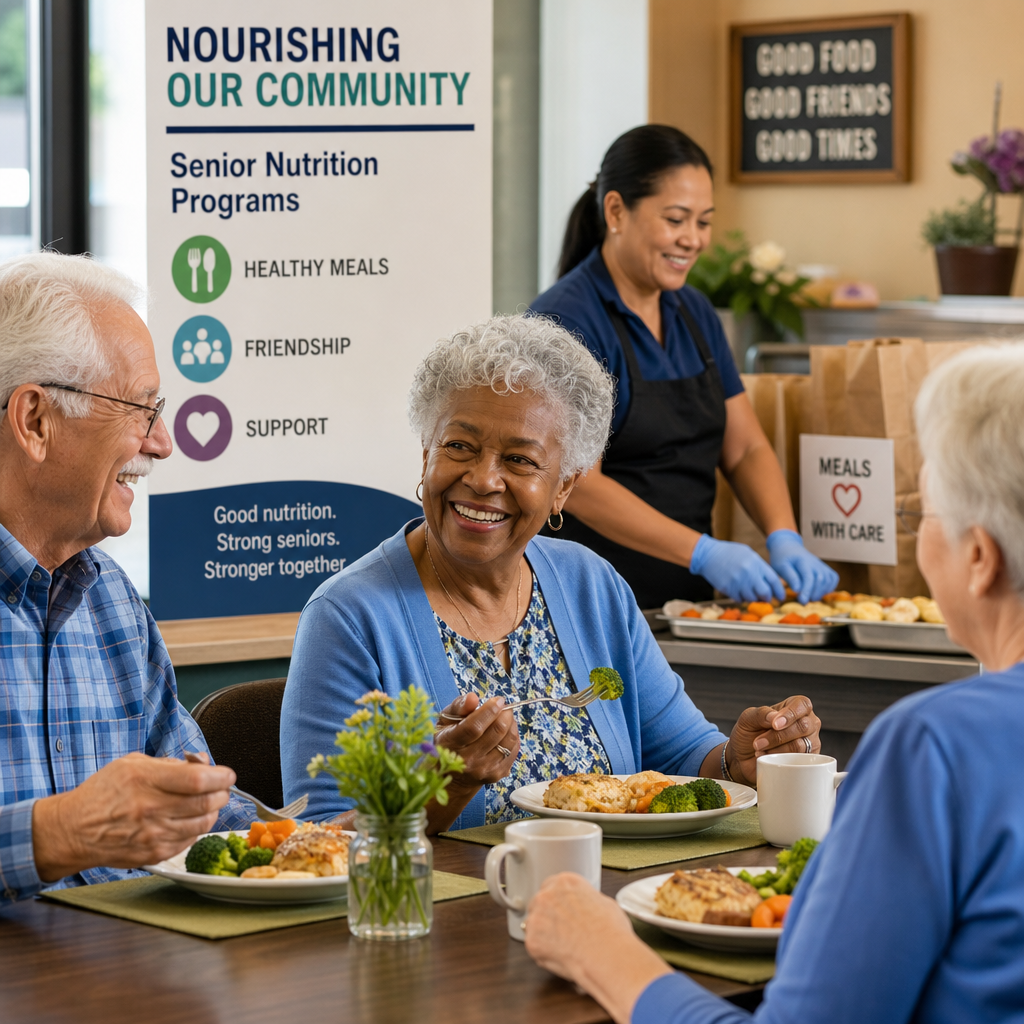
Congregate meal programs provide meals in group settings such as senior centers, churches, recreation centers, or community facilities. These meals are usually served during lunch and offer more than nutrition—they also create social opportunities.
Benefits of congregate meals include:
Balanced, often dietitian-planned meals
A chance to socialize with peers
Information about other community resources
Activities and wellness programs at the site
For seniors who live alone, these meals can offer a welcome reason to get out of the house and interact with others. Social connection is important, too. Research has shown that isolation can affect both physical and mental health, and shared meals help reduce that risk.
Home-Delivered Meals
Home-delivered meals, often called “Meals on Wheels” or similar programs, bring food directly to older adults who are homebound or have difficulty preparing meals. These meals are usually delivered several times a week, depending on the program.
Home-delivered meal services are especially helpful for people who:
Cannot drive or use public transportation
Have mobility limitations
Are recovering from an illness or hospitalization
Live alone and struggle with cooking
Need regular contact with another person
In addition to food, the person delivering meals may notice signs that someone needs help—such as confusion, poor home conditions, or changes in health—and connect them with additional resources.
Groceries and Food Boxes
Some senior nutrition programs provide groceries or shelf-stable food boxes instead of, or in addition to, prepared meals. These are helpful for older adults who can still cook but need support getting enough food.
Food boxes may include items like:
Canned fruits and vegetables
Whole grains
Pasta or rice
Peanut butter
Shelf-stable milk
Canned proteins
Low-sodium soups or beans
This kind of support can be especially useful in rural areas, where meal sites may be far away, or for seniors who prefer making their own meals but need help with food costs.
Nutrition Education
Meal services often include nutrition education tailored to older adults. This might cover topics such as:
How to build balanced meals
Managing diabetes or high blood pressure through diet
Reading food labels
Staying hydrated
Making healthy meals with limited ingredients
Safe food handling for one or two people
Education helps seniors and caregivers make better food choices and can improve the effectiveness of meal support programs.
Who Qualifies for Senior Nutrition Services?
Eligibility rules vary by program, but many nutrition services are available to adults age 60 and older. Some programs may also serve:
A spouse of an eligible older adult
A caregiver who is living with the older person
Adults under 60 with disabilities, in certain cases
For home-delivered meals, programs typically focus on people who are homebound or have a hard time leaving home due to health or mobility issues. Congregate meal programs may be more open, sometimes allowing donations from participants rather than requiring payment.
Even if income is limited, many seniors can still receive meals. Some programs ask for voluntary contributions, but no one is usually denied services because they cannot pay.
How These Programs Help Older Americans
Senior nutrition programs do more than fill an empty stomach. They play a key role in helping older adults stay healthier and more independent.
1. They Reduce Food Insecurity
Food insecurity happens when someone does not have reliable access to enough affordable, nutritious food. Among older adults, this can lead to skipped meals, poor diet quality, and worsening health.
Senior nutrition programs provide a dependable source of food. For a person choosing between groceries and medicine, or rent and meals, this support can make a major difference.
2. They Support Chronic Disease Management
Many older adults live with conditions such as diabetes, heart disease, kidney disease, or high blood pressure. Diet plays a major role in managing these conditions. Meals offered through senior nutrition programs are often designed to be:
Lower in sodium
Balanced in calories
Rich in fruits, vegetables, and whole grains
Appropriate for common dietary needs
For example, a senior with high blood pressure may benefit from meals that are lower in salt, while someone with diabetes may need meals with controlled portions of carbohydrates.
3. They Help Older Adults Stay Independent
When cooking becomes difficult, some seniors may begin skipping meals or relying on processed foods. This can affect strength, energy, and health. Nutrition support can help older adults remain at home longer and avoid unnecessary hospital visits or nursing home placement.
For example, a widow who can no longer shop safely after dark may start getting weekly meal deliveries. That support can help her continue living independently while maintaining her health.
4. They Reduce Loneliness and Isolation
Meals are about people as much as food. Congregate meal sites offer a regular routine, conversation, and a sense of belonging. Even home-delivered meal visits can be meaningful when the older adult has limited contact with others.
This social aspect is especially important because loneliness has been linked to depression, cognitive decline, and poorer health outcomes. A simple meal program can become an important touchpoint for emotional well-being.
5. They Provide a Safety Check
For homebound older adults, meal delivery can function as a safety net. Delivery volunteers or staff may be among the few people who see the senior regularly. If they notice changes—such as unopened mail, confusion, or signs of illness—they can alert family members or social service agencies.
That added layer of awareness can help prevent a small issue from becoming a crisis.
Common Challenges Senior Nutrition Programs Address
Not every older adult has the same needs. Nutrition programs adapt to meet a variety of challenges.
Limited Income
Many seniors live on fixed incomes, which can make groceries feel too expensive. Nutrition programs help stretch budgets by reducing food costs.
Reduced Mobility
Arthritis, weakness, falls, or recovery from surgery can make grocery shopping and cooking difficult. Meal delivery and food boxes can fill this gap.
Difficulty Cooking for One
Cooking for one can feel overwhelming, wasteful, or not worth the effort. Ready-made meals are often easier for seniors living alone.
Dietary Restrictions
Programs may offer modified meals for special diets, including low-sodium, diabetic-friendly, or texture-modified options, depending on the provider.
Transportation Barriers
Many older adults no longer drive. If public transit is limited, getting to a store or meal site can be nearly impossible. Home delivery solves part of that problem.
How Families and Caregivers Can Use These Services
Families often want to help older relatives eat well but may not know where to start. Senior nutrition programs can be a valuable support for caregivers, too.
Caregivers can:
Help identify local meal programs
Assist with applications or eligibility questions
Arrange delivery schedules
Check whether special diets are available
Coordinate with doctors or dietitians when needed
For example, if an older parent is recovering from surgery, a caregiver might arrange temporary meal delivery until cooking is manageable again. Or if a grandparent is skipping meals because grocery shopping is too hard, a family member can connect them with a community meal site.
Using these services is not a sign of failure. It is a practical way to keep a loved one safe and well-nourished.
Where to Find Senior Nutrition Support
Older adults and caregivers can often find local nutrition assistance through:
Area Agencies on Aging
Senior centers
Local departments of aging
Community action agencies
Faith-based organizations
Meals on Wheels providers
Hospital discharge planners or social workers
211 community resource lines
Many communities have multiple services available, and an aging services office can help match a person with the right option.
When looking for support, it helps to ask:
Is the service available in my area?
Is there a waiting list?
Are meals delivered or served on-site?
Are special diets available?
Is there a cost or suggested donation?
How often are meals provided?
The answer may vary by location, but many communities work hard to make these services accessible.
A Closer Look at Nutrition Quality
Senior nutrition programs are often designed with older adults’ needs in mind. A well-planned meal for seniors may include:
Lean protein such as chicken, beans, eggs, or fish
Whole grains like brown rice or whole wheat bread
Fruits and vegetables
Dairy or fortified alternatives for calcium and vitamin D
Healthy fats in moderate amounts
Enough fluid to support hydration
Hydration matters more than many people realize. Older adults may not feel thirst as strongly, yet dehydration can lead to dizziness, confusion, constipation, or urinary issues. Some meal programs also encourage water intake or include foods with high water content, like soups and fruit.
Texture is another important factor. Seniors with dental problems or swallowing difficulties may need softer foods or modified textures. Good programs work to accommodate these needs safely.
The Bigger Picture: Supporting Aging with Dignity
Senior nutrition programs are part of a larger effort to help older Americans age with dignity, health, and connection. They recognize that food is not just a medical need—it is also a matter of comfort, routine, and belonging.
A warm meal delivered to the door, a shared lunch at a neighborhood center, or a box of groceries for the week can all make a meaningful difference. These services help older adults remain active in their homes and communities while reducing the risks that come with hunger and isolation.
Frequently Asked Questions
1. What services do senior nutrition programs provide?
Programs may provide meals at community locations, home-delivered meals, nutrition education, counseling, wellness checks, and referrals to other services. Some communities also offer groceries or supplemental food packages.
2. Who may qualify for senior nutrition services?
Older Americans Act nutrition services generally serve adults age 60 and older. Certain spouses, caregivers, and people with disabilities may also qualify under specific circumstances. Local eligibility requirements can vary by program.
3. What is the difference between congregate and home-delivered meals?
Congregate meals are served in group settings such as senior centers, faith-based facilities, and community centers. Home-delivered meals are intended for older adults who cannot easily attend a congregate meal location.
4. Are senior nutrition services free?
Many Older Americans Act meal programs accept voluntary contributions but do not require eligible participants to pay the full cost of their meals. Other food assistance programs may use income limits or different participation requirements.
5. How can older adults find meal programs in their community?
Older adults and caregivers can use the Eldercare Locator to search for local Area Agencies on Aging, meal delivery services, congregate meal sites, and other community resources.
Senior nutrition programs provide essential meals and food support for older Americans who face barriers to eating well. Whether through congregate meals, home-delivered food, groceries, or education, these programs help seniors stay nourished, connected, and independent. They address more than hunger—they support health, dignity, and quality of life.
For older adults and caregivers alike, knowing these services exist can open the door to practical, reliable help. In a time of life when nutrition needs are changing, community support can make all the difference.
Emily A, holds a Master's degree in Public Administration (MPA) and has over 7 years of experience researching federal and state assistance programs. She writes educational content focused on government benefits, public policy, and community resources, using information from official agencies to help readers understand available programs and eligibility requirements.