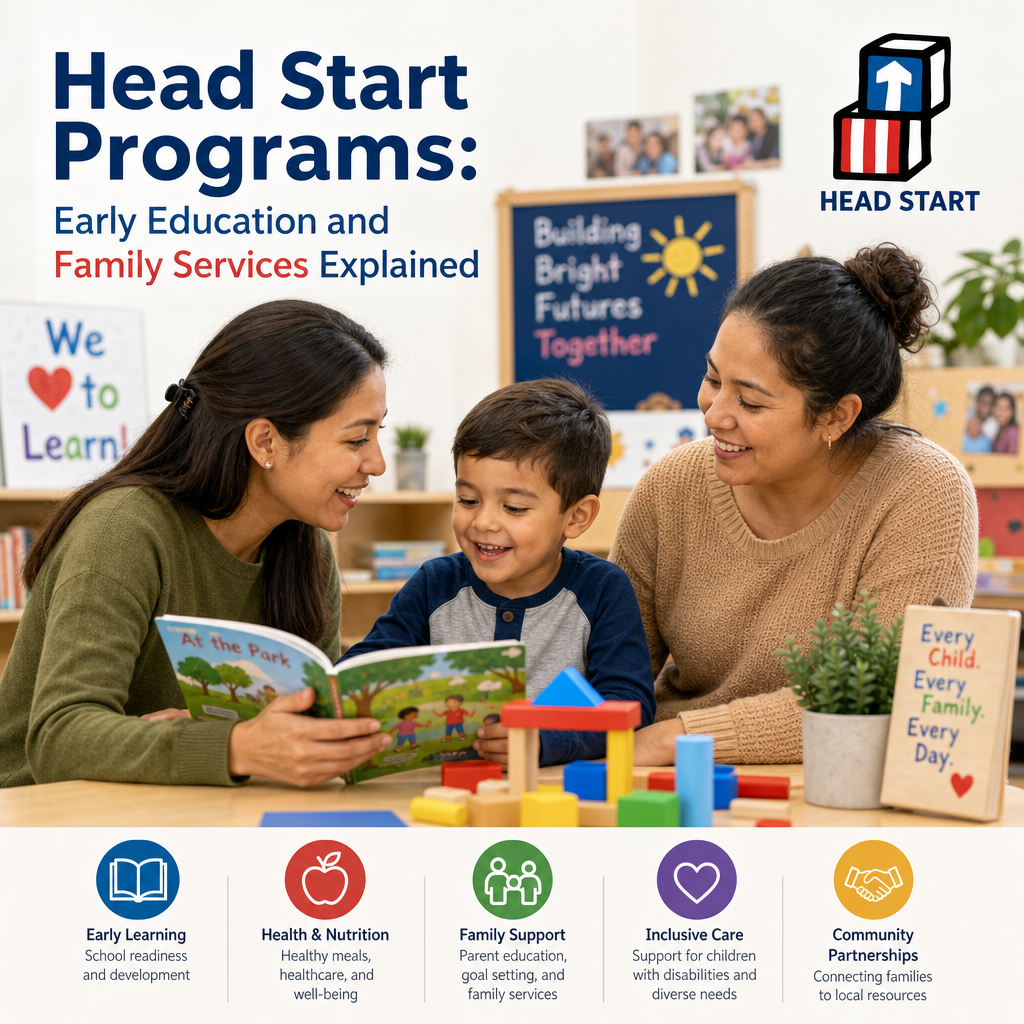
Head Start Programs: Early Education and Family Services Explained
Head Start programs give young children from low-income families a strong start by combining early learning with health, nutrition, and family support. This article explains how they work, who they serve, and why they matter for children and caregivers alike.
By: Jennifer Collins on July 28, 2026
For many families, finding high-quality early childhood education that also supports the whole household can feel overwhelming. That is where Head Start programs come in. Designed to help young children from low-income families get a strong start in life, Head Start combines early learning, health, nutrition, and family support in one comprehensive program.
Unlike many preschool options that focus mainly on classroom readiness, Head Start takes a broader approach. It recognizes that a child’s learning and development are deeply connected to family well-being, health, and stability. This article explains what Head Start programs are, who they serve, what services they provide, and why they continue to play an important role in communities across the United States.
What Is Head Start?
Head Start is a federally funded early childhood education program created in 1965 as part of the War on Poverty. Its original goal was simple but powerful: to give children from families with fewer resources the tools and support they need to succeed in school and in life.
Today, Head Start serves children from birth to age five through several program options, including:
Early Head Start for infants, toddlers, and pregnant people
Head Start preschool programs for children ages 3 to 5
Family child care partnerships in some communities
The program is operated by local agencies, nonprofits, school systems, and community organizations that receive funding and follow federal standards. Although each local program may look a little different, the mission is the same: support school readiness through education, health, and family engagement.
Who Head Start Serves
Head Start is intended for families who meet federal income guidelines, though some children may qualify based on other circumstances. Priority is often given to families facing greater challenges, such as:
Low income
Homelessness
Foster care placement
Disability or developmental concerns
Lack of access to quality early education
Because the program is designed to reduce barriers, it often reaches children who may benefit most from additional support. Head Start also strives to include children with disabilities and special needs, ensuring they can learn alongside peers in inclusive settings whenever possible.
The Core Goals of Head Start
Head Start is built around a whole-child approach. That means it does not focus on just one area of growth, like reading or numbers. Instead, it supports development across multiple domains.
1. School Readiness
One of the most visible goals of Head Start is to prepare children for kindergarten and later academic success. This includes helping children build:
Early literacy and language skills
Problem-solving abilities
Social and emotional skills
Early math and science understanding
Attention and self-regulation
Children in Head Start learn through play, structured activities, routines, and guided exploration. The emphasis is not on worksheets or formal testing, but on creating meaningful experiences that support natural development.
2. Physical and Mental Health
Healthy children are more ready to learn. Head Start programs often include screenings and support services that help identify issues early, such as:
Vision or hearing concerns
Dental problems
Speech or language delays
Nutrition needs
Emotional or behavioral concerns
This early attention can make a significant difference. For example, a child with an untreated hearing issue may struggle to follow directions or develop language skills. Head Start helps catch these challenges early so families can get support sooner.
3. Family Well-Being
Head Start understands that children thrive when their families are supported. That is why many programs offer family services that may help caregivers with:
Parenting support
Employment and education goals
Housing referrals
Financial literacy
Access to community resources
Emergency assistance connections
This family-centered approach is one of the features that makes Head Start unique among early education programs.
Early Education in Head Start Programs
The educational side of Head Start is often what people think of first, and for good reason. The classroom experience is carefully designed to promote growth in a safe, nurturing environment.
Learning Through Play
Head Start classrooms are usually play-based, meaning children learn by doing. A child might build with blocks, act out a story, sort objects by color, or sing songs that introduce letters and numbers. These activities may seem simple, but they support critical developmental skills.
For example:
Building with blocks encourages spatial reasoning and problem-solving
Pretend play supports language development and social skills
Story time introduces vocabulary and comprehension
Counting games build early math understanding
Play-based learning is especially effective for young children because it matches the way they naturally explore the world.
Developmentally Appropriate Instruction
Teachers in Head Start use age-appropriate strategies that match each child’s developmental stage. Rather than expecting all children to learn the same thing at the same pace, teachers observe progress and adapt activities accordingly.
A 3-year-old might be working on sharing and using simple sentences, while an older preschooler might be practicing letter recognition and following multi-step directions. The focus is on meeting children where they are.
Qualified Staff and Family Communication
Head Start programs must meet federal standards for staff qualifications and ongoing training. Teachers, aides, and family service staff work together to support children’s growth and keep families informed.
Communication with parents and caregivers is a major part of the model. Families may receive regular updates about:
Classroom activities
Developmental milestones
Behavioral progress
Health and nutrition information
Ways to support learning at home
This partnership helps families stay involved in their child’s early education.
Family Services: A Key Part of the Head Start Model
One of the most important things to understand about Head Start is that it is not just a preschool. It is a family support program as well. The family services component helps caregivers build stability and access resources that can improve the whole family’s quality of life.
Parent Engagement
Head Start encourages parents and caregivers to be active participants in the program. This may include:
Family meetings
Parent-teacher conferences
Volunteering in the classroom
Home visits
Goal-setting sessions
Families are viewed as partners, not just observers. Their knowledge of the child is valued, and their input helps guide the program.
Support for Basic Needs
Some families face challenges that make it hard to focus on long-term goals. Head Start often connects families to local services that address immediate needs, such as:
Food assistance
Healthcare referrals
Transportation resources
Housing support
Job training
Mental health services
These supports do not solve every problem, but they can reduce stress and help families move toward greater stability.
Goal Planning and Advocacy
Many Head Start family service workers help caregivers set personal goals. For one family, the goal might be to finish a GED program. For another, it could be finding better childcare for a younger sibling or securing a dental appointment for a child.
By helping families identify priorities and connect with resources, Head Start acts as a bridge to broader community support.
Early Head Start: Support from the Start
While many people know Head Start as a preschool program, Early Head Start serves infants, toddlers, and pregnant people. This is an especially important option because the earliest years of life are critical for brain development.
What Early Head Start Provides
Early Head Start typically includes:
Home-based visits or center-based care
Developmental activities for babies and toddlers
Parent-child relationship support
Prenatal education and health referrals
Nutrition and health screenings
Family service support
Programs may work with expectant parents to promote healthy pregnancies and prepare for the early months of parenting. For infants and toddlers, the focus is on nurturing relationships, responsive caregiving, and developmental milestones.
Why the Early Years Matter
Research shows that children’s brains grow rapidly in the first three years of life. During this time, relationships, language exposure, nutrition, and safety all play major roles in development. Early Head Start helps families make the most of this critical period.
For example, a parent might learn how to respond to a baby’s cues, create a predictable routine, or support early language through reading and conversation. These small actions can have lasting effects.
Health, Nutrition, and Mental Health Services
Head Start programs provide more than classroom learning. They also help children get the health-related support they need to thrive.
Health Screenings and Referrals
Depending on the local program, children may receive screenings for:
Vision
Hearing
Dental health
Growth and physical development
Behavior and emotional well-being
If a concern is identified, staff can help families find the right follow-up care. Early intervention matters because many health issues are easier to address when caught early.
Nutrition Support
Healthy meals and snacks are usually part of Head Start. Programs must meet nutritional guidelines to support children’s growth and energy needs.
This is particularly important for families experiencing food insecurity. Consistent access to nutritious meals can improve concentration, behavior, and overall health.
Mental and Emotional Support
Young children are still learning how to express feelings, manage frustration, and build relationships. Head Start classrooms are designed to support emotional development through predictable routines, caring adults, and positive guidance.
Some programs also connect families with mental health consultants or counseling services when needed. This can help children who are experiencing stress, trauma, or developmental concerns.
Inclusion and Support for Children With Disabilities
Head Start has long been committed to inclusion. Children with disabilities or developmental delays are encouraged to participate in the program alongside their peers whenever appropriate.
Programs work with families and specialists to create individualized support. This may involve:
Speech therapy
Occupational therapy
Physical therapy
Behavioral support
Individualized education planning
The goal is to provide access, encouragement, and meaningful participation for every child. Inclusion benefits all children by building empathy, cooperation, and a sense of belonging.
Common Myths About Head Start
Because Head Start is such a broad program, there are a few misconceptions that are worth clearing up.
Myth 1: Head Start Is Just Free Preschool
While early education is a major part of the program, Head Start is much more than preschool. It also includes health, nutrition, and family services.
Myth 2: It Is Only for Children With Major Problems
Head Start is for eligible families with low income, but that does not mean the children are labeled or singled out. The program is designed to support development and reduce barriers before small issues become larger ones.
Myth 3: All Head Start Programs Are the Same
Each local program is shaped by community needs, staffing, and available resources. Some operate in centers, while others include home-based options or partnerships with family child care providers.
Myth 4: Parents Have Little Involvement
In reality, family engagement is central to the Head Start model. Parents are encouraged to take part in decision-making, learning activities, and goal setting.
How to Find a Head Start Program
Families interested in Head Start can usually search by zip code, county, or city through local program directories or community resource networks. When exploring options, it can help to ask:
What age groups do you serve?
Do you offer center-based or home-based services?
What are the hours of operation?
What family support services are available?
How are children screened and assessed?
Do you serve children with disabilities?
Is transportation provided?
Availability can vary widely depending on the community, so it is a good idea to apply early if possible.
Why Head Start Still Matters
Head Start remains important because it addresses more than academics. It recognizes that child development happens within a family and community context. When children have access to early learning, health care, nutritious food, and supportive adults, they are more likely to enter school ready to learn.
For families, Head Start can reduce stress, create connections, and open doors to resources they might not otherwise access. For communities, it can strengthen the foundation for long-term success.
Frequently Asked Questions
1. What is the difference between Head Start and Early Head Start?
Head Start Preschool generally serves eligible children ages 3 to 5. Early Head Start serves eligible infants and toddlers under age 3, and some programs also provide prenatal services to pregnant women and their families.
2. Who may qualify for Head Start services?
Eligibility may include families with income at or below the federal poverty level, families receiving qualifying public assistance, children experiencing homelessness, and children in foster care. Local programs confirm eligibility and prioritize enrollment according to community needs.
3. Is Head Start free for eligible families?
Yes. Head Start provides early learning and development services at no cost to eligible families. However, qualifying does not guarantee immediate placement because local programs may have limited spaces or waiting lists.
4. What services do Head Start programs provide?
Services may include early education, developmental screenings, health and dental support, nutritious meals, mental health assistance, disability services, family engagement, and referrals to community resources.
5. How can a family apply for Head Start?
Families should use the official Head Start Center Locator to find a nearby program and contact it directly. Local staff will explain eligibility, required documents, available program options, and whether the child can enroll immediately or join a waiting list.
Head Start programs offer a powerful combination of early education and family services that help children grow and families thrive. By focusing on the whole child and the whole household, Head Start supports school readiness, health, and stability during some of the most important years of life.
Whether through classroom learning, home visits, health screenings, or family goal setting, Head Start provides practical support where it matters most. For many families, it is more than an early childhood program—it is a pathway to stronger beginnings and better opportunities ahead.
Jennifer, M.Ed., holds a degree in Higher Education Administration, with
a focus on U.S. college financial aid, admissions policy, and student
support systems. She researches and writes about scholarships, federal
aid programs, and the college planning process to help students and
families make informed, well-supported decisions.