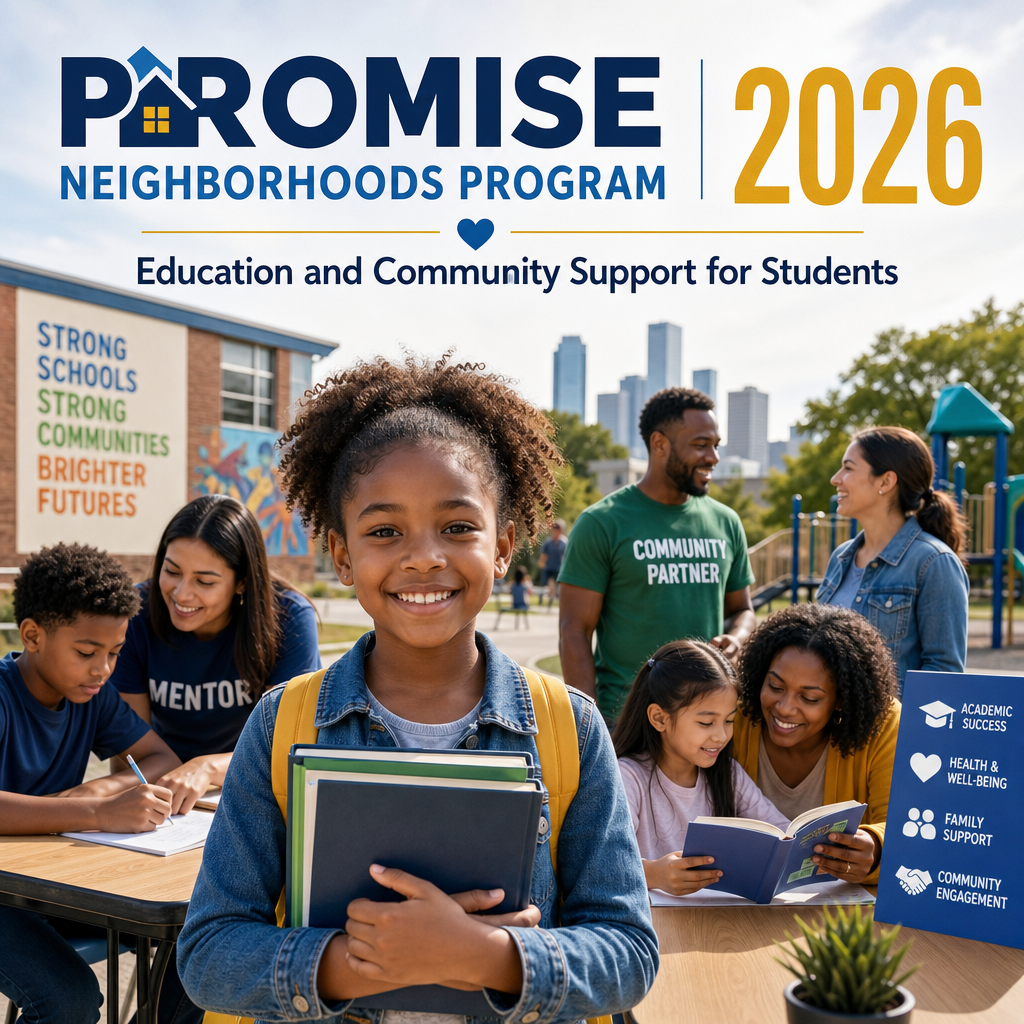
Promise Neighborhoods Program 2026: Education and Community Support for Students
The Promise Neighborhoods Program brings schools, families, and community partners together to create a stronger support system for students from early childhood through college and career. In 2026, it continues to offer a powerful, community-based approach to improving educational success and family well-being.
By: Jennifer Collins on July 27, 2026
Students do best when learning is supported by more than what happens in the classroom. A child’s success often depends on many connected factors: early childhood education, strong schools, family stability, access to health care, mentoring, after-school activities, and community trust. The Promise Neighborhoods Program 2026 is designed around that idea. It brings schools, families, nonprofits, local leaders, and public agencies together to help students succeed from early childhood through college and career.
In 2026, the program continues to stand out as a model for community-based education support. It does not focus on a single fix. Instead, it builds a network of services that help students grow academically, socially, and emotionally. For neighborhoods facing poverty, under-resourced schools, or limited access to support systems, this approach can be especially powerful.
What Is the Promise Neighborhoods Program?
The Promise Neighborhoods Program is a federal initiative aimed at improving outcomes for children and young adults in high-need communities. Its goal is to create a coordinated system of support that helps students succeed in school and beyond.
The program is based on a simple but important idea: education works better when the surrounding community is also strong. That means students should have access to:
High-quality early learning
Effective schools
Academic tutoring and enrichment
Family engagement services
Health and mental health support
College and career preparation
Safe and supportive neighborhoods
Rather than funding isolated services, the program encourages communities to build a long-term strategy that connects every stage of a child’s development.
Why the Program Matters in 2026
In 2026, many communities are still dealing with learning loss, mental health challenges, family economic stress, and unequal access to educational opportunities. Schools alone cannot solve every issue students face. That is where Promise Neighborhoods becomes valuable.
The program matters because it addresses the full environment around a child. A student struggling with attendance, for example, might not just need academic help. They may also need transportation support, counseling, stable housing, or after-school supervision. By connecting services, the program helps communities respond more effectively.
Key reasons it remains important:
It supports whole-child development
It reduces barriers to learning
It strengthens family-school partnerships
It encourages long-term community investment
It helps communities measure progress and improve outcomes
This broad approach is especially useful in neighborhoods where challenges are connected. A child’s academic performance may be affected by food insecurity, housing instability, or limited access to healthcare. Promise Neighborhoods recognizes that these issues are linked.
How Promise Neighborhoods Work
Promise Neighborhoods are built around local partnerships. Each neighborhood develops a plan based on its own needs, resources, and goals. The program does not use a one-size-fits-all model. Instead, it supports communities in designing solutions that reflect local realities.
1. Community planning and needs assessment
The first step usually involves identifying the biggest challenges facing children and families. Local organizations gather data on:
Reading and math achievement
Attendance
Graduation rates
Early childhood readiness
Access to support services
Family income and stability
Health and wellness indicators
This helps leaders understand where the gaps are and where investment can make the greatest difference.
2. Coordinated service delivery
Once needs are identified, partners work together to deliver services in a connected way. This might include:
School-based tutoring
Early childhood programs
Family workshops
Mental health counseling
College advising
Job training for parents
Nutrition and wellness supports
The goal is to avoid fragmented help. A student should not have to navigate separate systems alone if the neighborhood can coordinate support.
3. Data-driven improvement
Promise Neighborhoods rely on data to track progress over time. Communities measure outcomes to see whether students are improving in areas such as attendance, achievement, and graduation. They also evaluate whether the support system is reaching the families who need it most.
This data helps communities refine their strategies and make better decisions about resources.
4. Sustainable partnerships
A successful Promise Neighborhood depends on trust and collaboration. Schools, nonprofits, local colleges, health providers, businesses, and community groups often work together to keep the initiative moving forward. Over time, these partnerships can create lasting improvements even beyond the original funding period.
Services Commonly Found in Promise Neighborhoods
While every neighborhood is different, many Promise Neighborhoods offer a mix of educational and social supports. The most effective programs often combine several types of services to address student needs at different stages of life.
Early childhood support
High-quality early learning can make a major difference in long-term success. Services may include:
Preschool access
Parent-child literacy programs
Developmental screenings
Home visits for new families
Early intervention referrals
These services help children enter kindergarten ready to learn.
Academic support
Once students are in school, academic support becomes essential. Common services include:
Tutoring in reading and math
Homework help
Summer learning programs
Credit recovery for older students
Enrichment activities in science, technology, arts, and sports
These programs help students build confidence and stay on track.
Family engagement
Families are central to student success. Promise Neighborhoods often include resources such as:
Parenting classes
Family literacy nights
Translation and interpretation services
Workshops on navigating school systems
Support for families of children with special needs
When families feel informed and welcomed, they are more likely to stay involved in their child’s education.
Health and wellness services
Students cannot learn well if their physical or emotional needs are unmet. Many neighborhoods provide:
School-based health clinics
Vision and dental care referrals
Mental health counseling
Trauma-informed support
Nutrition assistance
Physical activity programs
These services help remove barriers that can affect attendance, behavior, and academic focus.
College and career readiness
Older students benefit from guidance that prepares them for life after high school. Supports may include:
College visits
FAFSA help
Career exploration
Internship opportunities
Resume and interview preparation
Dual enrollment or early college programs
This part of the program helps students see a path forward and connect learning to real goals.
Example of a Promise Neighborhood in Action
Imagine a neighborhood where many students are struggling with reading by third grade. Attendance is inconsistent, and families report limited access to after-school supervision and counseling services.
A Promise Neighborhood initiative in that community might include:
A preschool literacy campaign for younger children
Reading tutors in elementary schools
Family literacy nights with book giveaways
Attendance outreach through social workers
Mental health support for students showing stress or trauma
After-school clubs that keep children engaged
Career and college readiness programs for teens
Instead of treating each problem separately, the community creates a full support system. Over time, reading scores may improve, attendance may rise, and families may feel more connected to schools.
This example shows how the program works best when it is tailored to local needs and delivered through strong partnerships.
Benefits for Students and Families
The Promise Neighborhoods Program offers several important benefits. While results vary from place to place, the model can create meaningful improvements when implemented well.
Improved academic outcomes
With tutoring, early learning, and school support, students often have a better chance of meeting grade-level expectations. Strong academic foundations can lead to higher graduation rates and better college readiness.
Better attendance and engagement
When families receive support and schools communicate clearly, students are more likely to attend regularly and stay engaged. Attendance outreach and mentoring can also help reduce chronic absenteeism.
Stronger emotional support
Many students face stress, trauma, or instability that affects learning. Access to counseling and trusted adults can make school feel safer and more manageable.
Greater family involvement
Family-focused services help parents and caregivers become active partners in education. This often leads to stronger trust between schools and the community.
Expanded opportunity
Promise Neighborhoods can open doors to enrichment, leadership, career training, and higher education. For many students, these opportunities may not otherwise be available.
Challenges the Program Must Address
Although the Promise Neighborhoods model is promising, it also faces real challenges. Communities often need to solve complex problems with limited resources.
Funding limitations
The work is long-term, but funding may be short-term or uncertain. Sustaining services after initial grants can be difficult.
Coordination across organizations
Bringing schools, nonprofits, and agencies together requires time, communication, and shared goals. Without strong coordination, services can become disjointed.
Data sharing and privacy
Tracking outcomes is important, but it must be done carefully. Communities need systems that protect student privacy while still allowing partners to collaborate effectively.
Staffing and capacity
Programs depend on dedicated staff, volunteers, and local leaders. Recruiting and retaining skilled workers can be a challenge, especially in high-need areas.
Measuring long-term impact
Some benefits may take years to appear. Communities must stay committed long enough to see whether the program truly changes life outcomes for students.
What Success Looks Like
A strong Promise Neighborhood is not just one that offers many services. It is one that creates real improvement in student and family well-being. Success might look like:
More children entering kindergarten ready to learn
Better reading and math performance
Fewer absences and suspensions
Higher high school graduation rates
Increased college enrollment
Stronger family engagement
Better access to health and social supports
The most successful neighborhoods often share a few traits: they listen to residents, use data wisely, build trust, and keep student needs at the center of every decision.
The Role of Community Voices
One of the most important features of the Promise Neighborhoods approach is that it values local voices. Programs are stronger when they are shaped by the people who live and work in the neighborhood.
Parents, students, teachers, faith leaders, youth advocates, and community organizations all bring valuable insight. Their experiences can reveal what is working, what is missing, and what needs to change.
When residents are part of planning and decision-making, the program becomes more responsive and more likely to last. This community-led approach helps ensure that support is not imposed from outside but developed with the people it is meant to serve.
Looking Ahead
As education continues to evolve in 2026, programs like Promise Neighborhoods remain an important reminder that student success depends on more than test scores. Children thrive when they have access to stable relationships, quality learning opportunities, and community support.
The future of the program will likely depend on strong partnerships, reliable funding, and a continued focus on measurable results. But its core idea is timeless: when a neighborhood invests in its children, it invests in its own future.
Frequently Asked Questions
1. What is the Promise Neighborhoods Program?
Promise Neighborhoods is a place-based federal grant program that helps high-need communities create coordinated systems of educational, family, health, and community support for children and young people from early childhood through college and career.
2. What services can a Promise Neighborhood provide?
Services vary according to community needs but may include early childhood education, tutoring, family engagement, mental health support, attendance initiatives, after-school programs, college advising, career preparation, and connections to health and social services.
3. Can families apply directly for Promise Neighborhoods funding?
No. Federal grants are awarded to eligible organizations that lead partnerships within qualifying communities. Families and students receive services through programs developed by funded organizations and their local partners.
4. How does the program measure its results?
Promise Neighborhoods grantees track ten results across the cradle-to-career pipeline using federal performance indicators. These measures include kindergarten readiness, academic achievement, attendance, graduation, postsecondary preparation, family engagement, and community support.
5. What is the status of the program in 2026?
The fiscal year 2026 competition has an estimated $65 million available, with approximately 12 awards expected. Applications are due on August 6, 2026, and funded projects are expected to operate for up to five years.
The Promise Neighborhoods Program 2026 shows how education and community support can work together to improve student outcomes. By connecting schools with families, health services, mentoring, and neighborhood resources, the program helps address the many factors that shape learning.
It is not a quick fix, and it requires cooperation, planning, and persistence. But when it works well, it can create lasting change for students and families. In communities where opportunity has often been limited, Promise Neighborhoods offer a hopeful path forward—one built on support, collaboration, and the belief that every child deserves a chance to succeed.
Jennifer, M.Ed., holds a degree in Higher Education Administration, with
a focus on U.S. college financial aid, admissions policy, and student
support systems. She researches and writes about scholarships, federal
aid programs, and the college planning process to help students and
families make informed, well-supported decisions.