2026 Dependent Care FSA Limit: New $7,500 Maximum Explained
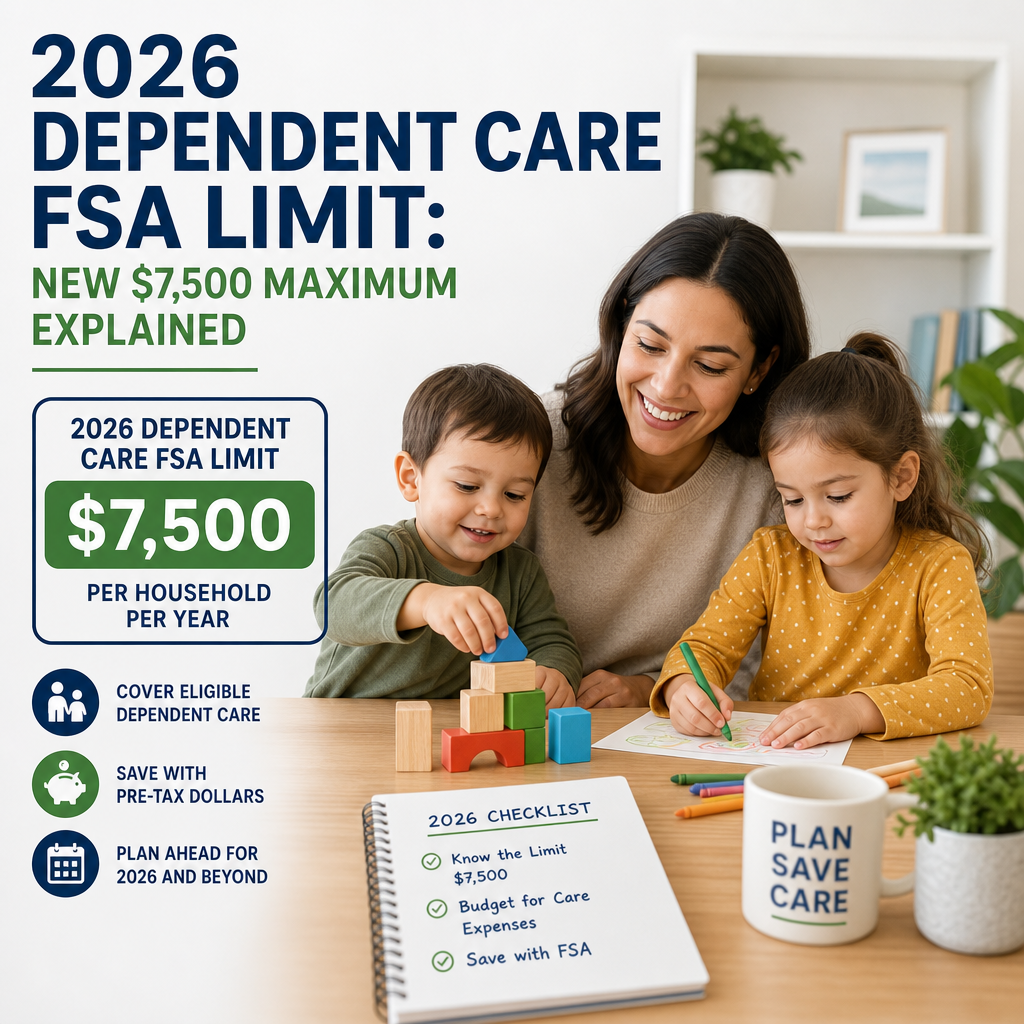
The 2026 dependent care FSA limit rises to $7,500 per household, giving eligible families a bigger pre-tax way to help cover child care and other qualifying dependent care costs. Here’s what changed, who can use it, and how to avoid common mistakes.
By: Sarah Mitchell on July 28, 2026
The 2026 Dependent Care FSA limit is one of the most important employee benefits updates to understand if you pay for child care or other qualifying dependent care expenses. For many households, a dependent care flexible spending account can lower taxable income and make work-related care costs a little easier to manage. With the new $7,500 maximum for 2026, families, HR teams, and benefits planners should know exactly how the account works, who qualifies, and how to avoid costly mistakes.
This guide explains the 2026 limit, what changed, which expenses may qualify, and how to make the most of a dependent care FSA without running into compliance issues.
What Is a Dependent Care FSA?
A dependent care FSA, also called a dependent care flexible spending account, is an employer-sponsored benefit that lets eligible employees set aside pre-tax money to help pay for qualifying dependent care expenses.
Unlike a health FSA, this account is not for medical bills. It is designed for care that allows you and, if applicable, your spouse to work, look for work, or attend school full-time.
Common uses include:
Child care for a child under age 13
Adult day care for a dependent adult who lives with you and needs care
Before- and after-school care that allows you to work
Summer day camp, if it qualifies under IRS rules
Because contributions are made pre-tax through payroll deductions, the account can reduce your taxable income. That said, the rules are strict, and not every care expense is eligible.
2026 Dependent Care FSA Limit: What Changed?
The headline update is simple: the 2026 Dependent Care FSA limit is $7,500 per household, or $3,750 if married filing separately.
That represents an increase from the longstanding federal limit of $5,000 for many workers. The higher maximum gives families more room to use pre-tax dollars toward rising child care costs.
Why the new limit matters
For many working parents and caregivers, dependent care costs can be one of the largest monthly household expenses. A higher cap means:
More income may be sheltered from federal income tax
Payroll tax treatment may be more favorable, depending on your plan and circumstances
Employers can offer a more competitive benefits package
Families may be able to cover a larger share of care expenses through a tax-advantaged account
Important note on employer plans
Even though the federal maximum is $7,500 for 2026, your employer may still choose a lower plan limit. In other words:
The IRS sets the maximum allowed under the law
Your employer decides whether to offer the benefit and how much you may contribute
You can only elect up to the amount your employer’s plan permits
If you participate in a dependent care FSA, always check your plan document or benefits portal for the exact contribution rules.
Who Can Use a Dependent Care FSA?
To qualify, the expenses must be for the care of an eligible dependent so you can work or look for work.
Common eligible dependents
In general, the dependent care FSA may cover care for:
A child under age 13 who lives with you more than half the year
A spouse who is physically or mentally incapable of self-care and lives with you more than half the year
Another dependent who is physically or mentally incapable of self-care and lives with you more than half the year
Work-related requirement
The care must enable you and your spouse, if married, to work or actively look for work. For married couples, both spouses generally need earned income unless one is disabled or a full-time student under IRS rules.
That means the account is not a general family benefit. If no one is working or seeking work, the expense usually will not qualify.
What Expenses Qualify?
The dependent care FSA can be very useful, but only if the expense meets the rules.
Usually eligible expenses
Examples often include:
Licensed child care centers
Family day care providers
Nanny or in-home caregiver services, if they meet tax reporting requirements
Before- and after-school care
Summer day camp for a child under 13
Adult day care for a qualifying dependent adult
Usually not eligible expenses
The following are typically not reimbursable:
Overnight camp
Tutoring for educational purposes only
Kindergarten tuition or private school tuition
Babysitting for social events, date nights, or non-work-related reasons
Care provided by your spouse, your child under age 19, or another dependent you claim on your tax return
Transportation costs that are not part of the care arrangement itself
A practical example
If you pay a day care center $1,200 per month so you can work full-time, that expense may qualify.
If you pay a babysitter to stay with your child while you go to dinner, that expense generally does not qualify because it is not work-related care.
How the 2026 Dependent Care FSA Works
A dependent care FSA follows a few important steps.
1. You elect a contribution amount
During open enrollment, you choose how much to contribute for the plan year. For 2026, that amount cannot exceed the federal maximum of $7,500, assuming your employer allows the full limit.
2. Payroll deductions are taken pre-tax
Your employer withholds the elected amount from your paycheck throughout the year. The money is usually taken evenly each pay period.
3. You pay for care expenses
Depending on your plan, you may pay the provider directly and then submit a claim for reimbursement, or you may use a benefits debit card if your employer offers one.
4. You submit documentation
Most plans require proof such as:
Provider name and address
Dates of service
Amount paid
Dependent name and age
Tax identification number or Social Security number, when required
5. You receive reimbursement
Approved claims are reimbursed up to the amount you have already contributed to the account.
Key Rules to Know Before You Enroll
The 2026 Dependent Care FSA limit is helpful, but the account has rules that can affect your tax outcome.
The “use it or lose it” concept
Money in a dependent care FSA is generally subject to a use-it-or-lose-it rule. That means you should not contribute more than you expect to spend on qualifying care during the plan year.
Some employers may offer a grace period or a limited carryover feature, but dependent care FSAs do not always work the same way as health FSAs. Check your specific plan.
Reimbursements cannot exceed contributions
Even if you pay a large eligible bill early in the year, you can only be reimbursed up to the amount that has been contributed so far.
Example:
You elect $7,500 for the year
Your provider bills $2,000 in January
If only $500 has been deposited into your account, you can generally be reimbursed only up to $500 at that time
Tax form requirements
You will usually need to report dependent care FSA information on your tax return. Your provider information and the total amount received are important for compliance, so keep records throughout the year.
Coordination with the Child and Dependent Care Tax Credit
You cannot double-dip on the same expense. If you use a dependent care FSA, it may reduce the amount of expenses available for the Child and Dependent Care Tax Credit.
This is one reason it helps to compare both benefits before deciding how much to contribute.
How to Decide Whether to Max Out the Account
Contributing the maximum is not always the best move for everyone. The right number depends on your actual care costs, tax situation, and household income.
Consider these factors
Ask yourself:
How much qualifying dependent care will I realistically pay in 2026?
Will my care provider accept the payment method my plan offers?
Do I expect a change in child care, school schedules, or employment?
Am I likely to need the Child and Dependent Care Tax Credit as well?
Does my employer have a lower contribution cap than the federal maximum?
A simple planning example
Suppose you expect to spend $6,800 on after-school care and summer camp in 2026. If your employer permits it, you might elect around $6,800 instead of the full $7,500, especially if you are unsure about expenses.
That strategy can help you avoid leaving unused funds behind at year-end.
When maxing out may make sense
A full contribution may be worth considering if:
You have consistent child care bills every month
Both spouses work full-time
Your provider qualifies under IRS rules
Your employer allows the full 2026 maximum
You have a history of using most or all of your dependent care expenses
How Employers Should Prepare for the 2026 Limit
HR and benefits teams should review plan materials well before open enrollment. If the plan is not updated correctly, employees may receive misleading information about their available contribution amount.
Best practices for employers
Update summary plan descriptions and enrollment systems
Confirm payroll deductions reflect the new limit
Review communication materials for accuracy
Train HR staff on eligibility and reimbursement questions
Coordinate with the third-party benefits administrator
Clear communication matters. Employees are more likely to use the benefit correctly when they understand the rules and limits.
Common Mistakes to Avoid
Even experienced benefit users make errors with dependent care FSAs. Here are some of the most common ones.
Overestimating expenses
If you contribute too much, unused money may be lost depending on plan rules. Estimate carefully.
Paying an ineligible provider
Care from a spouse, dependent, or non-qualifying provider generally cannot be reimbursed.
Forgetting to keep records
Save receipts, invoices, and provider details. Missing documentation can delay or deny a claim.
Confusing dependent care with health care
A dependent care FSA does not pay for doctor visits, prescriptions, or medical supplies. That belongs in a health-related benefit account or out-of-pocket medical planning.
Ignoring tax filing rules
You may need provider tax information to properly report dependent care benefits. If you skip this step, you can create a tax problem later.
Dependent Care FSA vs. Child and Dependent Care Tax Credit
Many people wonder whether to use a dependent care FSA or rely on the tax credit. In some cases, you may use both, but not on the same dollar of expenses.
The basic difference
Dependent care FSA: Saves money by letting you pay eligible expenses with pre-tax dollars
Child and Dependent Care Tax Credit: Reduces tax liability based on eligible expenses, subject to tax rules and income-related limits
Which is better?
That depends on your income, expenses, and tax situation. In many cases, families benefit by using the FSA first and then evaluating whether any remaining eligible expenses may also qualify for the tax credit.
A tax professional can help you compare the two based on your specific situation.
Frequently Asked Questions
1. What is the 2026 Dependent Care FSA limit?
The federal maximum is $7,500 per household for 2026, or $3,750 if married filing separately. However, your employer may set a lower plan limit.
2. Can both spouses contribute the full amount?
No. The household maximum applies to the account total, not each spouse individually. If both spouses have access to a dependent care FSA through separate employers, their combined contributions generally cannot exceed the federal household limit.
3. Does the dependent care FSA cover preschool or daycare?
It can cover qualifying daycare or preschool expenses if the care is work-related and meets IRS eligibility rules. However, tuition for kindergarten or school-based education generally does not qualify.
4. What happens if I do not use all the money in my account?
Unused funds may be forfeited under the use-it-or-lose-it rule, unless your employer’s plan includes a grace period or another permitted feature. Always estimate contributions carefully.
5. Can I change my election during the year?
Usually only if you experience a qualifying life event, such as a change in employment, marital status, or dependent care needs, and your employer’s plan allows the update. Open enrollment is the main time to set or change your election.
The 2026 Dependent Care FSA limit gives eligible workers a larger pre-tax opportunity to help manage the real cost of child care and dependent care. With the new $7,500 maximum, families may be able to reduce taxable income while covering expenses that make work possible. Still, the benefit works best when you understand the rules: only qualifying care counts, reimbursements depend on contributions already made, and unused funds may be lost if you overestimate.
Before enrolling, review your employer’s plan details, compare expected expenses, and think about how the dependent care FSA fits with the Child and Dependent Care Tax Credit. A little planning now can prevent headaches later and help you use this benefit more effectively throughout the year.
If you expect steady qualifying care expenses in 2026, this may be a smart time to revisit your election and make sure you are taking full advantage of the updated limit.
Sarah Mitchell
Mary S, CFP®, is a Certified Financial Planner with over 12 years of experience in personal finance, retirement planning, and wealth management. She writes educational content that helps readers understand financial concepts and make informed decisions based on reliable information.