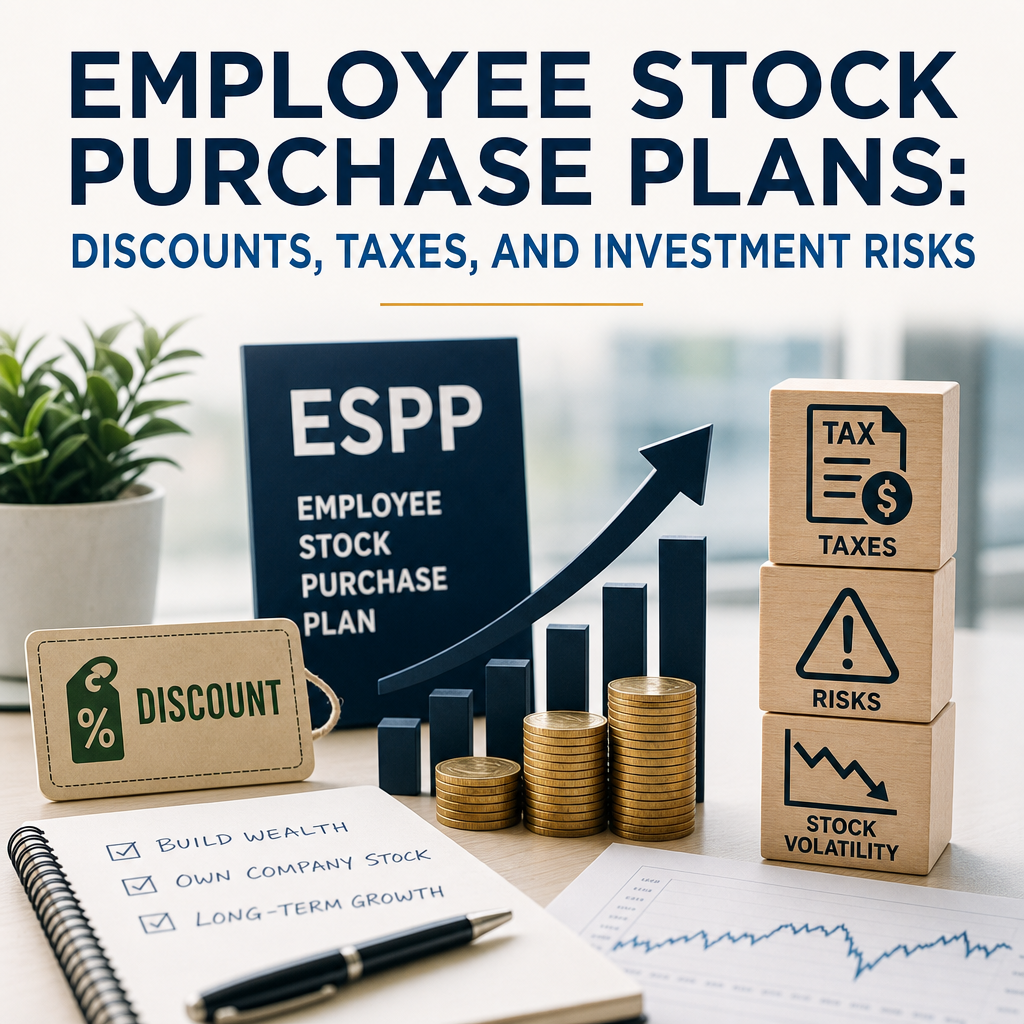
Employee Stock Purchase Plans: Discounts, Taxes, and Investment Risks
Employee stock purchase plans can make buying company stock feel like an easy win, especially when a discount is involved. But before you enroll, it’s important to understand the tax rules, holding periods, and risks that can turn a promising perk into a costly mistake.
By: Sarah Mitchell on July 28, 2026
Employee Stock Purchase Plans, or employee stock purchase plans, can be one of the most appealing benefits a company offers. They give workers a chance to buy company stock, often at a discount and sometimes through payroll deductions that make investing feel more accessible. On paper, that sounds simple: buy shares below market value and potentially profit later.
In practice, employee stock purchase plans involve important tax rules, holding period requirements, and real investment risks that employees should understand before participating. A discount does not automatically mean a guaranteed gain, and concentrating too much of your financial life in one company can backfire if the stock drops or the business struggles.
This guide breaks down how employee stock purchase plans work, how taxes are typically handled, and what to watch out for before you decide whether to enroll.
What Is an Employee Stock Purchase Plan?
An employee stock purchase plan is a company-sponsored program that lets eligible employees buy company shares, usually through after-tax payroll deductions. Many plans offer stock at a discount from the market price, often up to 15%, though the exact terms vary.
These plans are not the same as:
Stock options, which give you the right to buy shares at a set price
Restricted stock units (RSUs), which are granted by the employer and vest over time
401(k) plans, which are retirement accounts with tax advantages
Employee stock purchase plans are voluntary. If you enroll, your employer typically withholds a percentage of your paycheck and uses that money to purchase shares on designated purchase dates.
Common Features of Employee Stock Purchase Plans
Most employee stock purchase plans share a few traits:
Eligibility rules: Often limited to employees who meet tenure or hours-worked requirements
Offering periods: A span of time, such as 6 or 12 months, during which payroll deductions accumulate
Purchase dates: The dates when accumulated funds are used to buy shares
Discounts: A reduced purchase price based on the plan terms
Lookback provisions: Some plans use the stock price at the beginning of the offering period or purchase date, whichever is lower, to determine the discount
That last feature can make the plan especially attractive if the stock price rises during the offering period.
How Employee Stock Purchase Plans Work
The basic process is usually straightforward, but the details matter.
Step 1: You Enroll
If your company offers employee stock purchase plans, you choose whether to participate and decide how much of your paycheck to contribute. Many plans cap contributions at a percentage of compensation or a dollar limit.
Step 2: Payroll Deductions Build Up
Your employer withholds money after taxes from each paycheck. Those deductions accumulate during the offering period.
Step 3: Shares Are Purchased
At the purchase date, your accumulated contributions buy company stock at the plan’s discounted price. Depending on the plan, the stock may be purchased automatically in a brokerage account on your behalf.
Step 4: You Decide What to Do Next
After shares are purchased, you can usually hold them or sell them. That decision affects your tax treatment and your exposure to the company’s stock price.
Understanding the Discount
The discount is often the headline feature of employee stock purchase plans, but it helps to understand how it actually works.
Suppose your company offers a 15% discount. If the stock’s market value on the purchase date is $100 per share, you may be able to buy it for $85 per share. If the stock immediately stays at $100, that discount appears valuable. If the stock falls to $80, the discount may soften the blow, but you could still lose money.
Some plans include a lookback provision, which can improve the economics. For example, if the stock started the offering period at $80 and ended at $100, a lookback plan might let you buy at 85% of the lower starting price. That creates a lower purchase price than a plan using only the end-date market value.
Still, the discount is not the whole story. Taxes and market risk can significantly affect your actual return.
Employee Stock Purchase Plans and Taxes
Taxes are one of the most confusing parts of employee stock purchase plans, and they deserve careful attention. The tax rules can vary depending on the type of plan and when you sell the shares.
The Basic Tax Framework
Because payroll deductions are typically made after tax, participating in employee stock purchase plans does not usually reduce your income taxes when the money is withheld. The tax event becomes more complicated when the shares are purchased and later sold.
The main tax question is whether you sell the stock:
Immediately after purchase
Within the qualifying holding period
After the qualifying holding period
Qualifying vs. Disqualifying Dispositions
For many employee stock purchase plans, tax treatment depends on how long you hold the shares.
Qualifying Disposition
A qualifying disposition usually occurs when you hold the stock long enough to meet the plan’s required holding periods, which commonly include:
At least one year after purchase
At least two years after the offering date
If you meet those rules, part of the gain may be taxed as ordinary income and the rest as capital gain, depending on the specifics of the plan and the stock’s performance.
Disqualifying Disposition
If you sell before meeting those holding periods, the sale is generally a disqualifying disposition. In that case, more of the gain may be treated as ordinary income. This can make the tax result less favorable than many employees expect.
Why This Matters
People sometimes assume the discount is an automatic tax-free benefit. It is not. Your tax bill can be influenced by:
The offering price
The purchase price
The sale price
Your holding period
Whether the plan qualifies under IRS rules
Because the rules can be nuanced, many participants review the plan documents carefully or consult a tax professional before making large contributions.
Practical Example
Imagine you contribute $1,000 to an employee stock purchase plan with a 15% discount. The stock is worth $100 at purchase, so you buy at $85 per share.
You acquire about 11.76 shares
If the price rises to $120 and you sell immediately, you may owe tax on the discount and the gain
If you hold long enough for a qualifying disposition, the tax treatment may be different and potentially more favorable for part of the profit
The exact result depends on your plan and your personal tax situation, which is why it pays to understand the details before selling.
The Investment Risks You Should Not Ignore
A discount can make employee stock purchase plans look safer than they really are. But buying company stock always creates concentration risk.
Company-Specific Risk
If your salary, benefits, and investment account all depend on the same employer, you may be overexposed to one business. If the company faces layoffs, earnings problems, or a stock decline, your financial situation can take a double hit.
Market Risk
Even a strong company can see its stock price fall because of broader market conditions. Interest rate changes, industry trends, or investor sentiment can all affect the stock price during your offering period or after purchase.
Liquidity Risk
Your money may be tied up until the purchase date or until you decide to sell. If you need cash quickly, you may not be able to access the funds without selling shares, which could trigger tax consequences.
Timing Risk
The purchase date matters. If the stock drops significantly after the purchase date, your discount may not protect you from losses. Likewise, if you hold shares for tax reasons, you could face a decline while waiting to meet the qualifying holding period.
Psychological Risk
When employees invest in their own company, they may feel extra confident because they know the business. But familiarity can lead to bias. Workers often overestimate how well they understand the stock or underestimate the downside.
How to Decide Whether to Participate
Employee stock purchase plans can be valuable, but they are not right for everyone. A thoughtful decision starts with your broader financial goals.
Ask These Questions
Before enrolling, consider:
Can I afford the payroll deductions?
Make sure contributions do not weaken your emergency fund or daily budget.
Does my company stock already represent too much of my portfolio?
If you already receive RSUs or options, adding more exposure may increase risk.
What are the plan’s holding period rules?
The tax outcome often depends on whether you sell quickly or wait.
Is there a lookback provision?
This feature can improve the potential benefit of the discount.
What are the fees and brokerage terms?
Some plans involve account or transaction costs that reduce your net benefit.
A Simple Rule of Thumb
If you participate, many financial planners suggest treating the shares as a short-term bonus opportunity rather than a long-term core holding. In other words, the discount may create value, but that does not necessarily mean you should keep a large position in your employer’s stock.
Strategies for Managing Risk
You do not need to avoid employee stock purchase plans entirely to be prudent. A few habits can help you use them more wisely.
Diversify Your Investments
If you buy shares through employee stock purchase plans, consider how they fit into your broader portfolio. Diversification across asset classes, industries, and company sizes can reduce the damage from a single stock decline.
Set a Target Exposure
Some investors set a personal limit on how much employer stock they are willing to own. That limit can be based on:
A percentage of total investments
A percentage of annual income
A fixed dollar amount
The right limit depends on your risk tolerance and overall financial picture.
Think Ahead About Taxes
If you plan to sell after a qualifying holding period, keep good records:
Offering date
Purchase date
Purchase price
Fair market value on each relevant date
Sale date and sale price
These details are critical for reporting the transaction accurately.
Avoid Overcommitting
It can be tempting to max out contributions because the discount seems attractive. But if you are already building an emergency fund, saving for retirement, or paying down high-interest debt, a smaller contribution may be the smarter move.
When Employee Stock Purchase Plans Can Make Sense
Employee stock purchase plans often work best when several conditions line up:
You have stable cash flow
The discount is meaningful
You understand the holding period rules
You can tolerate stock market volatility
Your employer stock does not already dominate your finances
For example, an employee with a strong emergency fund and a diversified retirement portfolio may reasonably participate to capture the discount, then sell according to their tax strategy. On the other hand, someone carrying credit card debt or lacking savings may be better off directing money elsewhere first.
Common Mistakes to Avoid
Many employees make the same errors when using employee stock purchase plans.
1. Ignoring the Plan Documents
Every plan has its own rules. Small differences in discount rates, lookback provisions, and holding periods can change the outcome.
2. Forgetting About Taxes
A discount is not the same as take-home profit. Taxes can reduce your gain, especially if you sell too soon.
3. Letting Employer Stock Become Too Large a Share of Your Portfolio
Company loyalty is not a diversification strategy. Too much exposure to one employer can create unnecessary risk.
4. Assuming the Stock Will Keep Rising
Past performance is not a guarantee. A stock that looks strong today can lose value quickly.
5. Spending the Discounted Shares Too Fast
Some employees sell immediately and spend the money without a plan. If the goal is to build wealth, it helps to decide in advance whether you are using the plan for short-term gain, long-term investing, or a mix of both.
Frequently Asked Questions
What is the main benefit of employee stock purchase plans?
The main benefit is the opportunity to buy company stock at a discount, often through convenient payroll deductions. If the stock performs well and you understand the tax rules, the discount can create real value. However, the benefit is not guaranteed, because the stock price can fall after purchase.
Are employee stock purchase plans taxable when I buy the shares?
The payroll deductions are usually made with after-tax money, so the contribution itself is not a tax deduction. The tax impact typically becomes more important when you sell the shares. Depending on whether you make a qualifying or disqualifying disposition, part of the gain may be taxed as ordinary income or capital gain.
Should I always hold employee stock purchase plan shares for the qualifying period?
Not always. Holding long enough may improve tax treatment, but it also exposes you to more market risk. If the stock price drops sharply during the holding period, waiting for tax reasons could reduce or eliminate your profit. The right choice depends on your risk tolerance, financial goals, and confidence in the company.
What happens if my company stock price falls below the purchase price?
If the stock price drops after purchase, you could lose money even with the discount. The discount may reduce the size of the loss, but it does not eliminate market risk. This is one reason employee stock purchase plans should not be treated as risk-free investments.
How do I know if my employee stock purchase plan is worth it?
Review the plan documents and compare the discount, lookback features, holding requirements, and potential tax treatment against your financial situation. A plan may be worth participating in if you can afford the contributions, understand the risks, and avoid becoming too concentrated in company stock.
Employee stock purchase plans can be a valuable workplace benefit, especially when they offer a meaningful discount and favorable purchase features like a lookback provision. But the real value depends on more than the headline discount. Taxes, holding periods, market volatility, and concentration risk all affect whether the plan helps or hurts your financial goals.
The smartest approach is to treat employee stock purchase plans as one part of a broader financial strategy, not as a guaranteed path to easy money. Read the plan documents carefully, understand the tax consequences before you sell, and make sure company stock does not take over too much of your portfolio. For some employees, the plan can be a useful wealth-building tool. For others, especially those with tight budgets or heavy exposure to employer stock already, it may be better to participate cautiously or not at all.
In the end, informed decisions matter more than excitement. If you understand the discounts, taxes, and investment risks, you can use employee stock purchase plans more confidently and avoid the most common mistakes.
Sarah Mitchell
Mary S, CFP®, is a Certified Financial Planner with over 12 years of experience in personal finance, retirement planning, and wealth management. She writes educational content that helps readers understand financial concepts and make informed decisions based on reliable information.