2026–27 School Meal Eligibility Guidelines: Family Guide
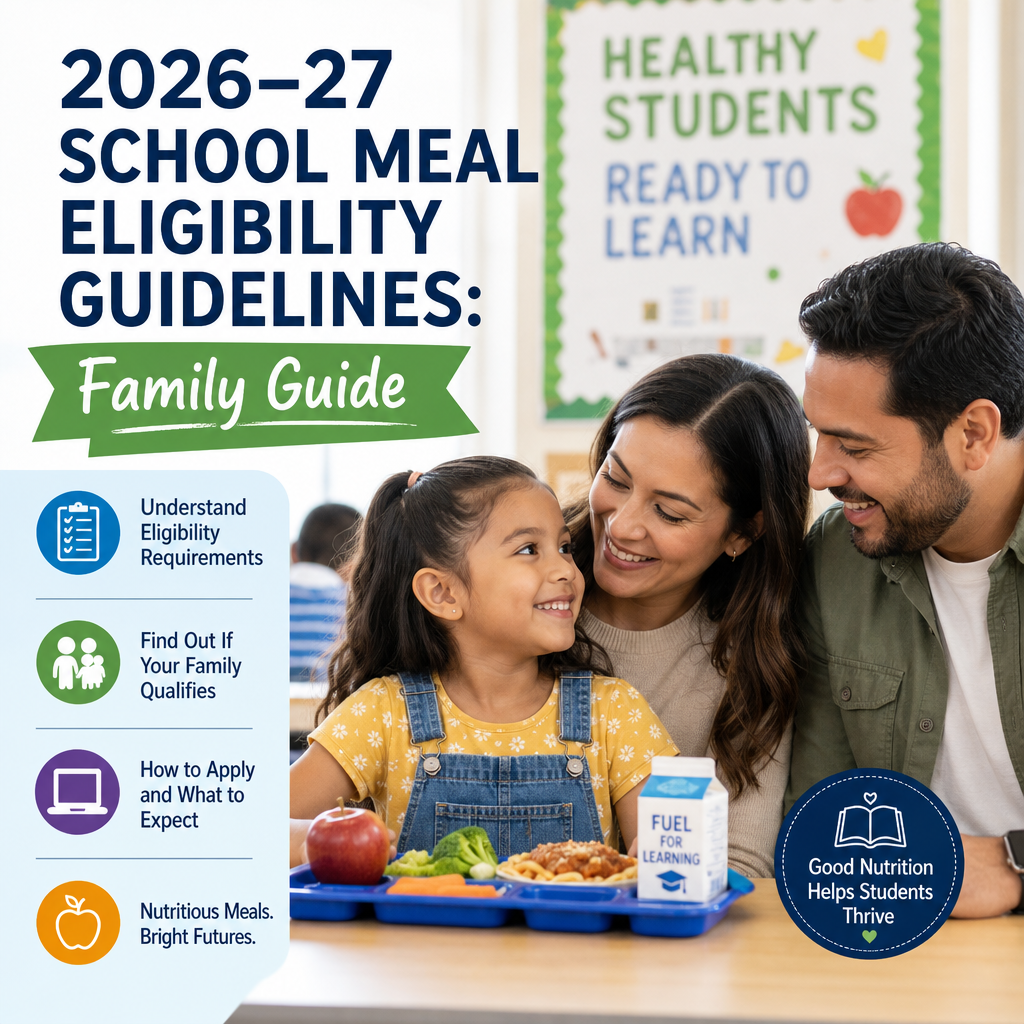
School meals play an important role in helping children stay focused, healthy, and ready to learn. For many families, understanding meal eligibility is just as important as understanding the school calendar or supply list. The 2026–27 school year brings updated meal eligibility guidance that may affect how families apply for free or reduced-price meals, what counts as income, and which students are automatically eligible.
If you are a parent, guardian, or caregiver, knowing the basics can save time, reduce stress, and help ensure your child gets the meals they need. This guide explains the key points in clear language, with practical examples and tips for preparing before the school year begins.
Why School Meal Eligibility Matters
School meal programs are designed to make sure students have access to breakfast and lunch during the school day. For many children, these meals are a major source of daily nutrition. When families qualify for meal benefits, it can ease the pressure on household budgets while supporting student health and concentration.
Eligibility guidelines determine:
- Whether a student receives free meals
- Whether a student receives meals at a reduced price
- Whether a household may need to complete an application
- Whether a student qualifies automatically through other programs
Because school meal rules can change from year to year, it is important to review the current guidelines each fall.
What’s New for the 2026–27 School Year
The exact eligibility thresholds and program details for 2026–27 may vary by state and district, but families should expect a few common themes in the updated guidelines:
Standard income limits are adjusted annually
Most income-based meal eligibility rules are updated each school year to reflect changes in federal poverty guidelines and household cost of living. This means the income level required to qualify for free or reduced-price meals may be slightly different from the prior year.
Direct certification remains a major pathway
Many students are approved automatically without a paper application if their household already participates in qualifying assistance programs. This process is called direct certification and is intended to reduce paperwork for families.
Community eligibility may expand in some schools
Some schools and districts qualify to provide free meals to all students under federal community eligibility provisions. If your school participates, you may not need to apply at all.
State and local programs may add extra help
Some states supplement federal meal programs with additional benefits, including universal breakfast, afterschool snacks, or expanded free lunch coverage. Families should check with their district for local updates.
Who May Qualify for Free or Reduced-Price Meals
Students may qualify for meal benefits in several ways. The most common are based on household income, participation in public assistance programs, or special circumstances.
1. Household income
Families with income below certain limits may qualify for free or reduced-price school meals. The school will usually compare your household size and total gross income to the current eligibility chart.
2. Participation in assistance programs
Children in households receiving benefits from certain programs may qualify automatically. These programs commonly include:
- Supplemental Nutrition Assistance Program (SNAP)
- Temporary Assistance for Needy Families (TANF)
- Medicaid in some states, depending on local rules
- Other state-administered benefit programs
3. Students who are foster children, homeless, migrant, or runaway
Students in certain special circumstances are often categorically eligible for free meals. This includes children who are:
- In foster care
- Experiencing homelessness
- Migratory
- Identified as runaway youth
These categories are intended to make sure vulnerable students receive consistent support.
4. Participation in Head Start or similar programs
In some cases, children enrolled in Head Start or certain early childhood assistance programs may also qualify automatically.
Understanding Income Eligibility
Income eligibility is one of the most common reasons families apply for school meal benefits. The school usually looks at the total gross income of everyone in the household before taxes and deductions.
What counts as income?
Income may include:
- Wages and salaries
- Tips and bonuses
- Self-employment earnings
- Unemployment benefits
- Social Security benefits
- Child support received
- Retirement or pension income
- Disability payments
- Some public assistance payments
What counts as a household?
A household includes everyone living in the same place and sharing expenses, even if they are not related. For example, grandparents, aunts, uncles, and other relatives living in the same home may count in the household total.
How income is compared
Schools typically compare your total household income to a federal eligibility chart based on the number of people in the household. Larger households have higher income limits because they support more people.
Example
A family of four with two working adults may qualify if their gross annual income falls below the current free or reduced-price threshold for a four-person household. If one adult works full time and the other has part-time income, both amounts are usually counted together.
Because the exact numbers change each year, families should use the current 2026–27 eligibility chart provided by their school district.
Free Meals vs. Reduced-Price Meals
Not every eligible family receives the same level of support. There are usually two main categories.
Free meals
Students approved for free meals do not pay for breakfast or lunch at school.
Reduced-price meals
Students approved for reduced-price meals receive meals at a lower cost than the standard price. In many districts, breakfast and lunch costs are minimal, though the exact amount may vary by location.
What families should know
- Eligibility for free meals is based on lower income limits or categorical eligibility.
- Reduced-price eligibility applies to households with income slightly above the free-meal threshold.
- Some districts may cover the reduced-price cost so that students still eat at no charge.
Always check your district’s policy, since some schools offer extra meal support beyond federal minimums.

Automatic Eligibility: What Is Direct Certification?
Direct certification is one of the easiest ways for families to receive meal benefits. Instead of completing a full application, the school or district matches student information with records from other assistance programs.
You may not need to apply if your child is directly certified
Families receiving benefits like SNAP or certain Medicaid categories may be notified automatically that their child qualifies.
Benefits of direct certification
- Less paperwork
- Faster approval
- Reduced risk of missed deadlines
- More consistent access to meals
Why families should still review notices
Even if your child has been certified in a past year, eligibility does not always continue automatically forever. Families should carefully read school letters and update information if the district requests it.
How to Apply for School Meal Benefits
If your household is not directly certified and your child does not attend a community eligibility school, you may need to submit an application.
Typical application steps
- Get the application from your school, district website, or meal services office.
- List all household members.
- Enter income for each person who earns money.
- Provide any requested benefit or case numbers if applicable.
- Sign and submit the form before the deadline.
Helpful tips
- Use your most recent income information.
- Double-check names, dates, and household size.
- Include all children in the household, even if they attend different schools.
- Keep a copy of the application for your records.
When to apply
Many schools allow families to apply before the school year begins. Even if you miss the start date, you can usually apply at any point during the year if your financial situation changes.
What Documents May Be Required
Some families are approved without additional paperwork, but others may be asked to provide documentation.
Common documents include:
- Pay stubs
- Tax returns
- Benefit award letters
- Medicaid or SNAP documentation
- Proof of foster care status
- Proof of residency or household composition, if requested
If you are asked for documents, send them as soon as possible to avoid delays.
Common Situations and How They Work
School meal eligibility can feel confusing when life circumstances change. Here are a few examples.
Example 1: A family with fluctuating work hours
A parent works in retail and has income that changes from week to week. In this case, the school may ask for recent pay stubs or a summary of average earnings. Families should report income as accurately as possible using the school’s instructions.
Example 2: A grandparent is raising a child
If a grandparent provides most of the household support and the child lives in the home, that child may be included on the application. The household should list everyone who shares the home and finances, not just the legal parent if they are not part of the same household.
Example 3: A student is placed in foster care
Foster children are often categorically eligible for free meals. The school may require foster placement documentation or case information, but the student usually does not need to qualify based on household income.
Example 4: A family receives SNAP
A child in a SNAP household may qualify automatically through direct certification. If the family is notified, they should review the letter and keep it with other school records in case questions come up later.
What Families Should Watch For in School Notices
Schools often send meal eligibility letters at the beginning of the year, after an application is reviewed, or when a student’s status changes. These letters may include important information about:
- Approval for free or reduced-price meals
- The length of the approval period
- Instructions for reapplying
- Rights to appeal if a family disagrees with the decision
- Additional state or district meal support
Do not ignore these notices. If the school requests updated income information or says the approval period is ending, acting quickly can prevent a gap in benefits.
If Your Income Changes During the Year
Many families experience changes after the school year starts. A new job, reduced hours, separation, unemployment, or additional household members can all affect meal eligibility.
When to update the school
You should contact the school or district if:
- Your income drops significantly
- Someone in the household loses a job
- A child joins or leaves the household
- You gain eligibility for a public assistance program
- Your address changes and affects school enrollment
Why updates matter
A family may become eligible even if they did not qualify at the beginning of the year. Reporting changes promptly can help your child receive benefits sooner.
Tips for Families Preparing for 2026–27
A little planning can make the process much easier. Consider these practical steps:
- Read school meal letters carefully
- Save income records in one place
- Apply early if you expect to qualify
- Check whether your district participates in community eligibility
- Ask about breakfast, afterschool snacks, and summer meal programs
- Update your school if your household situation changes
It can also help to check whether your district offers online applications, which may be faster and easier than paper forms.
Where to Get Help
If you are unsure about eligibility, you are not alone. School offices, district nutrition staff, and family resource centers can often answer questions about the application process.
You can ask about:
- Income limits for your household size
- Whether your child qualifies automatically
- Which documents you need
- Deadlines for applying
- Appeal steps if your application is denied
Many districts also provide translated applications and language support for families who need it.
Frequently Asked Questions
1. What are the income limits for free and reduced-price school meals in 2026–27?
Under the federal guidelines, households with income at or below 130% of the federal poverty level may qualify for free meals. Households with income above 130% but at or below 185% may qualify for reduced-price meals. Families should use the official 2026–27 chart for their household size and location.
2. Which children may qualify automatically for free meals?
Children may be directly certified through programs such as SNAP, TANF, or the Food Distribution Program on Indian Reservations. Foster children and children identified as homeless, migrant, runaway, or enrolled in qualifying Head Start programs may also be categorically eligible. Medicaid-based certification is available only under applicable participating systems.
3. Do families need to apply at a Community Eligibility Provision school?
Generally, no. Schools participating in the Community Eligibility Provision can provide breakfast and lunch to all enrolled students without collecting individual applications for free and reduced-price meals.
4. Must families submit pay stubs with the initial application?
Families generally provide household and income information on the application without attaching income documents. However, school districts must select some approved applications for verification, and those households may later be asked for pay stubs, benefit statements, or other acceptable records.
5. Can a family apply after the school year begins?
Yes. Families may apply during the school year, particularly if their income decreases, household size changes, or they begin participating in a qualifying assistance program. They should contact their school district’s nutrition office for local application instructions.
Official Resources
- Federal Register: 2026–27 Child Nutrition Income Eligibility Guidelines
- USDA: National School Lunch Program
- USDA: School Meals
- USDA: Community Eligibility Provision
- USDA: Apply for Free and Reduced-Price School Meals
Conclusion
The 2026–27 school meal eligibility guidelines are designed to help families access nutritious meals with as little confusion as possible. Whether your child qualifies through income, public assistance, foster care, or direct certification, the key is to stay informed and act early.
Review your district’s current guidelines, keep your household information updated, and watch for school notices throughout the year. With the right information, families can make sure students have reliable access to the meals they need to learn and thrive.