Senior Farmers’ Market Nutrition Program Eligibility and Available Foods
The Senior Farmers’ Market Nutrition Program, often called SFMNP, helps older adults stretch their food budgets while enjoying fresh, locally grown produce. It is a seasonal nutrition program designed to connect eligible seniors with fruits, vegetables, herbs, and other farm-fresh foods from approved farmers’ markets, roadside stands, and community-supported agriculture programs.
For many seniors, this program offers more than just groceries. It can improve access to nutritious foods, support local farmers, and encourage healthier eating habits during the peak growing season. Understanding who qualifies and what foods are included can make it easier to take full advantage of the benefits.
What Is the Senior Farmers’ Market Nutrition Program?
The Senior Farmers’ Market Nutrition Program is a federal nutrition initiative administered through states, territories, and tribal organizations. While the program is funded at the national level, each local agency decides how to distribute benefits, set application rules, and manage participation.
The goal is straightforward: help eligible older adults buy fresh, locally grown produce from participating vendors. Unlike a general food assistance program, SFMNP is limited to specific seasonal foods and approved market locations. That focus supports both senior nutrition and local agriculture.
In many areas, participants receive coupon booklets, electronic benefits, or similar vouchers that can be used during the farmers’ market season. These benefits are not permanent and typically expire at the end of the season.
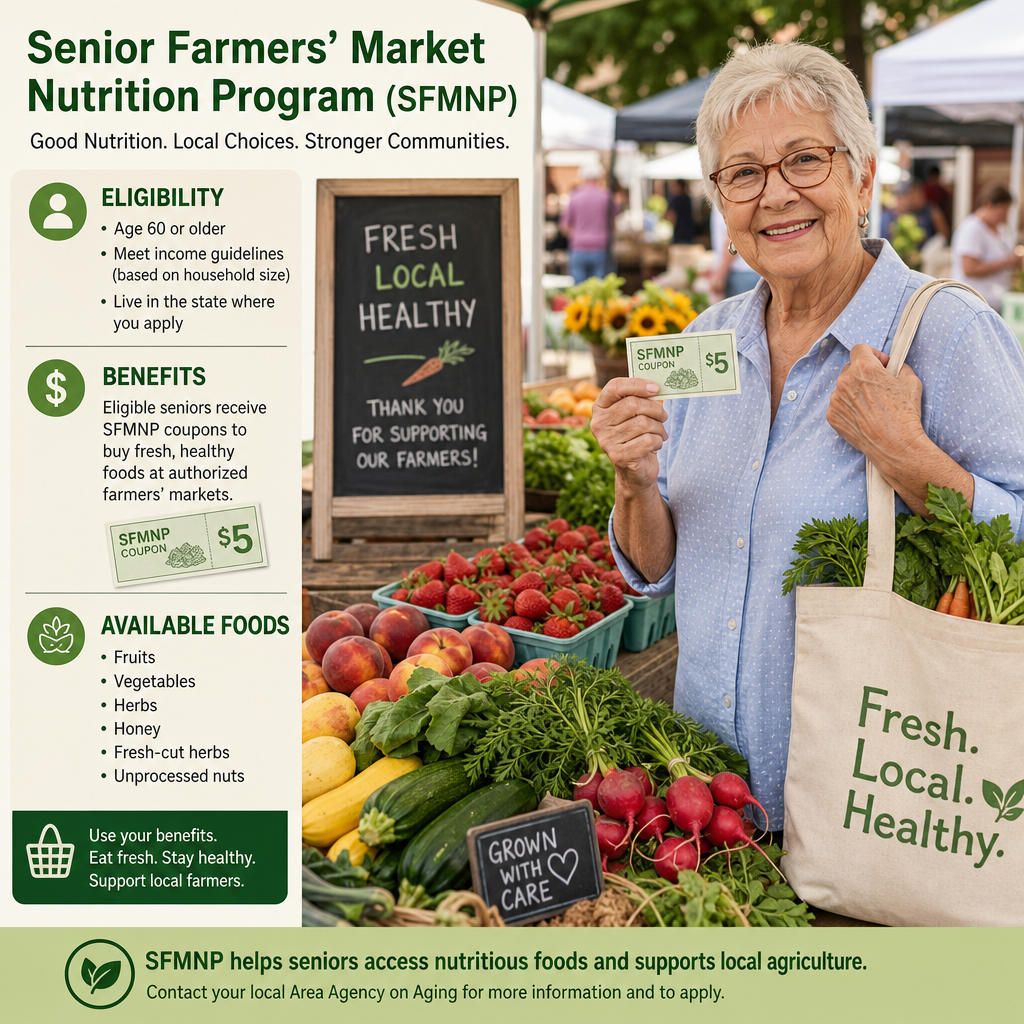
Who Is Eligible?
Eligibility for SFMNP is based primarily on age and income, though exact rules may vary by state. Because each state administers the program slightly differently, it is important to check local guidelines. Still, most programs follow a similar framework.
Age Requirements
To qualify, a person must usually be:
- 60 years of age or older
- In some cases, 55 years or older if participating through certain tribal programs
The age threshold may be different in some locations, but 60 is the most common minimum age for senior participants.
Income Requirements
SFMNP is intended for low-income seniors. Applicants generally must have household income at or below a set limit, often based on the federal poverty level or another state-defined income standard.
Commonly, eligibility is determined by whether the household income falls within a specified percentage of the poverty line. For example, a state may require income to be at or below 185% of the federal poverty guideline, though the exact threshold can differ.
Residency Requirements
Applicants typically need to live in the state or area where they are applying. The benefits are usually not transferable between states, because each local program manages its own coupon distribution and rules.
Other Possible Qualifications
Some states may give preference or priority to seniors who:
- Live alone
- Have limited access to grocery stores
- Participate in other assistance programs
- Reside in senior housing or community care settings
However, these additional factors are not universal. The basic eligibility usually comes down to age, income, and residency.
How to Apply for Benefits
Applying for the program is often simple, though the exact process depends on where you live. In many cases, applications are available through:
- Local Area Agencies on Aging
- Senior centers
- State departments of health or agriculture
- Tribal offices
- Community organizations
- Farmers’ market program offices
Applicants may need to provide:
- Proof of age
- Proof of income
- Proof of residency
- Identification, such as a driver’s license or state ID
Some areas offer walk-in applications during the program season, while others require pre-registration or appointments. Because benefit supplies are often limited, it is wise to apply early.
How the Benefits Work
Once approved, participants receive benefits that can be used at authorized vendors. These benefits may come as paper coupons or electronic cards, depending on the state.
Using Coupons or Vouchers
If the program uses paper coupons, participants can bring them to approved farmers’ markets and exchange them for eligible foods. Vendors then redeem the coupons through the program.
Electronic Benefits
Some states use electronic benefit transfer systems or similar cards. These work like a debit card but can only be used for approved foods and locations. Electronic systems are becoming more common because they can be easier to manage and track.
Seasonal Availability
SFMNP is typically a seasonal program. Benefits are usually available during the summer and early fall, when fresh produce is most abundant. The exact season varies by state and local growing conditions.
Because the benefits are seasonal, it helps to plan ahead. Participants may want to visit markets early and often to use their benefits before they expire.
What Foods Are Available Through SFMNP?
The program is designed to provide fresh, unprocessed, locally grown foods. Approved items focus mainly on produce and related agricultural products.
Eligible Foods
Participants can usually buy:
- Fresh fruits
- Fresh vegetables
- Fresh herbs
- Honey
- Cut herbs in some areas
- Fresh mushrooms in some states
- Peas and beans in their fresh, edible pods
The foods must generally be grown locally by approved farmers and sold at authorized locations.
What Counts as Fresh Produce?
Fresh produce includes items sold in their natural form without heavy processing. Examples include:
- Apples
- Peaches
- Tomatoes
- Cucumbers
- Lettuce
- Spinach
- Carrots
- Squash
- Green beans
- Corn
- Berries
- Melons
This list can vary by region and season, but the key is that the foods are fresh and locally grown.
Honey and Herbs
Some programs allow the purchase of honey and fresh herbs. This can be helpful for seniors who want to add flavor to meals without relying heavily on salt or packaged seasoning mixes. Honey may be especially useful for tea, baking, or as a natural sweetener in moderation.
Foods That Are Usually Not Allowed
The program generally does not cover:
- Processed foods
- Canned fruits or vegetables
- Frozen produce
- Dried fruit
- Baked goods
- Dairy products
- Meat, poultry, or seafood
- Prepared meals
- Nonfood items
Even if a market sells a wide range of products, benefits can only be used for approved items. If a vendor also sells jams, sauces, or packaged snacks, those products are typically not eligible unless the program specifically allows them, which is uncommon.
Where Can Benefits Be Used?
Benefits can only be redeemed at approved locations. This ensures that the food is local and that vendors follow the program’s rules.
Farmers’ Markets
Farmers’ markets are the most common place to use SFMNP benefits. These markets usually feature local growers selling seasonal produce directly to consumers.
Roadside Stands
Some programs also allow spending at roadside stands, especially if they are run by local farmers and meet program standards.
Community Supported Agriculture Programs
In some areas, participants can use benefits with CSA farms. A CSA, or community supported agriculture program, allows consumers to buy a share of a farm’s harvest. This may provide weekly or biweekly boxes of seasonal produce.
Approved Vendors Only
Not every market or farm is approved. Participants should look for signs, ask market managers, or check their local program’s vendor list to confirm where benefits are accepted.
Why the Program Matters for Senior Nutrition
Access to fresh fruits and vegetables is important at any age, but it can be especially valuable for older adults. As people age, nutrition needs may shift, and fresh produce can play a major role in supporting health and wellness.
Helps Improve Diet Quality
SFMNP makes it easier for seniors to add more fruits and vegetables to meals. That can support:
- Better fiber intake
- More vitamins and minerals
- Improved meal variety
- Healthier snacking choices
For example, a senior who uses benefits to buy berries, leafy greens, and tomatoes may find it easier to prepare balanced meals at home.
Encourages Seasonal Eating
Because the program is tied to the local growing season, it encourages people to eat what is fresh and available. Seasonal produce is often at its best in flavor and nutrition, and it can also be more affordable.
Supports Independence
Being able to choose fresh foods at a market can support independence and dignity. Rather than relying only on packaged or shelf-stable foods, seniors can select ingredients that fit their preferences and cooking habits.
Benefits Local Farmers
The program also supports small and medium-sized farms by increasing direct sales. This helps strengthen local food systems and keeps agricultural dollars in the community.
Tips for Making the Most of the Program
A little planning can go a long way when using SFMNP benefits. Since the program is seasonal and often limited, participants may want to use their benefits strategically.
Visit Markets Early in the Season
Popular produce can sell out quickly, especially in busy markets. Shopping early may increase the chances of finding a wide variety of fruits and vegetables.
Ask Farmers What Is in Season
Farmers can tell you what is freshest and most abundant. If you are unsure how to use an unfamiliar vegetable, ask for preparation ideas. Many vendors are happy to suggest simple ways to cook their produce.
Plan Meals Around Available Foods
Try building weekly meals based on what is available at the market. For example:
- Tomatoes, cucumbers, and herbs for salads
- Squash and onions for roasting
- Apples and berries for snacks or breakfast
- Greens and beans for soups or stir-fries
Store Produce Properly
Fresh fruits and vegetables can spoil if stored incorrectly. Keep leafy greens refrigerated, store tomatoes at room temperature if needed, and use berries soon after purchase. Proper storage helps reduce waste and makes benefits go further.
Bring Reusable Bags
Markets may not always provide bags, and carrying produce is easier with reusable shopping bags or baskets. This also makes shopping more convenient and environmentally friendly.
Common Questions About Eligible Foods
Many participants have similar questions about what can and cannot be purchased. Understanding the rules ahead of time can prevent confusion at checkout.
Can Benefits Be Used for Organic Produce?
Yes, if the organic produce is locally grown and sold by an approved vendor, it is usually eligible. Organic status does not change the basic requirement that the food must be approved under the program.
Can I Buy Cut Fruit or Prepackaged Produce?
Usually no, unless the program specifically allows it. Most benefits are limited to whole fresh produce, not prepared or processed items.
Can I Use Benefits at Grocery Stores?
Typically not. The program is designed for farmers’ markets, roadside stands, and CSA programs, not general grocery stores.
Can I Buy Seeds or Plants?
In most cases, no. SFMNP benefits are for eating foods, not gardening supplies. Seeds, seedlings, and live plants are generally not eligible.
How SFMNP Differs from Other Food Assistance Programs
It is easy to confuse SFMNP with other food benefit programs, but they serve different purposes.
SFMNP vs. SNAP
SNAP benefits can be used for a much wider range of groceries at approved retailers, including many packaged foods. SFMNP is much more limited and is focused only on fresh, local produce and similar foods.
SFMNP vs. WIC Farmers’ Market Benefits
WIC farmers’ market benefits are designed for pregnant women, new mothers, infants, and young children who qualify for WIC. SFMNP is for older adults. Both programs may support farmers’ market shopping, but they serve different populations.
Frequently Asked Questions
1. Who qualifies for the Senior Farmers’ Market Nutrition Program?
Applicants generally must be at least 60 years old and have household income within the limit established by the administering agency. Certain tribal programs may serve eligible participants beginning at age 55.
2. Which foods can be purchased with SFMNP benefits?
Benefits may generally be used for eligible locally grown fruits, vegetables, fresh-cut herbs, and honey. The specific foods available depend on local program rules, participating farmers, and the regional growing season.
3. Where can SFMNP benefits be used?
Participants can redeem benefits only through authorized farmers, farmers’ markets, roadside stands, and participating community-supported agriculture programs. They generally cannot be used at ordinary grocery stores.
4. Can SFMNP benefits be used to purchase prepared or processed foods?
No. Products such as prepared meals, baked goods, canned foods, dried fruit, dairy products, meat, seafood, and nonfood items are generally not eligible. The program primarily supports fresh, locally grown agricultural products.
5. How can an older adult apply for SFMNP?
Applicants should contact the SFMNP agency serving their state, territory, tribal organization, or local area. Because the program is seasonal and benefits may be limited, application periods, documents, distribution methods, and deadlines vary by location.
Official Resources
- U.S. Department of Agriculture: Senior Farmers’ Market Nutrition Program
- USDA: 2026–2027 SFMNP Income Eligibility Guidelines
- USDA: Senior Farmers’ Market Nutrition Program Contacts
- USDA: SFMNP Program Regulations
- Electronic Code of Federal Regulations: Senior Farmers’ Market Nutrition Program
Conclusion
The Senior Farmers’ Market Nutrition Program is a valuable seasonal resource for older adults who want better access to fresh, healthy foods. By offering benefits for eligible seniors, the program helps make fruits, vegetables, herbs, and honey more affordable while also supporting local farmers.
Eligibility usually depends on age, income, and residency, and the foods available are limited to fresh, locally grown items sold through approved vendors. With a little planning, seniors can use the program to improve meal quality, explore seasonal produce, and make healthier food choices throughout the market season.