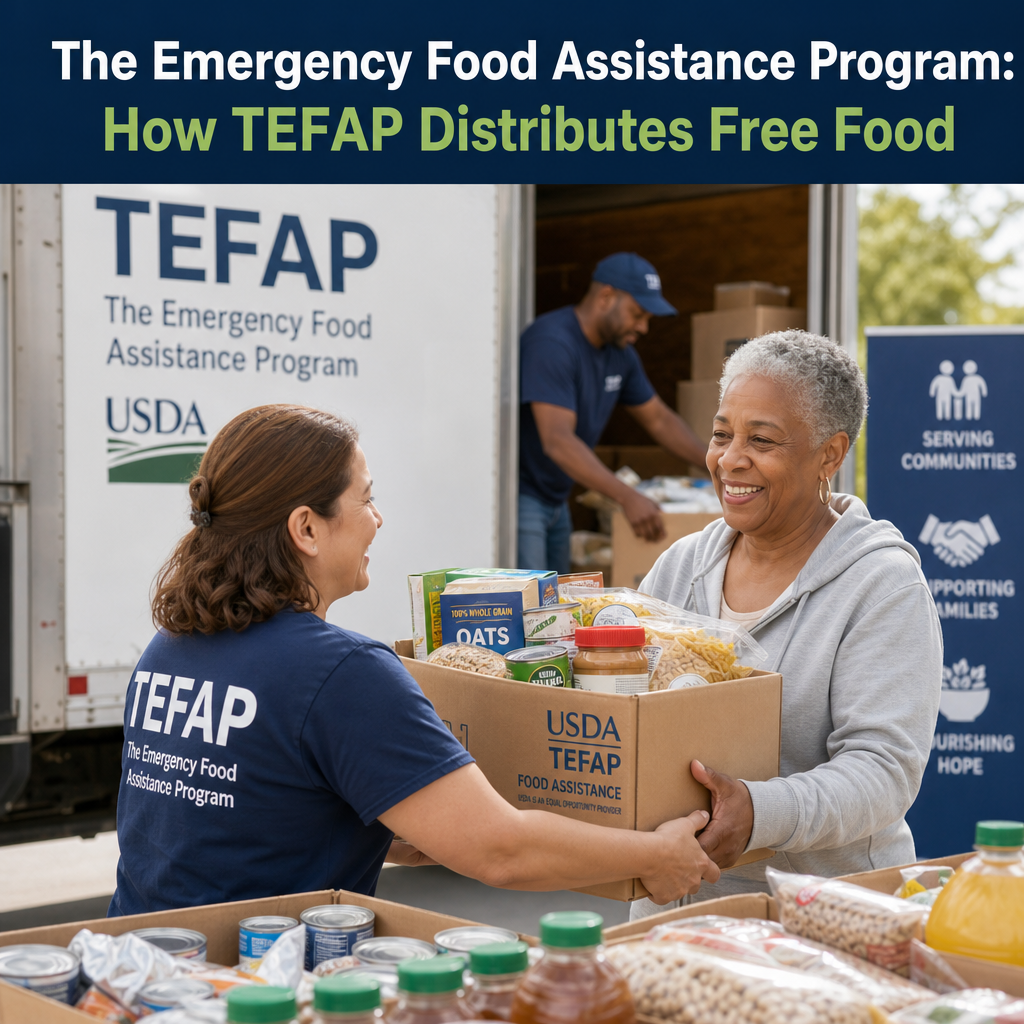
The Emergency Food Assistance Program: How TEFAP Distributes Free Food
The Emergency Food Assistance Program helps connect people facing hardship with free, nutritious food through food banks, pantries, and community organizations. Learn how TEFAP works and how it supports families when they need it most.
By: Emilly Adams on July 28, 2026
When families face sudden job loss, rising grocery prices, medical bills, or a disaster that disrupts daily life, finding enough food can become a serious challenge. In the United States, one of the major safety-net programs designed to help in these moments is the Emergency Food Assistance Program, often called TEFAP.
TEFAP helps provide free food to people in need through a network of food banks, pantries, soup kitchens, and community organizations. It is a quiet but important part of the nation’s hunger-relief system, supplying millions of pounds of nutritious food every year. Understanding how TEFAP works can help people access support when they need it and can also help communities better appreciate the role it plays in fighting hunger.
What Is TEFAP?
TEFAP stands for the Emergency Food Assistance Program. It is a federal food assistance program run by the United States Department of Agriculture (USDA). TEFAP’s main purpose is to distribute USDA foods to people with low incomes through local agencies that can get food into communities quickly.
Unlike some other nutrition programs, TEFAP does not provide monthly benefits directly to individuals. Instead, it supplies food to organizations that then give it out to the public. This makes it a flexible and practical system for reaching families in need.
TEFAP food often includes items such as:
Canned fruits and vegetables
Beans and lentils
Peanut butter
Pasta and rice
Canned meat, poultry, or fish
Milk and dairy products
Frozen foods
Fresh produce, depending on the distribution site
The exact food available can vary by state, season, and supply levels, but the goal is always the same: provide nutritious food to households that are struggling to afford it.
How TEFAP Distributes Free Food
TEFAP works through a partnership between the federal government, state agencies, and local service organizations. The system is designed so that food moves from federal warehouses or suppliers to community distribution points where people can receive it.
1. The USDA Purchases and Provides Food
The USDA purchases food items from American farmers and producers or uses surplus agricultural products to support the program. This means TEFAP not only helps families in need but also supports the agricultural economy.
These foods are then sent to states based on formulas that take into account need, population, and other factors. States receive allocations and decide how to distribute the food within their borders.
2. States Manage the Program
Each state administers TEFAP according to federal guidelines. State agencies decide which local organizations will receive food and how the program will operate in their area.
State agencies often work with:
Food banks
Pantries
Soup kitchens
Homeless shelters
Faith-based charities
Community centers
States also handle recordkeeping, distribution rules, and compliance with federal requirements. While TEFAP is federally funded, the state level is where a lot of the coordination happens.
3. Local Agencies Hand Out the Food
Local partners are the face of TEFAP for most recipients. These organizations distribute food directly to people in need through pantry visits, meal programs, drive-through distributions, and emergency food boxes.
For example:
A food pantry may provide a household with a box of TEFAP items once a month.
A soup kitchen may use TEFAP foods to prepare free meals.
A mobile pantry may bring TEFAP food to rural neighborhoods or areas with limited transportation.
Because local groups are already embedded in their communities, TEFAP can reach people quickly and efficiently.
Who Can Get TEFAP Food?
One of the most important features of TEFAP is that it is intended for people and families with low incomes. Eligibility rules vary somewhat by state, but in many cases people can receive TEFAP food if their household income is at or below a certain percentage of the federal poverty line.
Some states require households to self-declare that they meet income guidelines or are facing food insecurity. In many cases, the process is simple and does not require extensive paperwork. The goal is to reduce barriers so that people can get food without unnecessary delays.
Common situations where TEFAP may help include:
A parent who lost a job and needs help until new work starts
An older adult living on a fixed income
A family with high medical expenses
A household affected by natural disaster or home displacement
A person between paychecks who cannot afford groceries
It is important to note that TEFAP is meant to be accessible. While some sites may ask for basic information, the program is not designed to be complicated or intimidating.
What Kind of Food Does TEFAP Provide?
TEFAP focuses on nutritious staple foods that can support balanced meals. The types of items available depend on USDA purchases and state distribution patterns, but the program aims to include a mix of shelf-stable, frozen, and fresh items when possible.
Vegetables: canned green beans, corn, carrots, frozen vegetables
Fruits: canned peaches, applesauce, fruit cups
Dairy: milk, cheese, yogurt, shelf-stable milk
Other staples: flour, cooking oil, soup, macaroni and cheese
In some areas, TEFAP food boxes may be supplemented with donated items from grocery stores, farms, or community partners. That means a pantry might offer a mix of USDA foods and locally donated products, giving households a more complete set of groceries.
Example of a TEFAP Food Box
A family receiving TEFAP assistance at a pantry might leave with:
A bag of rice
Two cans of vegetables
A box of pasta
Peanut butter
Canned chicken
A bottle of shelf-stable milk
Applesauce cups
Dry beans
This kind of package can help stretch a budget and provide ingredients for several meals.
Why TEFAP Matters
TEFAP plays a critical role in food security across the country. For many households, it can be the difference between going hungry and having enough to eat for the week.
It Helps Fill Gaps in the Food System
Many people who need TEFAP are not completely without resources. They may be working, but not earning enough to cover basic needs. They may have government benefits that do not last all month. They may be facing temporary hardship.
TEFAP helps fill those gaps by providing free groceries and meals when other income sources fall short.
It Supports Local Charities
Food banks and pantries rely on a steady supply of food to serve their communities. TEFAP gives them an important source of staples they can distribute regularly. This reduces pressure on donations alone and helps agencies plan ahead.
It Helps During Emergencies
The “emergency” in TEFAP is not just a name. The program is especially useful when communities are hit by emergencies such as:
Floods
Hurricanes
Tornadoes
Wildfires
Power outages
Economic disruptions
In these situations, food supply chains can break down, stores may close, and families may lose access to groceries. TEFAP gives local agencies a way to respond faster.
How to Find TEFAP Food Near You
If someone needs food assistance, TEFAP is often available through local food banks or pantry networks. Because the program is administered at the state and local levels, the exact process depends on where a person lives.
Steps to Find a TEFAP Distribution Site
Contact a local food bank. Many food banks maintain directories of pantries and meal sites.
Call 211 if available in your area. This referral service can connect people with food programs and other support.
Check state or county human services websites. These often list TEFAP partners and distribution schedules.
Look for community pantries, churches, and shelters. Many partner organizations distribute TEFAP food.
Ask about mobile food distributions. Some areas offer drive-through or pop-up events.
A simple search for local food assistance can often lead to a TEFAP site. In many communities, the sign-up process is quick, and food is available on a regular schedule.
What to Expect at a TEFAP Distribution
People who have never used a food pantry before may feel unsure about what will happen. TEFAP distributions are usually designed to be respectful, private, and efficient.
Typical Process
At a pantry or distribution site, a household may:
Register or check in
Provide basic household information
Confirm income eligibility or self-declare need, depending on state rules
Receive a food box or choose from available items
Take food home the same day
Some sites are appointment-based, while others are walk-in or drive-through. Larger food banks may operate mobile distributions where people line up in cars and receive food without leaving their vehicle.
A Realistic Example
Imagine a mother with two children who recently had her work hours cut. She cannot afford her usual grocery bill this week. She visits a local food pantry that partners with TEFAP. After a short check-in, she receives a box containing pasta, canned vegetables, beans, fruit cups, and peanut butter.
That box may not cover every meal, but it can help her feed her children for several days and free up money for rent, utilities, or gas.
How TEFAP Differs from Other Food Programs
TEFAP is part of a larger nutrition assistance system, but it is different from programs like SNAP or school meals.
TEFAP vs. SNAP
SNAP provides monthly grocery benefits on an electronic card.
TEFAP provides free food through community distribution sites.
SNAP gives households more choice in what they buy, while TEFAP gives immediate access to food items already provided by the program.
TEFAP vs. School Meal Programs
School meals support children during the school day.
TEFAP serves households and community meal sites more broadly.
Families often use more than one program at a time. For instance, a parent may receive TEFAP food from a pantry while their children receive free school lunches.
Challenges TEFAP Faces
Even though TEFAP is a strong support system, it is not without challenges.
Limited Supply
Food availability can fluctuate based on federal purchases, shipping issues, and agricultural supply changes. If a pantry has more families than expected, food boxes may be smaller or less frequent.
Transportation Barriers
Some people who need food assistance live far from distribution sites or do not have reliable transportation. Rural areas may especially struggle with access.
Stigma and Awareness
Some families avoid food assistance because they do not know they qualify or feel embarrassed to ask for help. Community outreach is important to make sure people understand that these services exist to help them during hard times.
Rising Demand
When food prices rise or local economies weaken, demand for TEFAP food increases. Food banks and pantries often have to stretch resources to serve more people with the same or smaller supply.
How Communities Can Support TEFAP
TEFAP depends on a network of public and private partners, and communities can help strengthen that network in several ways.
Ways to Help
Volunteer at a food pantry or distribution event
Donate money to local food banks
Share information about TEFAP sites with neighbors
Support policies that reduce hunger and food insecurity
Organize food drives that complement TEFAP supplies
Even small acts can make a difference when combined with a coordinated food assistance system.
Frequently Asked Questions
1. What is the Emergency Food Assistance Program?
The Emergency Food Assistance Program, commonly called TEFAP, is a federal program that provides USDA foods to people with low incomes at no cost. States distribute the food through local food banks, pantries, soup kitchens, shelters, and other community organizations.
2. Who is eligible to receive TEFAP food?
Eligibility for food packages is generally based on household income and the guidelines established by each state. Some states may also allow participation based on enrollment in other assistance programs. Local distribution sites can explain the applicable requirements.
3. Do TEFAP recipients receive money or an electronic benefits card?
No. TEFAP does not provide cash or an electronic benefits card. Eligible households receive food packages from participating distribution sites or prepared meals from organizations such as soup kitchens.
4. What types of food are available through TEFAP?
Available products may include fruits, vegetables, meat, poultry, fish, beans, rice, pasta, cereal, dairy products, peanut butter, and other nutritious staples. Selection varies according to USDA purchases, availability, and state distribution decisions.
5. How can someone find TEFAP assistance nearby?
People seeking assistance can contact their state TEFAP agency or a participating local food bank or pantry. The USDA National Hunger Hotline can also help individuals locate nearby food assistance programs.
The Emergency Food Assistance Program, or TEFAP, is a vital part of the effort to reduce hunger in the United States. By moving USDA foods through state agencies and local organizations, TEFAP makes free food available to people who are struggling to afford groceries. It supports families, strengthens food banks, and provides an important response during emergencies.
For many households, TEFAP food is not just a box of groceries. It is relief, stability, and a reminder that help is available when times are hard.
Emily A, holds a Master's degree in Public Administration (MPA) and has over 7 years of experience researching federal and state assistance programs. She writes educational content focused on government benefits, public policy, and community resources, using information from official agencies to help readers understand available programs and eligibility requirements.