How AI-Generated Misinformation Is Changing Election Security
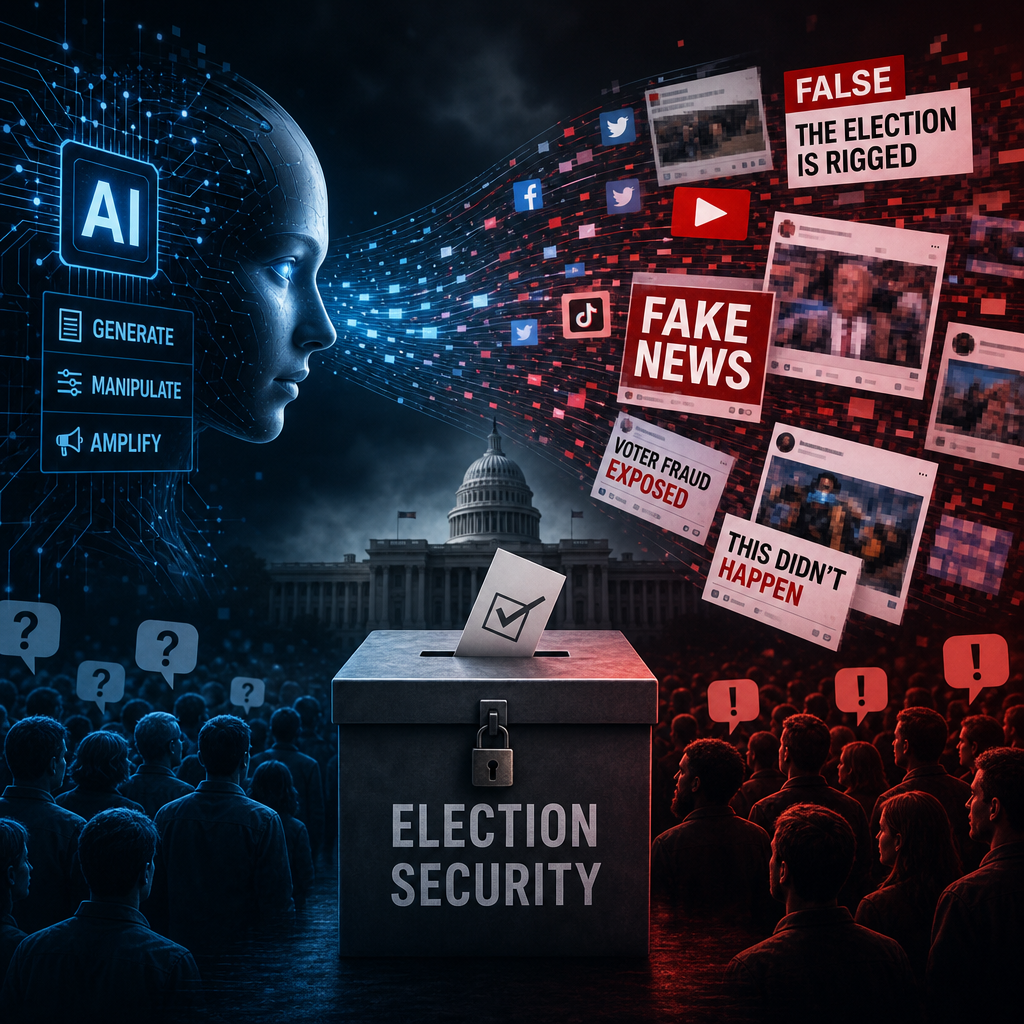
AI-generated misinformation is making election security harder by flooding voters and officials with convincing fake content that can spread in seconds. From deepfakes to cloned voices, these tools can quickly erode trust, confuse the public, and even influence how people vote.
By: Peter on July 27, 2026
Election security used to focus mainly on ballots, voting machines, and cybersecurity defenses against hacking. Those concerns still matter, but a new threat has quickly become impossible to ignore: AI-generated misinformation. With tools that can create realistic images, cloned voices, fake videos, and persuasive text in seconds, malicious actors now have powerful new ways to influence voters, confuse officials, and erode trust in democratic systems.
The danger is not just that false content exists. It is that it can spread faster, look more believable, and be personalized more effectively than ever before. In an election cycle, even a brief wave of convincing misinformation can sway public opinion, suppress turnout, or create chaos around results. Understanding how this threat works is essential for anyone interested in election security.
What AI-Generated Misinformation Means
AI-generated misinformation refers to false or misleading content created or enhanced by artificial intelligence. This can include:
Deepfake videos that make it appear a candidate said or did something they never did
Cloned audio that imitates a politician, election official, or journalist
Synthetic images showing fabricated events, protests, or evidence of fraud
AI-written posts, articles, or comments designed to look human and spread false claims
Automated bots that amplify misinformation at scale across social platforms
While misinformation has always been part of politics, AI changes the scale and sophistication. A misleading meme once required editing skills and time. Now, anyone with access to generative AI tools can produce polished fake content in minutes.
Why Elections Are Especially Vulnerable
Elections depend heavily on public trust. Voters need to believe that the process is fair, the information they receive is accurate, and the results are legitimate. AI-generated misinformation attacks those foundations in several ways.
1. It can spread faster than fact-checking can respond
Traditional misinformation often gave journalists and election officials time to debunk it. AI-generated content can be created and distributed instantly across many platforms. By the time fact-checkers identify a fake video or voice recording, millions of people may have already seen it.
2. It can exploit emotional reactions
False election content often aims to trigger anger, fear, or outrage. AI makes that easier because the material can look and sound incredibly real. A fake video of a candidate making offensive remarks or a fabricated audio clip of an official admitting fraud can cause immediate public reaction before anyone verifies it.
3. It can be targeted to different groups
Generative AI can create many versions of the same lie, tailored to specific communities, languages, or political leanings. One group might see a message about voter suppression, while another sees a false claim about polling locations or ballot rules. This personalization makes misinformation more effective and harder to track.
4. It can undermine confidence even when it is proven false
A damaging effect of AI misinformation is that it can create lingering doubt. Even if a fake is debunked, some people will remember the original claim more strongly than the correction. In elections, that uncertainty can be enough to reduce trust in the process itself.
Common Forms of AI Election Misinformation
AI-generated misinformation appears in several forms, each with different risks.
Deepfake video
Deepfake video uses AI to make a person appear to say or do something they never actually did. A convincing fake clip of a candidate announcing withdrawal from the race, insulting supporters, or confessing wrongdoing could influence voters in the final days before an election.
For example, a short clip posted the night before Election Day could spread quickly enough to affect turnout before it is debunked. Even if the video is later proven fake, the damage may already be done.
Synthetic audio
Cloned voice technology can reproduce a politician’s speech patterns or an official’s voice with striking accuracy. A fake robocall might tell voters that polling places have changed, that they must vote on a different day, or that a candidate has conceded. Because audio messages feel direct and personal, many people trust them before verifying.
AI-generated images
Images are especially persuasive on social media. A realistic but fake photo of election fraud, violent unrest, or a candidate at an inappropriate event can be shared widely in seconds. Unlike text claims, images tend to feel like proof, even when they are manufactured.
False text content
Large language models can generate endless posts, articles, and comments that look authentic. These may imitate local news coverage, issue fake endorsements, or repeat misleading narratives about ballot procedures. Because the writing can be customized for tone and region, it may seem more credible than obvious spam.
Bot-driven amplification
AI does not just create content; it also helps distribute it. Bots can post, like, repost, and comment at scale, making false stories appear popular and trustworthy. This artificial engagement can push misinformation into trending topics and recommended feeds, increasing its reach.
How AI Changes the Threat Landscape
The biggest shift is not simply that misinformation is now easier to produce. It is that the entire information environment around elections becomes harder to defend.
Lower cost, higher volume
In the past, large-scale disinformation campaigns required teams of people and significant resources. Today, a small group can use AI tools to generate a high volume of posts, images, and videos in a short time. That lowers the barrier for malicious actors, including foreign influence groups, partisan operatives, and even individuals with a grievance.
Speed and adaptability
AI allows campaigns to adapt quickly. If a false narrative does not work, new variants can be generated immediately. If one platform removes content, it can be reposted elsewhere with slight changes. This makes enforcement and moderation much harder.
More convincing deception
Human beings are often trained to look for obvious signs of fake content, but AI-generated material is becoming less detectable. Improved facial expressions, better voice synthesis, and more natural language generation all make fake content more believable. The average voter may not have the expertise to tell the difference.
Saturation and confusion
One of the most serious risks is not that people believe one fake story, but that they become overwhelmed by too many conflicting claims. In a “fog of misinformation,” people may stop trusting any source at all. That can be just as harmful as believing a specific lie.
Real-World Election Risks
AI-generated misinformation threatens elections in several practical ways.
Voter suppression
False messages can discourage people from voting by spreading incorrect information about polling places, eligibility, ID requirements, or election dates. A fake message that appears to come from a local election board can be especially harmful in communities with less access to reliable news.
Election-day confusion
If voters receive misleading instructions on the day of the election, even a small percentage of misinformation can create long lines, delayed voting, or complaints at polling stations. Election workers may spend valuable time correcting false claims instead of managing operations.
Candidate reputation attacks
A well-timed deepfake or synthetic audio clip can damage a candidate’s image days or hours before voters head to the polls. In fast-moving news cycles, reputational harm may outpace corrections.
Harassment of election officials
Fake content can also target local officials, judges, or poll workers by falsely accusing them of misconduct or corruption. This can lead to threats, public backlash, and reduced confidence in the institutions that run elections.
Post-election distrust
Even after votes are counted, AI-generated misinformation can fuel claims that the results are illegitimate. False videos or fabricated “evidence” of tampering may intensify conspiracy theories and make peaceful acceptance of results more difficult.
Why Corrections Are Harder Than Before
One of the central problems with AI-generated misinformation is that truth often moves slower than lies.
A correction usually requires:
Identifying the false content
Verifying its source
Coordinating with platforms and media outlets
Reaching the same audience that saw the original claim
That process takes time. Meanwhile, AI-generated content can be reshared in endless variations. By the time one fake is removed, ten more may exist. Corrections also struggle against emotional content. People often remember the sensational claim more strongly than the factual rebuttal.
Another challenge is plausibility. When a fake is realistic enough, debunking it can still leave a residue of doubt. Some people may think, “Maybe it was fake, but maybe there was some truth to it.” That uncertainty weakens confidence in the electoral process.
What Election Officials and Platforms Can Do
Combating AI-generated misinformation requires a layered defense.
Stronger detection and rapid response
Election offices, journalists, and platforms need systems that detect suspicious content quickly. This may include:
AI tools that flag deepfakes or synthetic audio
Monitoring for coordinated bot activity
Rapid verification channels for official statements
Clear incident response plans during election periods
Public communication from trusted sources
Election agencies should communicate early and often. Voters need easy access to official sources for polling locations, registration rules, and ballot deadlines. The more accessible reliable information is, the harder it is for false content to take hold.
Platform accountability
Social media companies play a major role because misinformation often spreads there first. Platforms can reduce harm by:
Labeling manipulated media
Limiting the reach of content that has not been verified
Removing coordinated inauthentic behavior
Supporting election integrity teams during high-risk periods
Watermarking and provenance tools
Some companies are developing ways to mark AI-generated content or trace its origin. Provenance systems can help users see where a video or image came from and whether it has been edited. These tools are not perfect, but they can make deception harder.
Media literacy education
Long-term resilience depends on the public. Voters should be encouraged to verify claims before sharing them, especially during election season. Basic habits such as checking official election websites, looking for corroboration from trusted news sources, and being skeptical of emotionally charged posts can make a meaningful difference.
What Voters Can Do
Individual voters are not powerless. A few practical habits can reduce the impact of AI misinformation.
Pause before sharing: If a post makes you angry or shocked, verify it first.
Check the source: Look for official election offices or reputable news organizations.
Watch for unusual timing: Be extra cautious about dramatic claims right before Election Day.
Look for corroboration: Real news is usually reported by multiple credible outlets.
Use official channels: Confirm voting rules, locations, and deadlines through government sources.
Report suspicious content: Platforms often allow users to flag manipulated or misleading media.
These steps may sound simple, but they matter. Misinformation thrives when people react instantly. Slowing down weakens its power.
The Bigger Democratic Challenge
AI-generated misinformation is not just a technology issue; it is a trust issue. Elections rely on shared reality. People do not have to agree on every policy, but they must agree on the basic facts that allow democracy to function: when and where to vote, who is eligible, how ballots are counted, and whether results are legitimate.
As AI tools become more advanced, the line between real and fake will continue to blur. That does not mean elections are doomed. It means election security must expand beyond technical defenses and include information integrity, public education, and faster response systems.
The goal is not to eliminate every false claim. That may be impossible. The goal is to make sure lies do not outrun truth so completely that voters lose confidence in the process.
Frequently Asked Questions
1. What is AI-generated election misinformation?
AI-generated election misinformation is false or misleading election-related content created or modified with artificial intelligence. It can include deepfake videos, cloned voices, synthetic images, automated social media posts, and fabricated articles.
2. How can deepfakes interfere with an election?
Deepfakes can falsely portray candidates or election officials saying or doing things that never occurred. When released shortly before voting begins or results are announced, this content may create confusion before officials and news organizations have time to verify it.
3. Can AI-generated messages suppress voter participation?
Yes. Malicious actors may use synthetic audio, videos, text messages, or social media posts to spread false information about voting dates, eligibility rules, identification requirements, or polling locations. Voters should confirm these details through official state and local election websites.
4. Can automated tools reliably identify every deepfake?
No. Detection technology continues to improve, but no automated tool can identify every piece of synthetic or manipulated media with complete accuracy. Verification should also consider the original source, supporting evidence, official statements, and reporting from multiple reliable organizations.
5. What should voters do when they encounter suspicious election content?
Voters should pause before sharing the content, investigate its original source, look for confirmation from reputable organizations, and verify election instructions through official government channels. Suspicious messages involving election crimes or voter suppression may also be reported to the appropriate authorities.
AI-generated misinformation is reshaping election security by making false content faster, cheaper, and more convincing than ever before. Deepfakes, cloned voices, synthetic images, and AI-written propaganda can distort public opinion, suppress turnout, and weaken trust in democratic institutions. The threat is serious, but it is not unbeatable.
A combination of stronger detection tools, responsible platform policies, clear official communication, and informed voters can reduce the damage. In the end, protecting elections in the AI era is about more than stopping hacks or securing machines. It is about defending the truth itself.
Peter B holds a degree in Journalism and has 5 years
of experience covering U.S. economic policy, labor markets, and
financial news. He writes data-driven news content on topics
like inflation, interest rates, and employment trends.