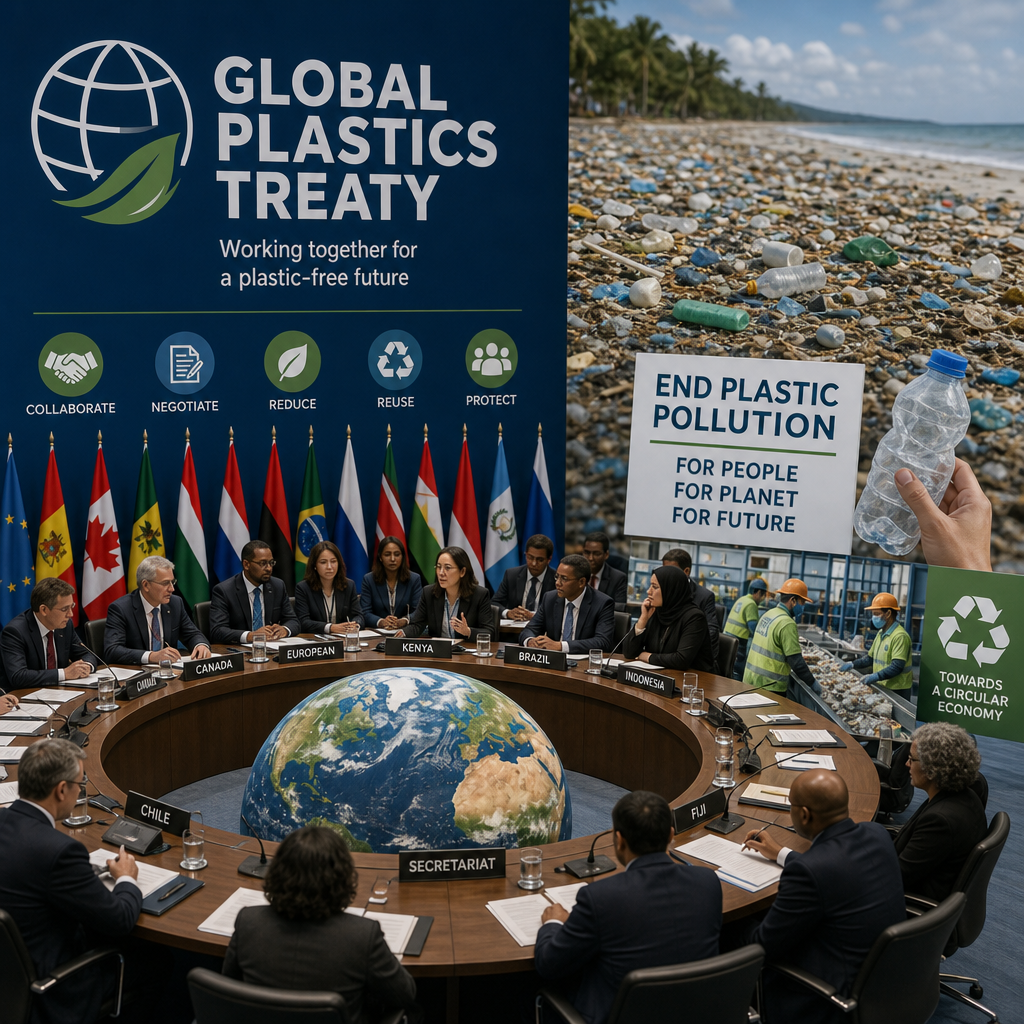
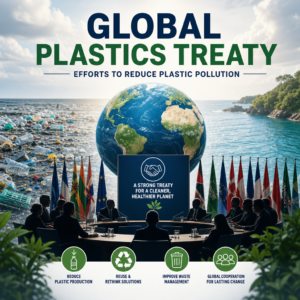
Global Plastics Treaty Efforts to Reduce Plastic Pollution
Plastic pollution has become a global crisis, affecting everything from oceans and wildlife to human health. A new global plastics treaty could help countries work together to reduce waste and change how plastic is made, used, and managed.
By: Peter on July 27, 2026
The Global Plastics Treaty and the Effort to Reduce Plastic Pollution
Plastic has become so deeply woven into modern life that it is easy to forget how recent its rise has been. In just a few decades, plastic went from a miracle material to one of the world’s most persistent environmental problems. It is found in oceans, rivers, soil, air, and even human bodies. From discarded bottles and shopping bags to invisible microplastics, the scale of plastic pollution has pushed governments to consider a historic response: a global plastics treaty.
This treaty is intended to become an international agreement that sets common rules for reducing plastic pollution across its entire life cycle. If successful, it could reshape how plastic is produced, used, reused, and disposed of around the world. But what exactly is this treaty, why does it matter, and what challenges stand in the way?
Why Plastic Pollution Has Become a Global Crisis
Plastic pollution is not a local issue. A plastic wrapper dropped in one city can travel through storm drains into a river, then out to sea, where it may break into smaller fragments and spread across continents. Because plastics are durable, lightweight, and cheap, they are widely used in packaging, consumer goods, construction, and transportation. Unfortunately, those same qualities make them hard to manage once they become waste.
The scale of the problem
Each year, hundreds of millions of tons of plastic are produced globally, and a significant amount becomes waste. Much of it is not recycled. Instead, it is burned, landfilled, or leaked into the environment. Single-use plastics are especially problematic because they are designed to be discarded quickly, often after minutes of use.
Some of the most visible impacts include:
Beaches covered in bottles, bags, and food containers
Wildlife harmed by ingesting plastic or becoming entangled in it
Clogged drainage systems that worsen flooding in cities
Microplastics entering drinking water, seafood, and the air
The problem is not only environmental. Plastic pollution also affects public health, tourism, fisheries, and local economies. In many places, waste management systems cannot keep up with the volume of plastic being generated.
What Is the Global Plastics Treaty?
The global plastics treaty is an international agreement being negotiated under the United Nations Environment Programme. Its purpose is to create legally binding rules to address plastic pollution at a global level. Unlike agreements that focus only on waste management, the treaty aims to consider the full life cycle of plastics—from production and design to consumption and disposal.
A life-cycle approach
This approach matters because plastic pollution cannot be solved by recycling alone. Most plastics are not recycled effectively, and even advanced systems struggle with the diversity of plastic types and additives. A life-cycle approach looks at several stages:
Production – How much plastic is made, and from what materials?
Design – Can products be made easier to reuse, refill, repair, or recycle?
Use – Are there alternatives to unnecessary single-use plastics?
Waste management – How can collection, sorting, and disposal be improved?
Pollution prevention – How can leaks into land, water, and air be stopped?
By addressing each stage, the treaty aims to reduce pollution before it happens rather than relying only on cleanup after the fact.
Why a Treaty Is Needed
Many countries have already introduced bans, restrictions, or recycling programs. So why is a global treaty necessary? The answer is that plastic pollution is international by nature. Supply chains cross borders, waste is traded between countries, and oceans carry debris far from its source. Without shared rules, progress in one country can be undermined by inaction in another.
A patchwork of policies is not enough
Today, plastic regulation varies widely. Some countries have strong bans on certain single-use items. Others have limited waste infrastructure. Some corporations make commitments to reduce packaging or use recycled content, while others continue business as usual. This inconsistency makes it difficult to create a unified global response.
A treaty could help by:
Setting common targets and standards
Creating accountability for governments and industries
Supporting countries with fewer resources
Encouraging innovation in alternatives and circular systems
Reducing the risk of plastic waste being shifted to weaker regulatory environments
In short, the treaty could provide the coordination needed to tackle a problem that no country can solve alone.
Key Issues in the Negotiations
Negotiating the treaty has not been simple. Countries differ in their priorities, levels of economic development, and views on how aggressive the agreement should be. Some want the treaty to include strong limits on plastic production and harmful chemicals. Others prefer a focus on better waste management and voluntary measures.
Production versus waste
One of the biggest debates is whether the treaty should address plastic production itself. Some governments and environmental groups argue that production must be limited if pollution is to decline meaningfully. They point out that if plastic output keeps rising, recycling and cleanup will never catch up.
Others are concerned that production limits could affect industries and jobs, particularly in countries where plastic manufacturing is economically important. These countries may favor measures that improve disposal systems rather than restricting how much plastic is made.
Global rules or national flexibility?
Another issue is how much flexibility countries should have in implementing the treaty. A one-size-fits-all approach may not work because countries differ in infrastructure, resources, and waste patterns. At the same time, too much flexibility could weaken the treaty’s impact.
The challenge is to find a balance between:
Strong global commitments
Practical national implementation
Financial and technical support for lower-income countries
Financing the transition
Reducing plastic pollution is not free. It requires investment in waste collection, recycling systems, product redesign, alternative materials, education, and enforcement. Many developing countries argue that any treaty must include financing mechanisms to help them meet new obligations. Without support, even the best agreement could be difficult to implement.
What a Strong Treaty Could Include
A strong global plastics treaty would likely go beyond simple cleanup measures. It would aim to shift the entire system of plastic use toward sustainability. While the final details are still being negotiated, many experts and advocates support several core elements.
1. Limits on unnecessary plastic production
If the world wants to curb pollution, it must address overproduction. A treaty could establish caps, reduction targets, or phased-down production of certain harmful or nonessential plastics.
2. Restrictions on problematic products
Some plastic items are especially harmful or hard to recycle, such as:
Single-use bags
Foam food containers
Small multilayer packaging
Certain fishing gear and microbead-containing products
The treaty could phase out these items or require safer alternatives.
3. Design standards for recyclability and reuse
Plastic products could be required to meet standards that make them easier to reuse, repair, refill, or recycle. This would reduce waste and support circular systems.
4. Extended producer responsibility
Under this principle, companies that produce plastic products would be responsible for helping manage their waste. This might include funding collection systems, supporting recycling infrastructure, or designing products for longer life.
5. Controls on toxic chemicals
Many plastics contain additives that can be hazardous to health or make recycling harder. A treaty could limit the use of certain chemicals and require greater transparency in product composition.
6. Support for waste collection and cleanup
Even with prevention measures, existing pollution must still be addressed. The treaty could help countries improve collection systems, manage leakage from rivers and coastlines, and clean up polluted areas.
The Role of Business and Industry
Businesses are central to the plastics problem and also to the solution. Packaging companies, consumer brands, petrochemical firms, retailers, and waste management providers all influence how much plastic enters the market and how it is handled after use.
Innovation in packaging and materials
Some companies are experimenting with:
Refillable containers
Compostable or bio-based packaging
Lightweight designs that use less material
Packaging-free retail models
Reuse systems for food and beverage products
These innovations can help reduce waste, but they must be evaluated carefully. Not every alternative is automatically better. For example, some compostable plastics require industrial facilities that are not widely available, and some bio-based materials still create waste if they are used in the same throwaway systems.
Corporate accountability
A treaty may push businesses to take greater responsibility for the plastic they produce. That could mean reporting how much plastic they place on the market, setting reduction goals, or paying into collection and recovery systems. Companies that adapt early may gain a competitive advantage as regulations tighten and consumers demand more sustainable products.
Why Consumer Behavior Still Matters
Although the treaty focuses on international policy, individual and local actions remain important. Consumer choices can reduce demand for unnecessary plastic, especially when combined with better infrastructure and policy changes.
Everyday actions that can help
People can reduce plastic use by:
Carrying reusable bags, bottles, and containers
Choosing products with minimal packaging
Buying in bulk when possible
Supporting refill and reuse services
Sorting waste properly where recycling systems exist
These choices alone will not solve plastic pollution, but they can reinforce larger systemic changes. Public demand also helps encourage companies and governments to act.
Challenges Ahead
The treaty offers real promise, but several obstacles could limit its effectiveness.
Enforcement
A treaty is only as strong as its enforcement. Countries may sign ambitious commitments but fail to implement them fully. Monitoring and reporting systems will be essential to track progress.
Greenwashing
Some organizations may present symbolic changes as major progress without making meaningful reductions. For example, replacing one type of plastic with another may still leave the underlying problem intact.
Unequal capacity
Countries with limited resources may struggle to build waste systems or regulate production. The treaty must account for these differences if it is to achieve global impact.
Dependence on fossil fuels
Plastic is closely linked to fossil fuel extraction and petrochemical industries. As demand for certain energy sources changes, some companies may see plastic production as a growth area. This makes the politics of the treaty especially complex.
What Success Could Look Like
If the global plastics treaty succeeds, the results could be significant. Cities might see less litter and cleaner waterways. Countries could build stronger reuse and collection systems. Companies could redesign products to last longer and generate less waste. Ocean and wildlife ecosystems could face less pressure from plastic debris.
In the long term, success would mean a shift away from a throwaway economy toward a more circular one. Instead of making, using, and discarding plastic at ever-growing rates, societies would focus on reducing unnecessary materials, keeping products in use longer, and ensuring that waste does not leak into nature.
Frequently Asked Questions
1. Has the global plastics treaty already been adopted?
No. As of July 2026, countries have not finalized or adopted the agreement. Negotiations remain underway through the United Nations Intergovernmental Negotiating Committee on Plastic Pollution.
2. Why did the previous treaty negotiations end without an agreement?
The INC-5.2 negotiations concluded without consensus in August 2025 because countries remained divided over issues such as plastic production, chemicals of concern, financing, product restrictions, and whether the treaty should establish global requirements or nationally determined measures.
3. What does the full life cycle of plastics include?
The full life cycle includes raw-material extraction, plastic production, product design, distribution, consumption, reuse, recycling, waste management, and the prevention or cleanup of environmental pollution.
4. Will the treaty legally limit global plastic production?
That has not been decided. Some countries support global measures addressing production and problematic plastic products, while others favor a greater focus on waste management, recycling, and nationally determined policies.
5. When will formal treaty negotiations continue?
The fourth part of the fifth negotiating session, known as INC-5.4, is planned within the period of March 13–24, 2027. Informal meetings and consultations are taking place before that session.
The global plastics treaty represents one of the most important environmental negotiations of our time. Plastic pollution is a complex, worldwide problem that cannot be solved by individual action or isolated national policies alone. A strong treaty could provide the shared rules, accountability, and support needed to reduce pollution across the entire life cycle of plastics.
The path forward will not be easy. Countries must balance environmental urgency with economic realities, and industries will need to rethink long-standing business models. But the stakes are high. A successful treaty could help protect oceans, wildlife, public health, and future generations from the growing burden of plastic waste.
Peter B holds a degree in Journalism and has 5 years
of experience covering U.S. economic policy, labor markets, and
financial news. He writes data-driven news content on topics
like inflation, interest rates, and employment trends.