Global E-Waste Trade: Health and Environmental Impacts
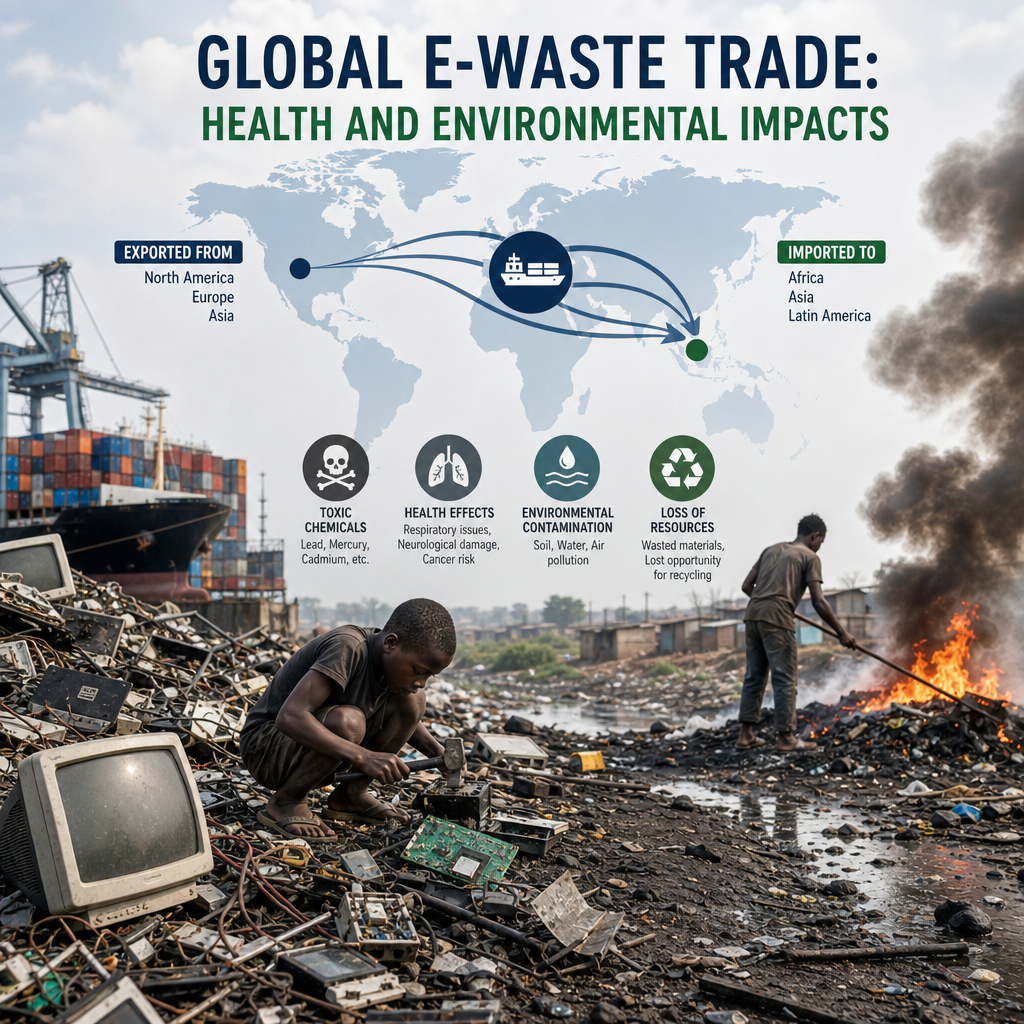
The global e-waste trade moves millions of discarded devices across borders every year, but not all of them are truly reusable. When unsafe shipments end up in places with weak regulations, they can fuel toxic pollution and serious health risks for local communities.
By: Peter on July 27, 2026
Electronic waste, or e-waste, is one of the fastest-growing waste streams in the world. Every year, discarded phones, laptops, TVs, printers, batteries, and other electronics move through a complex global supply chain—often ending up far from the place where they were originally used. The global e-waste trade has become a major environmental and public health issue because it can shift toxic burdens onto communities least equipped to handle them.
At first glance, exporting used electronics may seem practical. Some devices are repaired, reused, or harvested for valuable materials. But when old electronics are shipped without proper controls, the result is often open dumping, unsafe dismantling, burning, and contamination. Understanding the global e-waste trade and its impact on health and the environment is essential for consumers, businesses, and policymakers alike.
What Is the Global E-Waste Trade?
The global e-waste trade refers to the cross-border movement of discarded electronics, used electronics, and components that may be reused, repaired, or processed for materials recovery. In practice, the line between “secondhand goods” and waste is often blurry.
Why electronics are traded across borders
There are several reasons why e-waste moves internationally:
Cost savings: Processing e-waste in countries with stricter environmental standards is expensive.
Demand for used electronics: Some devices still have resale value in lower-income markets.
Material recovery: Electronics contain copper, aluminum, gold, silver, palladium, and other valuable metals.
Weak enforcement: Illegal shipments can slip through customs when inspections are limited.
Not all exports are harmful. Legitimate reuse and refurbishment can extend product life and reduce demand for virgin materials. The problem begins when items are nonfunctional, unsafely handled, or falsely labeled as reusable.
Common pathways of e-waste movement
E-waste often travels from high-consumption countries to regions where:
waste regulations are weaker,
labor is cheaper,
and informal recycling systems fill the gaps left by formal infrastructure.
This trade has been documented in parts of West Africa, South Asia, and Southeast Asia, among other regions. While the destinations vary, the pattern is similar: environmental costs are displaced away from wealthier consumers and onto communities with fewer protections.
Why E-Waste Is Dangerous
Electronics are built from a mix of metals, plastics, glass, and chemical compounds. That combination makes them useful—but also hazardous when discarded improperly.
Toxic substances in e-waste
Many devices contain materials that can harm human health and ecosystems, including:
Lead in circuit boards, solder, and display glass
Mercury in some switches, lamps, and screens
Cadmium in batteries and semiconductors
Brominated flame retardants in plastics and casings
Lithium-ion batteries, which can ignite or leak if damaged
When these materials are burned, crushed, or dumped in landfills, they can enter air, soil, and water.
Why informal recycling increases the risk
In areas without safe recycling facilities, workers may recover metals by:
burning wires to remove insulation,
breaking devices by hand,
using acid baths to extract valuable metals,
or dumping residues in open areas.
These methods release toxic fumes and leave behind contaminated ash, sludge, and dust. The short-term gain from recovering scrap metal rarely offsets the long-term harm.
Health Impacts of the Global E-Waste Trade
The health burden of e-waste often falls on workers, children, and communities living near recycling and dumping sites. Exposure can happen through inhalation, skin contact, ingestion of contaminated dust, or polluted food and water.
Risks to workers
People dismantling electronics without protective equipment may experience:
respiratory irritation,
skin problems,
headaches,
dizziness,
and exposure to metals and chemicals linked to long-term illness.
Repeated exposure to lead, cadmium, and mercury is especially concerning because these substances can accumulate in the body over time.
Risks to children
Children are often more vulnerable because they:
absorb some toxins more easily than adults,
breathe more air relative to their body size,
and may put contaminated objects or hands in their mouths.
In communities where informal e-waste recycling is common, children can be exposed through household dust, contaminated play areas, and family work environments. This creates risks for healthy development, learning, and overall well-being.
Community-wide health effects
The impact doesn’t stop at the recycling site. Pollutants can spread through:
stormwater runoff,
airborne dust,
groundwater contamination,
and smoke from open burning.
Nearby residents may face greater risks of chronic respiratory issues, neurological harm, and other conditions associated with repeated toxic exposure. Even when symptoms are not immediately visible, the environmental damage can persist for years.
Environmental Impacts of E-Waste Trade
The global e-waste trade affects ecosystems in ways that are both direct and long-lasting. Once hazardous substances are released, cleanup is difficult and expensive.
Soil and water contamination
When e-waste is dumped or processed unsafely, heavy metals and persistent chemicals can seep into:
farmland,
rivers,
wells,
and coastal areas.
This contamination can reduce soil fertility, threaten fish and wildlife, and create risks for people who rely on local water sources or homegrown food.
Air pollution from burning and smelting
Open burning is one of the most harmful practices linked to informal e-waste recycling. It can release:
fine particulate matter,
toxic smoke,
and persistent organic pollutants.
These pollutants can travel beyond the immediate worksite, affecting broader air quality and contributing to environmental degradation.
Climate and resource concerns
The issue is not only about pollution. E-waste also reflects inefficient use of resources. Electronics require energy and raw materials to manufacture, transport, and replace. When devices are discarded too quickly, the environmental cost rises across the entire product lifecycle.
A more sustainable approach would prioritize:
longer product lifespans,
repairability,
refurbishment,
and responsible materials recovery.
How the Legal System Tries to Control E-Waste Trade
International and national regulations aim to reduce illegal shipments and ensure safer management of hazardous waste. Still, enforcement remains uneven.
The Basel Convention
The Basel Convention is the key international treaty governing the movement of hazardous waste across borders. It seeks to reduce shipments of waste from richer countries to poorer ones and requires informed consent for many transboundary movements.
However, electronic waste presents a challenge because some shipments are claimed to be “used goods” for resale rather than waste for disposal. That distinction can be exploited to bypass restrictions.
National regulations and enforcement gaps
Different countries have different rules for:
import and export of used electronics,
producer responsibility,
recycling standards,
and hazardous waste handling.
Even where strong laws exist, enforcement can be difficult because shipments may be mislabeled, poorly documented, or routed through intermediaries. Customs officers often face the challenge of identifying whether containers are filled with reusable products or nonfunctional waste.
Extended Producer Responsibility
Many governments now use Extended Producer Responsibility (EPR) policies, which hold manufacturers accountable for the collection and recycling of products after use. EPR can help shift the burden away from municipalities and consumers, but it works best when paired with clear standards, transparency, and effective enforcement.
Why the Trade Persists
The global e-waste trade continues because it is economically convenient for many actors.
Market incentives
Discarded electronics still contain valuable materials, so there is money to be made by collecting, sorting, reselling, or dismantling them. In some places, informal recyclers depend on this income to survive.
Consumer behavior
Frequent device upgrades also fuel the problem. Many people replace electronics before they are fully worn out because of:
new model cycles,
software limitations,
battery degradation,
and marketing pressure.
The faster the turnover, the more waste enters the system.
Gaps in collection and recycling systems
In many countries, consumers have few easy options for returning old electronics. If drop-off programs are inconvenient or unclear, devices often end up in storage, in landfills, or with informal collectors.
What Consumers and Businesses Can Do
Reducing harm from the global e-waste trade requires action at every level. No single solution will fix the problem, but practical choices can make a real difference.
For consumers
You can help reduce e-waste by:
Keeping devices longer when they still work well.
Repairing before replacing whenever possible.
Donating or reselling usable electronics through reputable channels.
Recycling through certified programs rather than tossing electronics in the trash.
Removing personal data before passing a device along.
A smartphone or laptop that gets a second life has a much smaller environmental footprint than one that is discarded early.
For businesses
Organizations can reduce e-waste through:
device life-extension programs,
repair and refurbishment policies,
take-back partnerships,
and responsible procurement practices.
Businesses should also require vendors and recyclers to meet recognized environmental and worker safety standards. The cheapest recycling option is not always the safest or most ethical one.
For policymakers
Governments can strengthen outcomes by:
improving customs oversight,
supporting formal recycling infrastructure,
expanding EPR laws,
and funding public education campaigns.
Policies work best when they make safe choices easy and affordable for everyone.
A Better Future for Electronics
Solving the e-waste problem means rethinking how electronics are designed, sold, used, and recovered. The best solution is not just better recycling—it is less waste in the first place.
Design for durability and repair
Manufacturers can help by building products that are:
easier to repair,
easier to disassemble,
and more upgradeable.
When devices are designed with the end of life in mind, safe recycling becomes more efficient and less hazardous.
Build a circular economy
A circular economy keeps products and materials in use longer through reuse, repair, refurbishment, and responsible recycling. For electronics, this means treating old devices as valuable assets rather than disposable trash.
A circular approach can reduce:
raw material extraction,
pollution from manufacturing,
and the pressure to export hazardous waste.
Frequently Asked Questions
What is considered e-waste?
E-waste includes discarded electronics such as phones, computers, printers, televisions, batteries, cables, and other electrical devices. It can also include broken parts, accessories, and components that are no longer wanted or usable.
Is all international trade in used electronics illegal?
No. Some used electronics are legally exported for reuse, repair, or resale. The problem arises when shipments contain nonfunctional items, are mislabeled, or are sent to places without safe processing capacity. Illegal trade often blurs the line between reusable products and waste.
Why is e-waste recycling in the informal sector a problem?
Informal recycling often lacks protective equipment, pollution controls, and worker training. Methods like open burning and acid extraction can release toxic substances into the air, soil, and water, creating serious health and environmental risks.
How can I dispose of old electronics safely?
Use manufacturer take-back programs, certified e-waste recyclers, municipal collection events, or retailer return options where available. Before recycling or donating, erase personal data and remove batteries if the product instructions recommend it.
What laws regulate the global e-waste trade?
The main international framework is the Basel Convention, which governs hazardous waste shipments across borders. Many countries also have national e-waste rules, import restrictions, and extended producer responsibility policies that require manufacturers to help manage end-of-life electronics.
The global e-waste trade is more than a waste management issue. It is a matter of environmental justice, public health, and responsible consumption. When discarded electronics are shipped without proper safeguards, the risks do not disappear—they move to other communities, often where protections are weakest and the consequences are hardest to reverse.
The good news is that solutions already exist. Better product design, stronger laws, certified recycling, and longer device lifespans can all reduce harm. Consumers can make more thoughtful choices by repairing, reusing, donating, and recycling electronics responsibly. Businesses can adopt take-back systems and partner with reputable recyclers. Policymakers can improve enforcement and invest in safer infrastructure.
If we want a cleaner and fairer electronics economy, we need to treat e-waste as a design problem, a trade problem, and a human problem. The next step is clear: keep devices in use longer, support responsible recycling, and demand systems that protect both people and the planet.
Peter B holds a degree in Journalism and has 5 years
of experience covering U.S. economic policy, labor markets, and
financial news. He writes data-driven news content on topics
like inflation, interest rates, and employment trends.