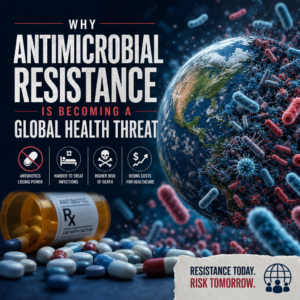
Why Antimicrobial Resistance Is Becoming a Global Health Threat
Antimicrobial resistance is quickly turning once-treatable infections into a major worldwide danger. Learn what’s driving AMR, why it’s spreading so fast, and how it threatens everyday medical care.
By: Peter on July 27, 2026
Why Antimicrobial Resistance Is Becoming a Global Health Threat
Antimicrobial resistance, often shortened to AMR, is one of the most urgent health challenges facing the world today. It happens when bacteria, viruses, fungi, and parasites evolve in ways that make medicines less effective or completely ineffective. In simple terms, the drugs we rely on to treat infections stop working as well as they used to.
That might sound like a problem limited to hospitals or complex medical settings, but AMR affects nearly everyone. It threatens routine surgeries, cancer treatment, childbirth, and the management of common infections. Once treatable illnesses can become dangerous again. As resistance spreads, the global health system faces higher costs, longer hospital stays, and more deaths.
Understanding why antimicrobial resistance is becoming a global threat is essential because the issue is not isolated to one country, one disease, or one type of medicine. It is a worldwide problem driven by human behavior, weak health systems, environmental factors, and the natural ability of microbes to adapt.
What Antimicrobial Resistance Means
Antimicrobials are medicines used to prevent and treat infections. They include:
Antibiotics for bacterial infections
Antivirals for viral infections
Antifungals for fungal infections
Antiparasitics for diseases caused by parasites
Resistance develops when microbes survive exposure to these medicines and continue to multiply. Over time, the strongest and most resistant strains spread. This can happen through mutation or by sharing resistance genes with other microbes.
A common misunderstanding is that the human body becomes resistant. In reality, it is the microbes that change. This distinction matters because it explains why resistance can spread rapidly across communities, hospitals, food systems, and even borders.
Why AMR Is Growing So Fast
AMR is not a new phenomenon. Microbes have always adapted. What has changed is the speed and scale of the problem. Several factors are accelerating resistance worldwide.
Overuse and Misuse of Medicines
One of the biggest drivers of AMR is the overuse of antimicrobials. When these medicines are used too often or in the wrong way, microbes have more opportunities to develop resistance.
Examples include:
Taking antibiotics for viral illnesses like colds or flu
Using antibiotics without a proper diagnosis
Not finishing a prescribed course
Using leftover medicines
Prescribing broad-spectrum antibiotics when a targeted drug would work better
In many places, antimicrobials are also available without a prescription. This can lead to self-medication, incorrect dosing, and inappropriate use.
Use in Agriculture and Livestock
Antimicrobials are not only used in human medicine. They are also used in farming to prevent disease in animals and, in some cases, to promote growth. This practice can encourage the development of resistant bacteria that spread through food, water, soil, and direct contact with animals.
For example, resistant bacteria can move from farm environments into grocery supply chains or nearby communities. This is one reason AMR is often called a One Health issue, meaning it connects human health, animal health, and environmental health.
Poor Infection Prevention and Control
When infections spread easily, antimicrobial use increases. In places with limited access to clean water, sanitation, hygiene, and infection control, more people get sick and more medicines are used. Healthcare facilities can also become hotspots for resistant organisms if hand hygiene, sterilization, and isolation practices are weak.
This creates a cycle:
More infections occur
More antimicrobials are used
Resistance rises
Infections become harder to treat
Slow Development of New Drugs
The pipeline for new antimicrobials has been limited for years. Developing these medicines is scientifically difficult and financially unattractive compared with drugs for chronic conditions. As a result, the world is not producing enough new treatments to stay ahead of resistance.
This is especially concerning because resistance continues to spread while innovation lags behind.
How AMR Threatens Global Health
The rise of antimicrobial resistance is not just a medical issue. It is a threat to public health, economic stability, and modern healthcare systems.
Common Infections Become Dangerous
Today, many infections that were once easy to treat may require stronger drugs, longer treatment, or hospitalization. Simple urinary tract infections, skin infections, pneumonia, and gastrointestinal infections can become much more serious when resistant strains are involved.
In severe cases, infections may become untreatable with existing medicines.
Medical Procedures Become Riskier
Modern medicine depends on the ability to control infection. Surgeries, chemotherapy, organ transplants, and intensive care treatments all rely on effective antimicrobials to prevent or treat infections.
If resistance keeps increasing, procedures that are routine today may carry much greater risk. A minor surgical infection could become life-threatening if no effective antibiotic is available.
Higher Death Rates
AMR is already linked to a growing number of deaths worldwide. As infections become harder to treat, patients may die from illnesses that were once manageable. The burden is especially severe for infants, older adults, and people with weakened immune systems.
Greater Financial Strain
Antimicrobial resistance also places heavy pressure on health systems and families. Resistant infections often require:
More expensive medicines
Longer hospital stays
Extra diagnostic tests
Specialized care
Lost productivity due to prolonged illness
For low- and middle-income countries, where healthcare resources are already stretched, these costs can be devastating.
Why AMR Spreads Across Borders
AMR is a global threat because microbes do not respect national borders. Resistant organisms can spread through:
International travel
Trade and food distribution
Migration
Medical tourism
Environmental routes such as water and waste
A resistant strain that emerges in one region can quickly appear elsewhere. That means no country can solve AMR alone. Even nations with strong healthcare systems remain vulnerable if resistance is rising in other parts of the world.
Globalization has made modern life more connected, but it has also made infectious threats more difficult to contain.
The Role of the Environment
The environment plays a larger role in AMR than many people realize. Antimicrobial residues and resistant microbes can enter water systems through:
Hospital waste
Pharmaceutical manufacturing discharge
Agricultural runoff
Human sewage
Improper disposal of medicines
Once in the environment, resistance genes can circulate among bacteria in soil, water, and wildlife. This creates a reservoir of resistance that can eventually affect human and animal health.
For example, if wastewater treatment is inadequate, resistant bacteria may survive and spread into rivers or coastal areas. Communities using those water sources may then be exposed to hard-to-treat infections.
Why Low- and Middle-Income Countries Are Hit Hardest
Although AMR is a global problem, its impact is often more severe in low- and middle-income countries. Several factors make these regions especially vulnerable:
Limited access to quality healthcare
High rates of infectious disease
Over-the-counter antibiotic use
Inadequate laboratory testing
Weak infection control systems
Poor sanitation and clean water access
Limited surveillance of resistance patterns
In some settings, doctors may prescribe antibiotics without being able to identify the exact cause of infection because diagnostic tools are unavailable or too expensive. This can lead to broad and repeated use of antimicrobials, which drives resistance further.
The result is a dangerous imbalance: the places that need effective medicines most are often the places where resistance is rising fastest.
Real-World Examples of the Threat
AMR is not a future possibility. It is already affecting healthcare around the world.
Drug-Resistant Tuberculosis
Tuberculosis is one of the most serious examples of antimicrobial resistance. Multidrug-resistant TB requires lengthy, complex, and costly treatment. Some patients do not respond to the available medicines, making treatment difficult and outcomes worse.
Resistant Gonorrhea
Certain strains of gonorrhea have developed resistance to multiple antibiotics. This limits treatment options and raises the risk of complications such as infertility and wider transmission.
Hospital-Acquired Infections
In hospitals, resistant bacteria such as certain strains of Staphylococcus aureus or Klebsiella pneumoniae can cause severe infections, especially in patients with open wounds, catheters, or ventilators. These infections can spread quickly if infection control is weak.
These examples show how AMR is not an abstract concept. It is already changing how medicine works.
What Can Be Done to Slow AMR
While antimicrobial resistance is a serious threat, it is not inevitable. Many actions can help slow its spread.
Use Medicines Responsibly
Antimicrobials should be used only when needed and exactly as prescribed. This means:
Avoiding antibiotics for viral infections
Following dosage instructions carefully
Not sharing medicines
Completing prescribed courses when advised
Never using leftover drugs without medical guidance
Improve Diagnostics
Better testing helps healthcare professionals identify the cause of an infection and choose the right treatment. Faster and more accurate diagnostics can reduce unnecessary antibiotic use and improve outcomes.
Strengthen Infection Prevention
Preventing infections reduces the need for antimicrobial treatment in the first place. Key measures include:
Hand hygiene
Vaccination
Clean water and sanitation
Safe food handling
Sterilization in healthcare settings
Proper waste management
Regulate Agricultural Use
Reducing unnecessary antimicrobial use in animals is critical. Policies can encourage better animal care, vaccination, hygiene, and alternatives to routine antibiotic use in farming.
Invest in Research and Development
New antibiotics, antivirals, antifungals, and diagnostic tools are needed. Governments, private companies, and global organizations must support innovation so treatment options do not fall too far behind resistance.
Expand Global Surveillance
Tracking resistance patterns helps public health officials respond more effectively. Better surveillance can reveal where resistance is emerging, how quickly it is spreading, and which interventions are working.
The Importance of Public Awareness
One of the biggest challenges in fighting AMR is that many people do not fully understand it. Because resistance develops gradually, it can be easy to ignore until a serious infection becomes difficult to treat.
Public education is essential. People should know:
Antibiotics do not work for viruses
Misuse can reduce future effectiveness
Prevention is as important as treatment
Personal behavior affects community health
When patients, healthcare providers, farmers, policymakers, and researchers all understand the stakes, progress becomes more possible.
Frequently Asked Questions
1. Does the human body become resistant to antibiotics?
No. Bacteria and other microorganisms develop resistance, not the human body. Resistant microbes can survive treatment, multiply, and spread between people, animals, food systems, healthcare facilities, and the environment.
2. Do antibiotics work against colds and the flu?
No. Antibiotics treat certain bacterial infections and do not work against viruses such as those that cause colds or influenza. Using antibiotics when they are unnecessary can cause side effects and contribute to antimicrobial resistance.
3. How should antimicrobial medicines be taken?
Antimicrobial medicines should be taken only when prescribed and exactly according to the healthcare professional’s instructions. Patients should not skip doses, share medication, save it for another illness, or stop treatment without professional guidance.
4. How does antimicrobial resistance spread?
Resistant microorganisms can spread through direct contact, healthcare facilities, contaminated food and water, animals, international travel, and environmental pollution. Resistance genes may also be transferred between certain microorganisms.
5. How can antimicrobial resistance be reduced?
AMR can be slowed through responsible prescribing, vaccination, hand hygiene, clean water and sanitation, infection prevention, improved diagnostic testing, appropriate antimicrobial use in animals, environmental safeguards, and global resistance surveillance.
Antimicrobial resistance is becoming a global health threat because it undermines the medicines that modern healthcare depends on. Driven by misuse, overuse, weak infection control, agricultural practices, and environmental spread, AMR is making infections harder and sometimes impossible to treat. It threatens routine care, increases costs, and puts lives at risk across every region of the world.
The good news is that this problem can still be managed if action is taken now. Responsible medicine use, stronger prevention, better diagnostics, smarter farming practices, and sustained research can all slow the rise of resistance. AMR is a global challenge, but it is also a shared responsibility—and one that requires urgent attention.
Peter B holds a degree in Journalism and has 5 years
of experience covering U.S. economic policy, labor markets, and
financial news. He writes data-driven news content on topics
like inflation, interest rates, and employment trends.