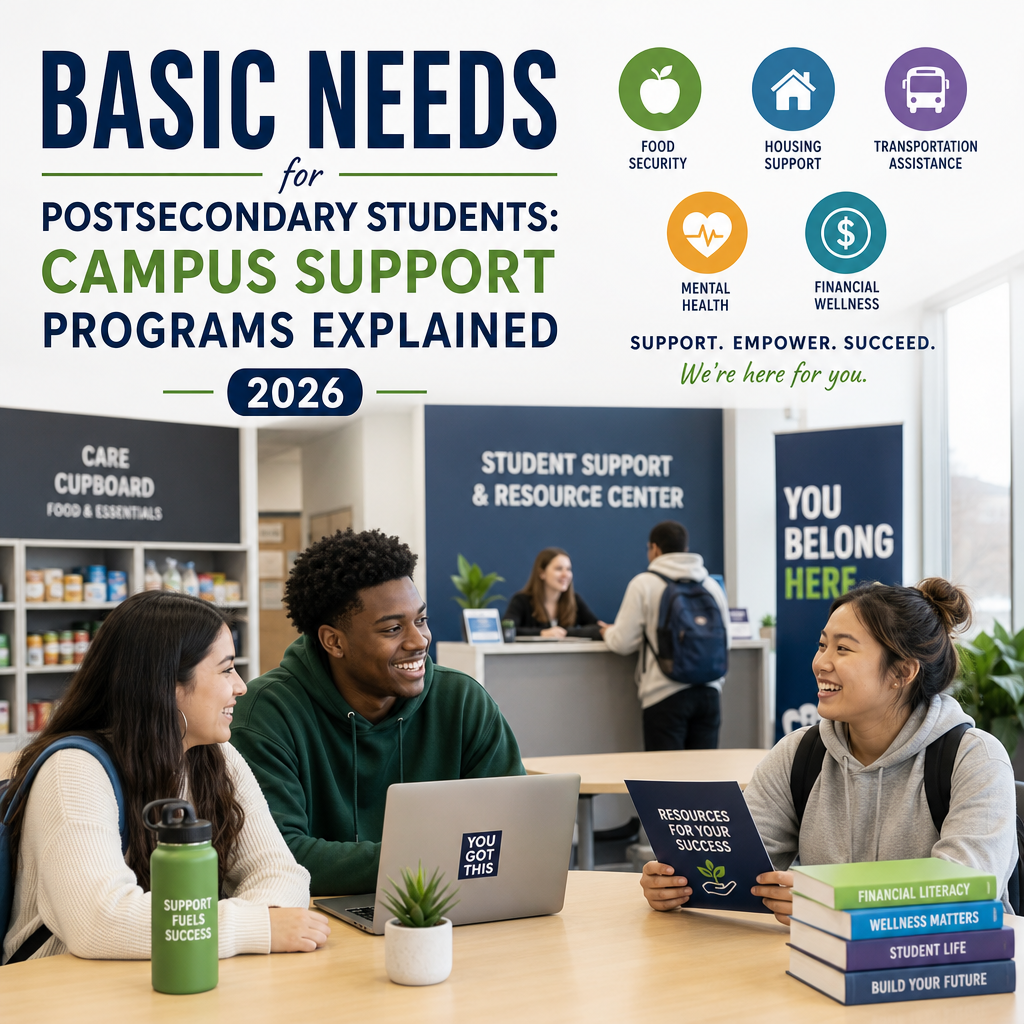
Basic Needs for Postsecondary Students: Campus Support Programs Explained 2026
Basic needs support is becoming a cornerstone of student success in 2026, helping colleges address food, housing, transportation, childcare, and other essentials that can make or break persistence. This article explains how campus programs are meeting those needs and why they matter more than ever.
By: Jennifer Collins on July 27, 2026
College and university life in 2026 looks very different from what it did even a few years ago. Tuition is still high, housing remains expensive, and students are balancing classes with work, caregiving, and mental health challenges. As a result, the conversation around student success has shifted. It is no longer enough for institutions to focus only on academics. Schools must also address the basic needs that allow students to stay enrolled, attend class, and thrive.
Basic needs support is now a central part of student retention and equity strategies across postsecondary education. These programs help students access food, housing, transportation, technology, childcare, emergency funds, and other essentials. When colleges respond to these needs, students are more likely to persist, graduate, and build long-term stability.
This article explains what basic needs programs are, why they matter in 2026, and how campuses are building stronger support systems for students.
What Are Basic Needs in Postsecondary Education?
Basic needs are the essential resources students need to live, learn, and succeed. In higher education, the term usually includes more than tuition and books. It refers to the everyday conditions that make academic participation possible.
Common basic needs include:
Food security: consistent access to nutritious meals
Housing stability: safe and affordable place to live
Transportation: ability to get to campus, work, and appointments
Childcare: support for student parents
Healthcare and mental health services: access to physical and emotional care
Technology access: devices, internet, and software
Emergency financial assistance: help during unexpected hardship
Clothing and personal care items: essentials many students struggle to afford
In practice, basic needs are not separate from academics. A student who is hungry, unhoused, or unable to afford internet service will have a harder time attending class, completing assignments, or staying enrolled.
Why Basic Needs Support Matters More Than Ever in 2026
The need for campus-based support has grown because students are facing multiple pressures at once. Inflation, rising rents, unstable employment, and family responsibilities all affect whether a student can focus on school.
1. Student poverty is still a major barrier
Many postsecondary students live close to the financial edge. Even students with aid may find that grants and loans do not cover the full cost of attendance. For commuter students, adult learners, and students with dependents, the gap can be especially large.
2. The cost of “hidden expenses” keeps rising
Tuition is only part of the cost of college. Students also need:
textbooks and course materials
transportation passes or car repairs
meals on campus
laptop upgrades and Wi-Fi
lab fees and program supplies
These expenses can quickly become unmanageable, especially when they come all at once.
3. Mental health and basic needs are connected
Financial stress and insecurity often affect mental health. Students dealing with food or housing instability may experience anxiety, depression, or burnout. In 2026, many campuses are recognizing that wellness services cannot succeed in isolation; students also need practical support.
4. Retention depends on stability
Students are more likely to leave school when basic needs go unmet. Support programs help institutions keep students enrolled by reducing emergency disruptions. This is not only a student welfare issue but also a strategic one for colleges and universities.
Types of Campus Basic Needs Support Programs
Institutions in 2026 are using a wide range of support programs to meet student needs. Some are direct services provided by the school, while others are partnerships with community organizations.
Food pantries and meal programs
One of the most common forms of campus support is the food pantry. These spaces provide groceries, snacks, and hygiene items at no cost. Some campuses also offer meal swipe donation programs, emergency dining funds, or free meal days during high-need periods such as finals week.
Example:
A community college might operate a pantry open three days a week, stocked with shelf-stable items, fresh produce, and toiletries. Students can visit discreetly and take what they need without a complicated application process.
Housing assistance and emergency shelter referrals
Housing insecurity is one of the most serious threats to student success. Campuses may respond by offering:
short-term emergency housing
hotel vouchers during crises
referrals to local shelters or transitional housing
rent assistance for students facing eviction
campus navigator services to help find long-term housing
Some universities also maintain student housing waiting lists or provide year-round residence hall access for vulnerable students who would otherwise have nowhere to stay during breaks.
Emergency grants and hardship funds
Unexpected expenses can push students out of school. Emergency grants are small, fast-disbursed funds designed to help with urgent needs such as:
broken phones or laptops
utility shutoff notices
car repairs
medical bills
rent emergencies
travel costs due to family crisis
These funds are often one of the most effective interventions because they help students stay enrolled during short-term setbacks.
Transportation support
Commuter students and students in rural areas often face transportation barriers. Colleges may provide:
subsidized bus passes
shuttle services
rideshare discounts
gas cards
parking fee waivers
bike share programs
Transportation support is especially important for students who attend night classes, clinical placements, internships, or multiple campuses.
Childcare resources for student parents
Student parents often juggle class schedules around childcare availability. Basic needs support for these students may include:
campus childcare centers
childcare subsidies
referrals to licensed providers
drop-in care during exams
family-friendly study spaces
parenting resource centers
These supports help student parents remain enrolled and complete degrees while meeting family responsibilities.
Technology and internet access
As classes, assignments, and advising services continue to rely on digital platforms, technology access is now a basic need. Programs may include:
laptop lending libraries
tablet checkout
Wi-Fi hotspot loans
software access
repair services
digital literacy support
Students without reliable technology face serious disadvantages, especially in hybrid or online courses.
Health and mental health support
Health care is another foundational need. Some campuses expand access through:
low-cost health clinics
counseling and crisis support
telehealth referrals
prescription assistance
nutrition education
peer support groups
A growing number of institutions are building integrated wellness centers that combine counseling, health navigation, and basic needs referrals in one place.
How Campus Support Programs Are Changing in 2026
Basic needs services used to be scattered and difficult to find. In 2026, campuses are becoming more intentional about making support visible, coordinated, and easy to access.
1. Centralized basic needs centers
Many colleges now operate a one-stop basic needs center where students can access multiple services in one location. Instead of visiting separate offices for food, housing, emergency aid, and referrals, students can meet with a navigator who helps them identify the right resources.
This model reduces confusion and makes support feel more accessible.
2. Proactive outreach
Rather than waiting for students to ask for help, some institutions are using data and early alert systems to identify signs of need. For example, if a student stops attending class, falls behind on fees, or repeatedly withdraws from courses, the school may proactively reach out with support options.
This approach can prevent crises from escalating.
3. Community partnerships
Colleges are increasingly partnering with food banks, housing nonprofits, healthcare providers, transportation agencies, and local government offices. These partnerships help schools extend their support beyond what the campus can provide alone.
Example:
A university might partner with a city transit agency to offer free bus passes and with a local food bank to stock its pantry with fresh and culturally relevant foods.
4. Student-led design
Institutions are also involving students in the design of support programs. Student advisory boards, focus groups, and peer navigators help campuses understand what barriers exist and how services can be more welcoming and effective.
This matters because students are often the best source of insight about what actually works.
Who Benefits Most from Basic Needs Programs?
All students can benefit from campus support, but some groups are more likely to experience basic needs insecurity.
Students who are often most affected include:
first-generation college students
low-income students
commuter students
student parents
foster youth and students with experience in care systems
homeless or housing-insecure students
undocumented students
students with disabilities
adult learners returning to school
graduate students with limited funding
part-time students balancing multiple jobs
These students may face overlapping challenges. A student parent, for example, may need childcare, transportation, food assistance, and emergency financial aid all at once. Effective programs recognize that needs are interconnected.
What Makes a Basic Needs Program Effective?
Not all support programs are equally helpful. In 2026, effective basic needs systems share several features.
Easy access
Students should not need to complete long, complicated paperwork just to get help. The best programs use simple intake forms, clear instructions, and welcoming spaces.
Confidentiality and dignity
Students are more likely to seek help when they feel respected. Programs should protect privacy and avoid making students feel judged or singled out.
Timely response
A delay of several weeks can be the difference between a student staying enrolled and leaving school. Emergency aid and referrals should be processed quickly.
Clear communication
Students cannot use resources they do not know about. Campuses should promote services through email, text, orientation, advising, syllabi, and campus apps.
Culturally responsive services
Support must reflect the diversity of the student body. That means offering inclusive food options, multilingual materials, accessible spaces, and staff who understand different backgrounds and experiences.
Coordination across departments
Basic needs should not fall through the cracks because offices are siloed. Advising, financial aid, housing, counseling, and student affairs should work together when possible.
Challenges Campuses Still Face
Even with progress, basic needs support in higher education is not perfect. Institutions continue to face practical and financial challenges.
Limited funding
Many campuses have strong intentions but limited budgets. Maintaining pantries, emergency funds, and professional staff requires sustained investment.
Stigma
Some students avoid asking for help because they fear embarrassment or think the resources are “not for them.” Campuses must normalize support as part of student success.
Awareness gaps
Resources often exist but are underused because students do not know where to find them. This is especially true for new students, transfer students, and online learners.
Inconsistent access
Students may find that services are only available during business hours or at one location on campus, which can be difficult for working students. Expanding hours and delivery options can help.
Measuring impact
Schools need better data on what programs work best. Tracking usage, retention, and student satisfaction can guide future improvements, but evaluation takes time and staff capacity.
What Students Can Look For on Campus
Students who need support should know that help often exists, even if it is not obvious at first glance. A campus may not use the phrase “basic needs,” but it may still offer related services.
Students can ask about:
food pantry access
emergency grants
housing assistance
commuter support
student parent resources
laptop loans
counseling services
health clinic services
payment plans or fee appeals
referrals to local agencies
If a school does not have a dedicated basic needs center, student affairs, financial aid, or advising offices are good starting points.
Frequently Asked Questions
1. What are considered basic needs for college students?
Basic needs commonly include food, temporary housing, transportation, physical and mental healthcare, childcare or dependent care, technology, hygiene, and other resources necessary for students to participate consistently in their education.
2. Does every college provide a basic needs center?
No. Services vary considerably between institutions. Some colleges operate centralized basic needs centers, while others provide assistance through financial aid, student affairs, counseling, housing, food pantries, or partnerships with community organizations.
3. Can students apply directly for the federal Basic Needs grant?
No. The federal program awards funding to eligible higher education institutions, systems, consortia, and qualifying nonprofit or public organizations. Students receive assistance through services created or supported by participating institutions.
4. Can college students qualify for SNAP food benefits?
Some college students may qualify for SNAP, but students enrolled at least half time generally must meet income requirements and an additional student exemption, such as qualifying employment, participation in work-study, responsibility for a dependent child, or another applicable condition.
5. Where should students ask for immediate assistance?
Students can begin with their institution’s student affairs, financial aid, counseling, housing, or basic needs office. They should ask specifically about food assistance, emergency grants, temporary housing, transportation, childcare, technology loans, and referrals to public benefit programs.
In 2026, basic needs support is no longer an optional add-on in postsecondary education. It is a core part of helping students remain stable, focused, and successful. Campus support programs for food, housing, transportation, childcare, technology, health, and emergency aid address the real-life barriers that can disrupt learning.
When colleges make these resources easy to access, coordinated, and respectful, students are better able to persist and complete their goals. Supporting basic needs is ultimately about supporting student achievement, equity, and long-term opportunity.
Jennifer, M.Ed., holds a degree in Higher Education Administration, with
a focus on U.S. college financial aid, admissions policy, and student
support systems. She researches and writes about scholarships, federal
aid programs, and the college planning process to help students and
families make informed, well-supported decisions.