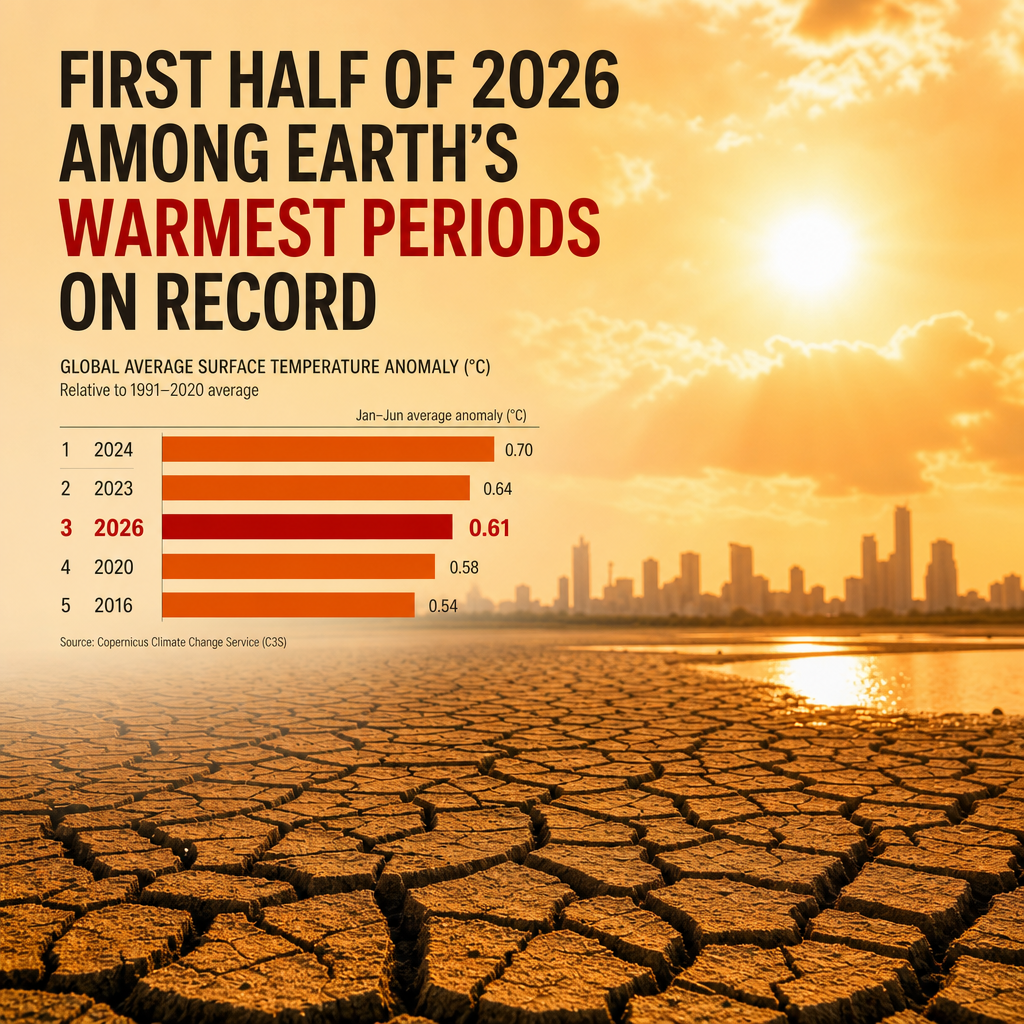
First Half of 2026 Among Earth’s Warmest Periods on Record
The first half of 2026 has landed among the warmest periods on record, underscoring just how persistent global warming has become. It’s a reminder that climate change isn’t just about isolated heat waves—it’s about a long-term shift in Earth’s average temperatures.
By: Peter on July 27, 2026
The first half of 2026 has already earned a place among the warmest six-month periods ever measured on Earth. While six months may seem like a short snapshot in the scale of climate history, records like this matter because they show how persistent and widespread global warming has become. A single hot week can feel like weather. A six-month stretch ranking among the warmest on record points to a climate trend.
Scientists monitoring global temperatures use long-term data from satellites, ocean buoys, weather stations, and climate models to compare each month and year with past conditions. When a period like the first half of 2026 lands near the top of the record books, it signals that heat is not only continuing, but spreading across land and ocean systems in ways that affect ecosystems, agriculture, infrastructure, and human health.
What Does “Warmest Periods on Record” Mean?
When researchers say a period ranks among the warmest on record, they are comparing average temperature across the globe to all other comparable periods in the modern record. This usually means data from the late 1800s onward, when reliable global measurements became available.
Why averages matter
Averages help scientists identify long-term trends instead of focusing on isolated events. For example:
One city may have a cool spring, but global averages may still be unusually high.
A heat wave in one region does not mean every region is hot at the same time.
The world’s oceans can absorb and store heat even when land temperatures fluctuate.
That is why a warm first half of the year is significant. It suggests that heat is embedded in the climate system rather than limited to one or two extreme events.
A record built over months, not days
Temperature records are often broken by tiny fractions of a degree. A difference of 0.1°C may not seem dramatic, but in climate science it can be meaningful. Over a global scale, even slight increases can lead to stronger heat extremes, more moisture in the atmosphere, and rising risks for drought, wildfire, flooding, and coral bleaching.
Why the First Half of 2026 Stood Out
The first half of 2026 was shaped by a combination of long-term warming and short-term climate conditions that amplified heat. Several factors can push global temperatures higher during a given year.
1. Greenhouse gas buildup
The main driver remains human-caused greenhouse gas emissions. Carbon dioxide, methane, and other heat-trapping gases continue to accumulate in the atmosphere. These gases reduce the amount of heat Earth can release back into space, causing global temperatures to rise over time.
This is the background condition that makes record warmth more likely. Even when natural variability shifts temperatures up or down for a while, the long-term trend continues upward.
2. Ocean heat
The oceans play a central role in the climate system because they absorb most of the excess heat trapped by greenhouse gases. When the ocean warms, it can influence atmospheric temperatures, storm patterns, marine ecosystems, and sea level.
A warm ocean surface can also feed more heat and moisture into the air above it, which can intensify humidity and heavy rainfall in some regions. If large parts of the ocean remain unusually warm for months, they can help keep global averages elevated.
3. Natural climate variability
Earth’s climate has natural ups and downs, including patterns such as El Niño and La Niña, which alter heat transfer between the ocean and atmosphere. Warm phases of these cycles often boost global temperatures, while cool phases can temporarily suppress them.
Even so, natural variability is now layered on top of a hotter baseline. That means a moderate natural warming push can produce record-setting results more easily than it would have decades ago.
4. Regional extremes
Extreme heat in many parts of the world can raise the global average further. When multiple continents experience above-normal temperatures at the same time, the effect can be substantial. In recent years, regions across North America, Europe, Asia, Africa, and the Arctic have all seen repeated temperature spikes.
How Scientists Track Global Heat
Global temperature records are built from multiple datasets that each use different methods but generally tell the same story. The consistency across independent measurements gives scientists confidence in the findings.
Main sources of temperature data
Researchers typically combine information from:
Weather stations on land
Buoys and ship measurements across the oceans
Satellite observations of the atmosphere and surface
Climate reanalyses that blend many sources into a consistent global picture
Each method has strengths and limitations. Land stations provide direct measurements but are unevenly distributed, with fewer sites in remote areas. Satellites cover large areas but do not directly measure surface temperature the same way ground stations do. By comparing multiple systems, scientists can cross-check trends.
Why ocean records are especially important
Since more than 70% of Earth’s surface is covered by water, ocean temperature matters enormously. In recent years, marine heat content has reached record highs, and those ocean temperatures influence global climate for months or even years. When the sea is warmer, the planet’s average temperature tends to stay elevated.
Why a Warm First Half Matters So Much
A warm six-month period is more than a statistical milestone. It can have real-world consequences that show up in everyday life.
More intense heat waves
As background temperatures rise, heat waves start from a hotter baseline. That means extreme heat events can become more dangerous and last longer. Cities, where concrete and asphalt trap heat, are especially vulnerable. Higher overnight temperatures also make it harder for the human body to recover.
Stress on water resources
Warm conditions can accelerate evaporation, drying soils and reducing water availability. In many regions, this increases pressure on reservoirs, rivers, and agriculture. Farmers may need more irrigation just as water supplies become less reliable.
Wildfire risk
Heat and dry conditions create fertile ground for wildfires. Even when fire is started by lightning or human activity, hotter and drier landscapes can help flames spread faster and burn more intensely. A prolonged warm stretch can therefore raise fire risk across large areas.
Ocean and coastal impacts
Warm oceans can damage coral reefs, push marine species toward cooler waters, and intensify some storms by providing more energy and moisture. Higher sea temperatures also contribute to long-term sea level rise through thermal expansion, adding to coastal flooding risk.
Health impacts
Extreme heat is one of the deadliest climate-related hazards. It can worsen dehydration, heart problems, kidney stress, and respiratory issues. Vulnerable populations, including older adults, young children, outdoor workers, and people without access to cooling, face the greatest risk.
Examples of What a Warmer Climate Looks Like
To understand why this kind of record matters, it helps to look at the kinds of changes that can happen during a period of sustained warmth.
Example: A summer city heat emergency
Imagine a major city where daytime temperatures hover above 95°F for days and nights remain unusually warm. Air conditioners strain the power grid, emergency rooms see more heat-related cases, and residents without reliable cooling face serious danger. A single record-warm month can make this scenario more likely, but a record-warm half-year suggests the background conditions are already stacked toward heat.
Example: A farming region with declining soil moisture
In an agricultural area, warmer-than-normal conditions can dry out fields early in the season. Crops may need extra irrigation, but water supplies are already under pressure. Reduced soil moisture can lower yields and raise food prices. A sustained warm period can amplify all of these effects.
Example: Coral reefs under pressure
When ocean temperatures remain high for months, coral reefs can bleach, losing the algae they depend on for energy and color. If the stress continues, corals may die. A half-year with widespread ocean warmth can therefore have long-term ecological consequences even if air temperatures later cool slightly.
Why This Record Is Part of a Bigger Pattern
The first half of 2026 did not become one of the warmest periods on record in isolation. It is part of a broader pattern of accelerating heat over the last several decades.
A warmer baseline
Each new temperature record matters because it is being set from a climate that is already warmer than the one before it. This means what used to be considered unusual is becoming more common. Historic heat waves are no longer rare outliers in some places; they are increasingly part of the new normal.
More frequent record highs than record lows
Across many regions, scientists observe that record-high temperatures are becoming much more common than record lows. That imbalance is one of the clearest signs of climate change. It suggests the climate system is not simply bouncing around naturally but shifting in a clear direction.
Long-term consequences
Sustained warming can affect:
Food production
Water security
Public health
Energy demand
Infrastructure durability
Biodiversity and ecosystems
The first half of 2026 is important not because it is a single isolated event, but because it fits into a long trajectory that affects all of these systems.
What This Means for the Rest of the Year
A very warm first half does not guarantee that the rest of the year will set a new annual record. Weather patterns can change, and natural cooling phases can temporarily moderate global temperatures. But when a year starts this warm, the odds of it finishing near the top of the record books increase.
Seasonal risks to watch
A warm start to the year can leave several hazards in place:
Heat waves may become more severe as summer progresses
Drought conditions can deepen if rainfall remains low
Storms may intensify in warmer ocean basins
Wildfire season can start earlier and last longer
Even if the remainder of the year is slightly cooler than the first half, the overall annual average may still remain unusually high.
What Can Be Done
A record-warm period can feel overwhelming, but it also underscores where action is needed.
Cutting emissions
Reducing greenhouse gas emissions is the most important long-term step. That means expanding renewable energy, improving energy efficiency, reducing methane leaks, and decarbonizing transportation and industry.
Building resilience
Communities can reduce harm by preparing for heat and extreme weather. Helpful measures include:
Expanding tree cover and cool roofs in cities
Strengthening power grids
Improving heat warning systems
Protecting water supplies
Updating building standards for hotter conditions
Protecting vulnerable people
Adaptation is not only about infrastructure. It also means ensuring that cooling centers, emergency outreach, and public health resources are available for people at greatest risk during heat emergencies.
Frequently Asked Questions
1. How warm was the first half of 2026 compared with previous years?
According to NOAA, the January–June 2026 global surface temperature ranked as the third highest in the 177-year temperature record.
2. Was June 2026 the warmest June ever recorded?
No. June 2026 was the second-warmest June globally, behind June 2024. However, the global ocean surface temperature reached its highest level recorded for any June.
3. What is the main cause of rising global temperatures?
The primary cause is the accumulation of greenhouse gases from human activities, particularly the burning of fossil fuels. Natural climate patterns can temporarily raise or lower temperatures, but they operate on top of the long-term human-caused warming trend.
4. Why do small increases in the global average temperature matter?
Even a small increase in the global average represents a large amount of additional heat across the atmosphere, oceans, and land. This extra energy can intensify heat waves, heavy rainfall, drought, wildfire conditions, ocean warming, and sea-level rise.
5. Does a warm first half mean 2026 will become the warmest year on record?
Not necessarily. Conditions during the remainder of the year can affect the final ranking. NOAA considers it very likely that 2026 will finish among the five warmest years recorded, but that does not guarantee it will rank first.
The first half of 2026 ranking among Earth’s warmest periods on record is another strong reminder that climate change is no longer a distant concern. It is already shaping temperatures, oceans, weather extremes, and daily life around the world. While one six-month period does not define the future on its own, it adds to a growing body of evidence that the planet is warming in a sustained and consequential way.
The message is clear: the climate system is under pressure, and the effects are showing up not just in headline-grabbing heat waves, but in the global averages that scientists track year after year.
Peter B holds a degree in Journalism and has 5 years
of experience covering U.S. economic policy, labor markets, and
financial news. He writes data-driven news content on topics
like inflation, interest rates, and employment trends.