How Arctic Shipping Routes Are Reshaping Global Maritime Trade
Arctic shipping routes are moving from a remote possibility to a serious trade option, offering shorter paths between major markets while introducing new risks and rules. As these northern corridors open and close with changing ice conditions, they are quickly becoming a key factor in global maritime strategy.
By: Peter on July 27, 2026
Arctic shipping routes are no longer a distant idea discussed only by climate scientists and naval planners. They are becoming a real factor in global maritime trade, changing how cargo moves between Asia, Europe, and North America. As ice conditions evolve and shipping technology improves, the Northern Sea Route, the Northwest Passage, and other polar corridors are drawing interest from carriers, exporters, insurers, and governments.
For businesses that depend on reliable ocean transport, Arctic shipping routes represent both opportunity and uncertainty. They can shorten voyage times in some cases, but they also bring weather risks, seasonal limitations, environmental concerns, and regulatory complexity. Understanding how these routes work helps explain why they are reshaping trade patterns, port planning, and shipping strategy worldwide.
What Are Arctic Shipping Routes?
Arctic shipping routes are sea lanes that pass through or near the Arctic region, offering alternatives to traditional trade corridors such as the Suez Canal or the Panama Canal. The best-known routes include:
Northern Sea Route (NSR): Runs along Russia’s northern coast from the Barents Sea to the Bering Strait.
Northwest Passage: Passes through the Canadian Arctic Archipelago.
Transpolar Route: A potential future route across the central Arctic Ocean, largely dependent on ice conditions.
These routes have long been difficult to navigate because of thick sea ice, limited infrastructure, and extreme weather. But as Arctic ice coverage changes and icebreaker support improves, more commercial shipping companies are watching these corridors closely.
Why Interest Has Grown
Several forces have increased attention on Arctic shipping routes:
Longer trade lanes between major industrial markets
Pressure to reduce fuel use on certain voyages
Shifting seasonal ice patterns
Interest from energy, mining, and resource exporters in the Arctic region
Geopolitical competition over transit control and infrastructure
In short, Arctic shipping routes are no longer just theoretical shortcuts. They are part of a broader conversation about the future of maritime logistics.
Why Arctic Shipping Routes Matter for Global Maritime Trade
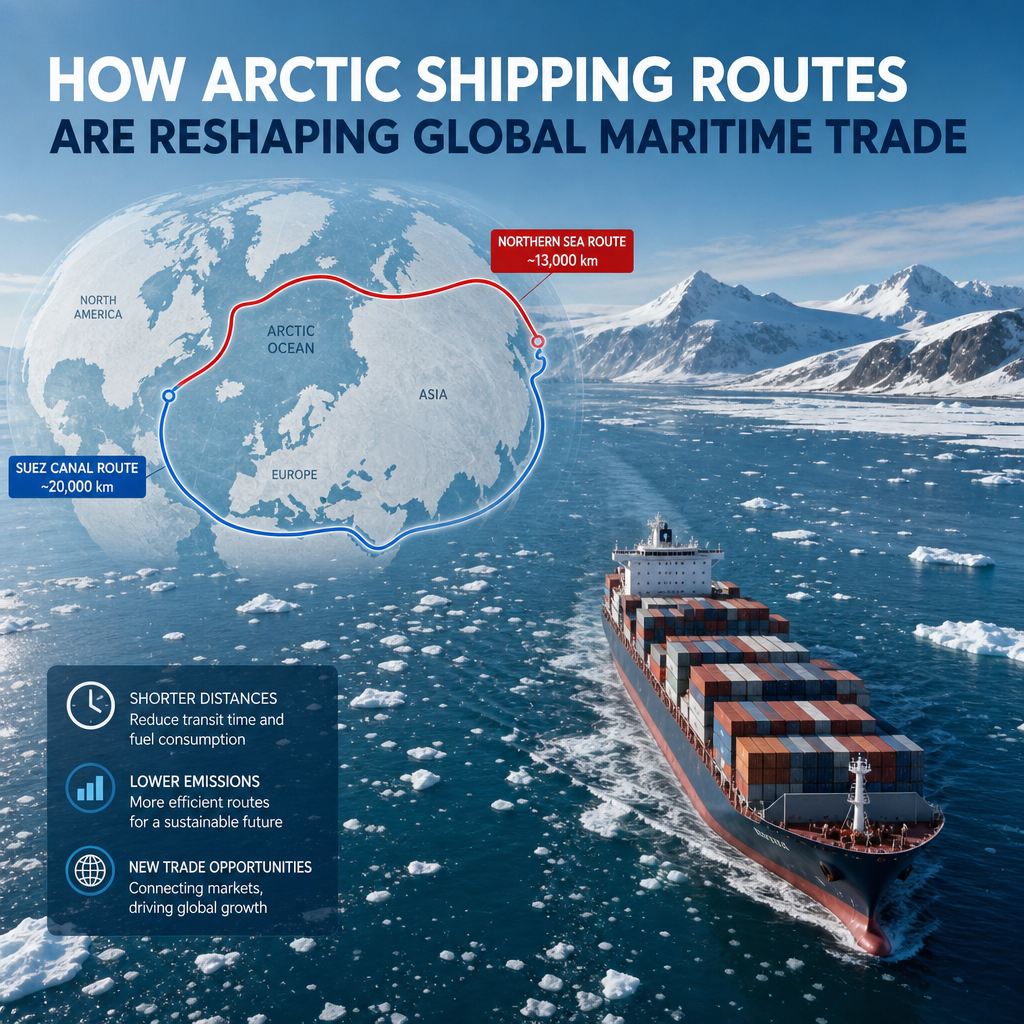
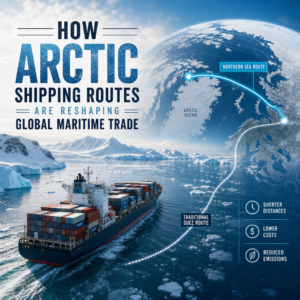
The biggest reason Arctic shipping routes matter is simple: geography. A shorter sea route can reduce transit time, fuel consumption, and operating costs under the right conditions. For time-sensitive cargo, that can create a meaningful competitive advantage.
Shorter Distances, Different Trade Maps
For some voyages, traveling through the Arctic can cut thousands of nautical miles compared with traditional routes. That does not automatically mean every shipment should use these passages, but it does mean shipping companies now have another strategic option.
This affects trade in several ways:
Route planning becomes more flexible
Carrier competition may increase
Ports may need to adapt to new traffic patterns
Cargo scheduling can improve for some lanes
Insurance and risk management become more important
For example, a shipping line moving goods between Northern Europe and Northeast Asia may evaluate whether an Arctic route offers a seasonal benefit compared with a passage through the Suez Canal. Even if the Arctic option is not used year-round, it can still influence pricing and service planning on conventional routes.
Implications for Supply Chains
Modern supply chains depend on consistency. Arctic shipping routes can offer faster transit in specific seasons, but they also introduce variability. Businesses that ship high-value, low-volume, or time-sensitive cargo may find the tradeoff attractive if they can manage the risks.
That said, many industries still prioritize reliability over speed. A route that is shorter but unpredictable may not be the best choice for all cargo types, especially those with strict delivery windows or temperature-sensitive requirements.
The Main Arctic Shipping Routes in Focus
Not all Arctic corridors function the same way. Each route has unique legal, geographic, and operational considerations.
Northern Sea Route
The Northern Sea Route has drawn the most commercial attention because it follows Russia’s northern coastline and can significantly shorten some voyages between Europe and Asia. It is the most developed Arctic route in terms of infrastructure and official oversight, but it is also shaped by Russian regulations, convoy requirements in some cases, and varying ice conditions.
Businesses considering this route must account for:
Seasonal accessibility
Ice class vessel requirements
Navigation support and pilotage
Transit permissions and fees
Political and sanctions-related considerations
Northwest Passage
The Northwest Passage runs through the Canadian Arctic and remains more challenging for commercial use. It is less developed than the Northern Sea Route and generally sees far less traffic. There are also long-standing legal debates about the status of the waters and the degree of regulatory control Canada exercises over them.
For most global carriers, the Northwest Passage is still more of a strategic possibility than a routine commercial lane.
Transpolar Route
The Transpolar Route is the most speculative of the three. It would cross the central Arctic Ocean and could become more practical if ice coverage continues to decline. At present, it is not a mainstream shipping option, but it appears in long-term planning discussions because it could eventually offer a more direct path across the top of the world.
How Arctic Shipping Routes Are Changing Maritime Trade
Arctic shipping routes are reshaping maritime trade not by replacing existing corridors overnight, but by changing the economics and geography of global logistics.
1. They Add a New Layer of Route Competition
Ocean carriers now have more options when planning long-distance voyages. That changes the competitive balance among major trade lanes and can influence freight rates, schedule design, and fleet deployment.
A shipping company may not choose the Arctic every time, but the possibility of doing so affects negotiations and network planning. Traditional routes may remain dominant, yet they are no longer the only game in town.
2. They Encourage Investment in Specialized Vessels
Arctic navigation often requires ships with ice-strengthened hulls and crews trained for polar conditions. That has led to greater interest in specialized tonnage, ice navigation systems, and weather routing tools.
This matters because the shipping industry rarely changes in one leap. It changes through incremental investment:
Ice-class vessels
Better satellite monitoring
Enhanced communications systems
Polar route planning software
Emergency response readiness
As more operators explore Arctic shipping routes, the demand for these capabilities grows.
3. They Influence Port and Infrastructure Strategy
Arctic trade cannot function without supporting infrastructure. That includes ports, search-and-rescue capability, fuel supply, weather forecasting, and emergency response services. Northern ports may benefit from increased activity, but they also face high costs and environmental constraints.
Some ports may invest in:
Storage and transshipment facilities
Cold-weather navigation support
Ice management equipment
Tug and pilot services
Refueling and maintenance options
These investments can reshape regional trade hubs and alter the flow of goods beyond the Arctic itself.
4. They Affect Energy and Resource Shipping
A major share of Arctic maritime activity has historically centered on resource transport, including oil, gas, minerals, and other bulk commodities. Arctic shipping routes can support exports from remote regions where overland logistics are difficult.
For resource producers, shorter shipping distances may improve efficiency. However, market volatility, environmental scrutiny, and infrastructure gaps still limit how far this advantage can go.
The Risks and Challenges of Arctic Shipping Routes
Any discussion of Arctic shipping routes has to include the challenges. The Arctic is not simply another shipping shortcut. It is a harsh operating environment with serious constraints.
Severe Weather and Ice Conditions
Even in a warming climate, Arctic conditions remain dangerous. Ice can shift quickly, fog can reduce visibility, and storms can create hazardous navigation conditions. These factors make voyage planning more complicated than on many established trade lanes.
Limited Search and Rescue Capacity
One of the biggest concerns in Arctic maritime trade is response capability. If a vessel runs into trouble far from major ports, help may take longer to arrive than in more populated shipping regions. That raises operational and safety risks.
Environmental Sensitivity
The Arctic ecosystem is fragile. A fuel spill, grounding, or collision can have long-lasting consequences. For that reason, environmental protection is a major issue in discussions about Arctic shipping routes.
Operators must think carefully about:
Emissions
Waste handling
Spill prevention
Marine mammal protections
Ice and wake impacts
Legal and Geopolitical Uncertainty
Arctic waters intersect with national claims, transit rules, and international law. That means shipping companies need to stay alert to regulatory changes, permitting requirements, and diplomatic tensions.
In practical terms, route selection is not just a question of distance. It is also a question of legal access and political stability.
What Shippers and Logistics Teams Should Consider
Companies exploring Arctic shipping routes should build a clear decision framework before committing cargo.
Evaluate Cargo Suitability
Not every shipment belongs in the Arctic. Ask whether the cargo is:
Time-sensitive
High-value
Able to tolerate seasonal variability
Suitable for cold-weather transport
Part of a long enough lane to benefit from a shorter route
Review Vessel and Crew Readiness
A standard vessel may not be appropriate for polar waters. Crews need specialized training, and operators should understand ice navigation procedures, emergency protocols, and communications requirements.
Factor in Total Cost, Not Just Distance
A shorter route may not be cheaper once you account for:
Ice-class premiums
Pilotage and escort fees
Insurance costs
Delays due to weather
Higher fuel use in difficult conditions
Infrastructure limitations
The best route is the one that works for the full logistics picture, not just the map.
Plan for Contingencies
Arctic shipping requires backup planning. Smart logistics teams should identify alternate routes, contingency inventory strategies, and communication plans in case conditions change suddenly.
The Future of Arctic Shipping Routes
The future of Arctic shipping routes will likely be shaped by a mix of climate trends, regulation, technology, and global demand. Some analysts expect more seasonal traffic and gradually expanding commercial interest. Others argue that harsh conditions and geopolitical risk will keep Arctic shipping niche rather than mainstream.
The most likely outcome is somewhere in between.
Arctic routes will probably remain a specialized option for selected cargoes and specific trade lanes. They may not replace the Suez Canal or the Panama Canal, but they can still influence how carriers design networks and how shippers think about resilience.
Long term, three developments will matter most:
Better climate and ice forecasting
More capable vessels and infrastructure
Clearer international rules for safe transit
If those improve, Arctic shipping routes could become more commercially significant without becoming universally practical.
Frequently Asked Questions
What makes Arctic shipping routes different from traditional shipping lanes?
Arctic shipping routes pass through polar waters where ice, weather, and limited infrastructure create different operating conditions. Unlike major canals or warm-water sea lanes, they often require specialized vessels, careful seasonal planning, and stronger safety measures.
Are Arctic shipping routes open all year?
No, not generally. Accessibility depends on ice conditions, vessel type, and local regulations. Some routes may be available for longer periods in certain years, but year-round commercial use remains limited.
Do Arctic shipping routes always save money?
Not necessarily. While shorter distances can reduce transit time and fuel use, other costs may rise, including ice-class vessel expenses, insurance, escort fees, and potential delays. A full cost analysis is essential.
Which Arctic shipping route is used most often?
The Northern Sea Route has seen the most commercial attention and activity. It is the most developed Arctic corridor, though it still presents major logistical, legal, and environmental challenges.
What industries are most likely to use Arctic shipping routes?
Industries that move bulk commodities, energy products, or high-value cargo on long-distance routes may benefit the most. That includes sectors such as natural resources, manufactured goods, and specialized logistics operations.
Arctic shipping routes are reshaping global maritime trade by introducing new possibilities for faster transit, new competitive pressures, and fresh strategic questions for shippers, carriers, and policymakers. They are not a simple replacement for established corridors, and they will not suit every cargo or every company. But their growing importance is impossible to ignore.
For logistics leaders, the key takeaway is balance. Arctic routes can offer real benefits in the right conditions, yet those benefits come with operational, legal, environmental, and safety challenges that require careful planning. Businesses that understand these tradeoffs will be better prepared to make smart routing decisions, manage risk, and adapt as the Arctic shipping landscape continues to evolve.
If you work in freight, trade, or supply chain planning, now is the time to watch how Arctic shipping routes develop. Even if you never use them directly, they may still influence pricing, schedules, and global trade patterns that affect your business.
Peter B holds a degree in Journalism and has 5 years
of experience covering U.S. economic policy, labor markets, and
financial news. He writes data-driven news content on topics
like inflation, interest rates, and employment trends.