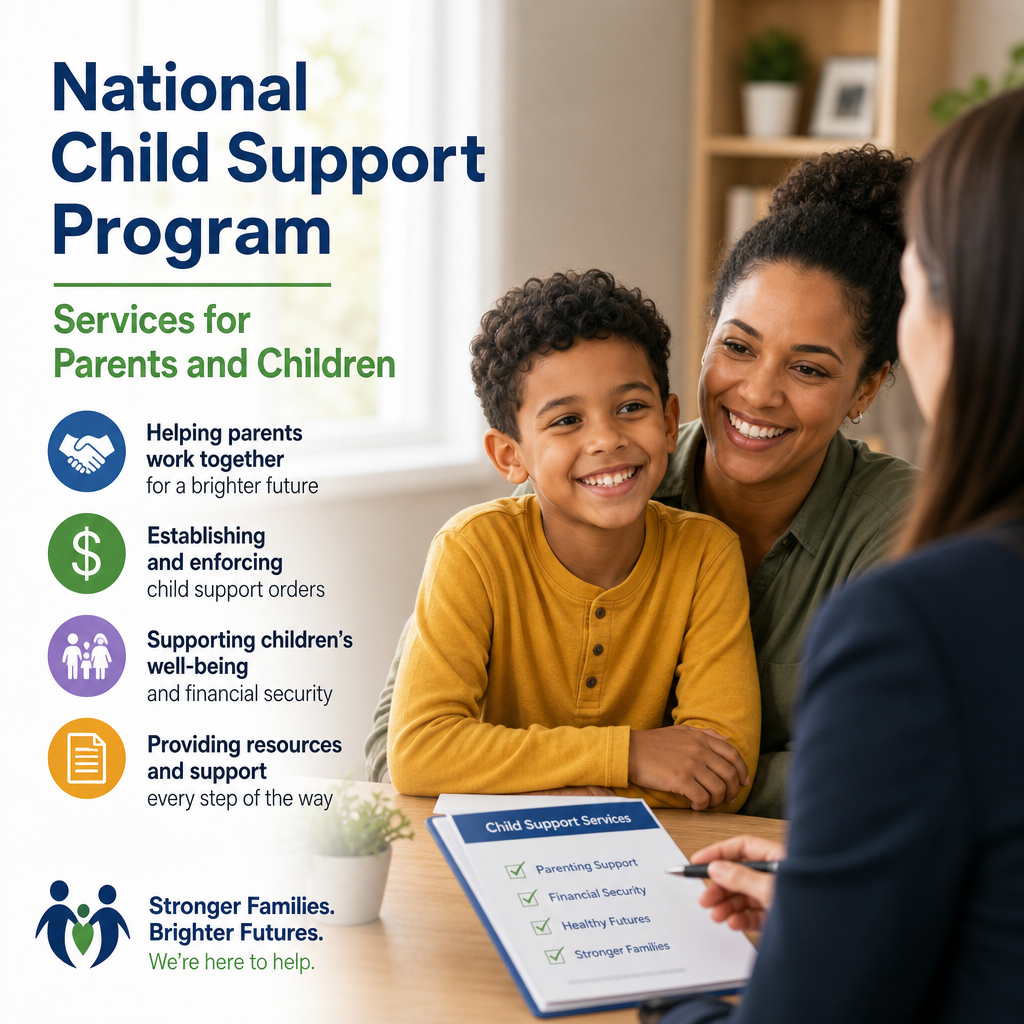
National Child Support Program Services for Parents and Children
The child support program helps parents navigate the often complicated process of establishing, collecting, and managing support payments. By making these services easier to access, it helps ensure children get the care and resources they need to thrive.
By: Emilly Adams on July 28, 2026
Raising children takes time, patience, and money. For many families, child support is an important part of making sure children have the resources they need to grow, learn, and thrive. The National Child Support Program exists to help parents establish, collect, and manage child support in a way that is fair, organized, and focused on the child’s best interests.
Whether parents live together or apart, child support can help cover everyday needs such as food, housing, clothing, school supplies, medical care, and childcare. The program also provides services that make it easier for families to navigate legal and financial responsibilities. Understanding what the program offers can help parents make better decisions and ensure children receive the support they deserve.
What Is the National Child Support Program?
The National Child Support Program is a public service system designed to help families with child support matters. In many countries or regions, this kind of program is operated by a government agency or child support enforcement office. Its main purpose is to make sure children receive financial support from both parents, even when the parents are separated, divorced, or were never married.
The program usually helps with:
Establishing parentage
Setting child support orders
Collecting and distributing payments
Enforcing support obligations
Modifying support orders when circumstances change
These services are especially important for parents who may not know how to begin the child support process or who need help when the other parent is not paying consistently.
Why Child Support Matters
Child support is more than just a monthly payment. It is a way of sharing responsibility for a child’s upbringing. Children benefit when both parents contribute to their well-being, financially and emotionally.
Benefits for children include:
More stable access to essentials like food, housing, and clothing
Better access to health care and school-related needs
Reduced financial stress in the primary household
Greater opportunity for healthy development and long-term security
For custodial parents, child support can reduce the strain of meeting all expenses alone. For noncustodial parents, formal child support arrangements can create a clear and predictable structure for fulfilling their responsibilities.
Core Services Offered by the Program
The National Child Support Program typically provides several key services. These services are designed to help both parents and children by making the support process more efficient and enforceable.
1. Locating a Parent
One of the first steps in establishing child support is finding the other parent. If a parent’s location is unknown, the program may use various tools to locate them.
This can include searching:
Employment records
Tax and income records
Public assistance databases
Motor vehicle or licensing information
Postal or contact records
Locating the parent is necessary so that the support process can move forward, especially when legal notices or court actions are required.
2. Establishing Parentage
Before child support can be ordered, legal parentage may need to be established. This is especially important when a child is born to unmarried parents or when there is uncertainty about the child’s legal father.
The program may help with:
Voluntary acknowledgment of parentage
Genetic testing when needed
Legal paperwork to confirm parentage
Once parentage is established, the child gains legal rights to support, and the parent gains legal responsibilities.
3. Setting Up Child Support Orders
A child support order is a legal decision that determines how much one parent must pay and how often payments are due. The amount is usually based on several factors, including:
Each parent’s income
The number of children involved
Custody arrangements
Health care costs
Childcare expenses
Local or national guidelines
The program helps families create these orders through administrative processes or court proceedings, depending on the system in place.
4. Collecting and Distributing Payments
Once a child support order is in place, the program often handles payment collection. This makes payments easier to track and reduces confusion between parents.
Payments may be collected through:
Wage withholding from an employer
Bank transfer
Online payment portals
Mail-in payments
Government payment systems
After collecting the money, the program distributes it to the parent or guardian caring for the child. This creates a paper trail and helps ensure that payments are received on time.
5. Enforcing Child Support
Not every parent pays child support reliably. When payments are missed, the program may take action to enforce the order. Enforcement services are a major part of the system because they help protect the child’s right to support.
Common enforcement tools include:
Wage garnishment
Tax refund interception
Driver’s license suspension
Passport restrictions
Property liens
Seizure of bank funds
Reporting missed payments to credit agencies
These actions are meant to encourage compliance and make sure support payments are taken seriously.
6. Modifying Support Orders
Life changes. A parent may lose a job, get a new job, become disabled, or have additional children. The child’s needs may also change over time. Because of this, child support orders sometimes need to be reviewed and adjusted.
The program may help parents request a modification when there is a significant change in circumstances. Examples include:
A major change in income
New medical or childcare expenses
Changes in custody or parenting time
A child aging out of certain expenses
Modification helps keep support fair and realistic while still meeting the child’s needs.
Services That Support Children Directly
Although child support systems often work through parents, the ultimate goal is to support children. Some programs also connect families with services that can improve a child’s quality of life.
Medical Support
Child support programs may include medical support orders. These can require a parent to help provide health insurance or contribute to medical expenses.
This may cover:
Health insurance premiums
Doctor visits
Prescription medications
Dental care
Vision care
Emergency treatment
Medical support is especially valuable because children’s health needs can be unpredictable and expensive.
Access to Records
In some systems, child support agencies can help children or custodial parents gain access to important records, such as:
Birth certificates
Social Security information
Paternity documents
Support payment records
These records can be useful for school enrollment, medical care, and legal matters.
Financial Stability for the Child’s Household
When child support is collected consistently, it helps create more stable household finances. That stability can improve the child’s daily life in practical ways, such as:
Keeping utilities on
Paying for transportation to school or activities
Covering after-school care
Reducing the risk of housing insecurity
Even modest payments can make a meaningful difference when they are reliable.
Services That Support Parents
The National Child Support Program is not only about collecting money. It also offers services that help parents understand their rights and responsibilities.
Guidance Through the Legal Process
Child support cases can be confusing, especially for parents who are dealing with separation, divorce, or changes in custody. The program often provides forms, instructions, and case workers who explain the process.
Parents may receive help with:
Filing applications
Responding to paperwork
Understanding deadlines
Attending hearings
Interpreting support orders
This guidance can be especially helpful for parents who do not have a lawyer.
Payment Tracking and Account Information
Many programs provide payment records so parents can track what has been paid, what is owed, and what remains outstanding. This transparency reduces disputes and helps parents stay organized.
A payment history can show:
Dates of payments
Amounts received
Missed payments
Outstanding balances
Adjustments or credits
Having clear records can prevent misunderstandings and make it easier to resolve problems.
Customer Support and Case Management
Some families need more individualized help. Case workers or support staff may assist with questions, paperwork, or referrals to other services.
This can include help with:
Updating contact information
Reporting changes in employment
Resolving payment issues
Understanding enforcement actions
Requesting modifications
For many parents, this support makes the process much less intimidating.
Special Circumstances the Program Can Address
Every family is different. Child support programs often have procedures for handling more complex situations.
When a Parent Is Unemployed or Underemployed
If a parent cannot afford payments because they are unemployed or earning less than before, the program may review the case. However, the parent usually must provide proof of the change and request a modification.
This is important because child support should be fair, but parents also need a realistic payment amount they can manage.
When Parents Share Parenting Time
Some parents have shared custody or joint parenting time. In these cases, support may still be required, but the amount may be adjusted based on how much time each parent spends with the child and how much each contributes financially.
The program helps make these calculations more consistent and objective.
When There Are Multiple Children or Families
Some parents have support obligations to children in more than one household. This can create complicated financial situations. Child support agencies help determine how obligations are calculated and whether adjustments are appropriate under the law.
When a Parent Lives in Another State or Country
Cross-jurisdiction cases are common. If parents live in different regions, the program may work with other agencies to locate the parent, establish orders, and collect support across borders.
This cooperation is essential for families who have moved or relocated after separation.
How Families Can Benefit from the Program
The National Child Support Program offers benefits that go beyond legal enforcement.
For children, it can mean:
Greater financial security
Better access to health and school needs
More consistent living conditions
Reduced stress in the home
For custodial parents, it can mean:
Less financial pressure
Support in navigating legal requirements
Easier collection and tracking of payments
Help with modifying orders when needed
For noncustodial parents, it can mean:
A clear understanding of obligations
Structured payment options
Official records of payments made
A path to request changes if circumstances change
In many cases, the program helps reduce conflict by creating a formal system both parents can follow.
Common Misunderstandings About Child Support
Many people have misconceptions about how child support works. Clearing up these misunderstandings can help families approach the process more confidently.
“Child support is only about paying the other parent.”
In reality, child support is for the child’s benefit. The payments help cover the child’s day-to-day and long-term needs.
“If I don’t see my child, I shouldn’t have to pay.”
Child support and visitation are separate issues. A parent’s obligation to pay support usually does not depend on whether parenting time is being exercised.
“If I lose my job, I can stop paying.”
A financial setback does not automatically cancel child support. The parent usually needs to request a formal review or modification.
“The program only helps the custodial parent.”
The program also provides services to noncustodial parents, including payment records, case information, and modification requests.
Tips for Parents Working with Child Support Services
Parents can often make the process smoother by staying organized and proactive.
Helpful steps include:
Keep copies of all court orders and notices
Update your contact information promptly
Save proof of income, expenses, and payments
Report major changes in employment or custody
Respond to agency requests on time
Ask questions if anything is unclear
Being prepared can help avoid missed deadlines, payment errors, and unnecessary stress.
Frequently Asked Questions
1. What services does the National Child Support Program provide?
Child support agencies can help locate parents, establish legal parentage, set support orders, collect and distribute payments, enforce obligations, and review orders when circumstances change.
2. How can a parent apply for child support services?
Parents and legal guardians should contact their state, tribal, or local child support agency. Depending on the location, applications may be accepted online, by mail, or through a local office.
3. Does the child support program handle custody or visitation disputes?
No. Child support, custody, and visitation are generally treated as separate legal matters. Parents needing assistance with custody or parenting time may need to contact a court, attorney, or legal aid organization.
4. What should a parent do after losing a job or experiencing an income change?
The parent should contact the child support agency promptly and ask whether the order qualifies for review or modification. The existing obligation normally remains in effect until it is formally changed.
5. Can child support be collected when parents live in different states or countries?
Yes. State child support agencies coordinate interstate cases through designated offices. The program can also assist with certain international cases when the other parent lives in a country with an applicable child support arrangement.
The National Child Support Program plays an important role in helping families meet children’s financial needs. Through services like locating parents, establishing parentage, setting support orders, collecting payments, enforcing obligations, and modifying orders when circumstances change, the program creates a structured system that supports children’s well-being.
For parents, it offers guidance, accountability, and practical tools for managing child support responsibilities. For children, it helps provide the financial stability and resources they need to grow up with greater security. In the end, the program’s services are about more than money—they are about helping families create a stronger foundation for the future.
Emily A, holds a Master's degree in Public Administration (MPA) and has over 7 years of experience researching federal and state assistance programs. She writes educational content focused on government benefits, public policy, and community resources, using information from official agencies to help readers understand available programs and eligibility requirements.