Weatherization Assistance Program: Free Home Energy Improvements Explained
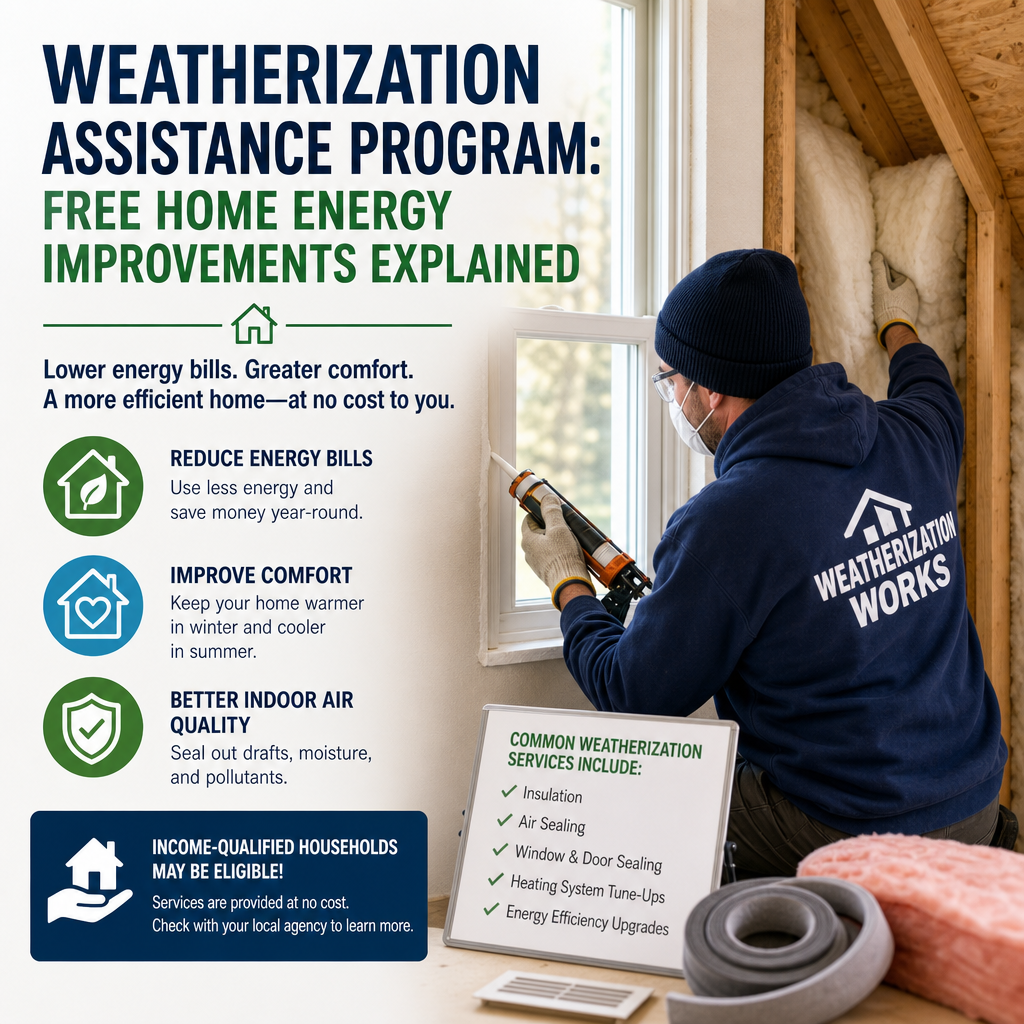
The Weatherization Assistance Program helps eligible households cut energy costs by making their homes more efficient at no cost. From sealing leaks to improving insulation and safety, it can make a home more comfortable year-round while lowering monthly bills.
By: Emilly Adams on July 28, 2026
Rising utility bills can put real pressure on a household budget, especially when a home leaks heat in winter or loses cool air in summer. The Weatherization Assistance Program (WAP) was created to help reduce those costs by making homes more energy efficient at no cost to eligible households. For many families, this program can mean lower monthly bills, a more comfortable living space, and improved safety all at once.
If you have heard of weatherization but are not sure what it actually covers, how to qualify, or what kinds of improvements are included, this guide breaks it down in plain language.
What Is the Weatherization Assistance Program?
The Weatherization Assistance Program is a federally funded initiative designed to help low-income households reduce their energy use. It is administered through states, local agencies, and community organizations. The goal is simple: improve the efficiency of homes so residents use less energy to stay warm in winter and cool in summer.
Unlike a loan or rebate program, WAP is usually free for eligible households. That means approved participants do not have to pay out of pocket for the services they receive.
The program has been operating for decades and has helped millions of families across the United States. It is especially valuable for households that spend a large portion of their income on energy bills or live in older homes that have poor insulation, drafty windows, or outdated heating systems.
How Weatherization Helps Homeowners and Renters
Weatherization is about more than just sealing a few gaps around the house. The program takes a whole-home approach to energy efficiency and safety. That means trained professionals evaluate the home and recommend improvements that will have the biggest impact.
Here are some of the main benefits:
Lower energy bills
Better indoor comfort
Fewer drafts and cold spots
Improved heating and cooling performance
Safer home conditions
Reduced moisture and mold risk
For example, a family living in an older home with poor attic insulation may notice that the upstairs bedrooms are freezing in winter and unbearably warm in summer. After weatherization, the home may hold temperature better, reducing the need to constantly run the furnace or air conditioner.
Even renters may benefit if their landlord agrees to participate or if the program rules in their area allow rental weatherization.
What Improvements Are Included?
The exact services vary by home and location, but the program typically focuses on cost-effective energy-saving measures. The goal is to get the greatest energy savings for each home within the available budget.
Common Weatherization Services
Some of the most common improvements include:
Sealing air leaks around doors, windows, and vents
Adding attic, wall, or floor insulation
Repairing or replacing broken windows
Weatherstripping doors and openings
Improving heating and cooling system efficiency
Repairing ductwork
Installing energy-efficient lighting
Fixing minor health and safety issues related to energy use
Energy Audits and Home Inspections
Before any work begins, most homes receive an energy audit or inspection. This allows the weatherization agency to identify where the home is losing energy and what improvements are most needed.
During the evaluation, a technician may check:
Insulation levels
Air leakage
Furnace performance
Water heater efficiency
Ventilation
Signs of moisture or mold
Combustion safety issues
This assessment helps determine the most effective upgrades for that specific home. For example, if a home already has decent insulation but has large leaks around the attic hatch and basement rim joists, sealing those leaks may be prioritized over other measures.
Who Is Eligible for the Program?
Eligibility is based mainly on income, household size, and sometimes special circumstances. Because the program is administered locally, exact requirements can vary by state or agency.
In general, priority is often given to:
Households with income at or below a certain percentage of the federal poverty level
Families receiving public assistance
Households with elderly residents
Homes with children
People with disabilities
Households with high energy burdens
Income Guidelines
Most programs use income limits tied to the federal poverty level or state-specific guidelines. In some cases, households already enrolled in programs like Supplemental Security Income, Supplemental Nutrition Assistance Program, or Temporary Assistance for Needy Families may qualify automatically or receive priority.
Renters and Homeowners
Both homeowners and renters may qualify, though the process can be different.
Homeowners can usually apply directly if the home meets program requirements.
Renters may need landlord approval before work can begin.
Multi-family properties may also qualify in some cases, especially if the building serves low-income residents.
If you rent, it is worth asking your local weatherization agency whether your unit is eligible. Even if you do not own the property, you may still be able to benefit from reduced bills and better comfort.
What Does the Application Process Look Like?
The application process is usually straightforward, but it can take time depending on demand and local resources. Here is a typical step-by-step overview.
1. Find Your Local Weatherization Agency
Each state has designated agencies that handle weatherization applications. These are often community action organizations or nonprofit partners.
You can usually find the correct agency by searching your state’s weatherization assistance resources or contacting your local social services office.
2. Submit an Application
Applicants generally need to provide basic household information, including:
Names and ages of household members
Address
Proof of income
Utility account information
Proof of public assistance, if applicable
Some agencies allow applications online, while others require paper forms or in-person appointments.
3. Home Assessment
If you appear eligible, a technician will visit your home to conduct an energy audit or inspection. This step helps determine which improvements are necessary.
4. Work Is Scheduled
Once the agency approves the recommended work, contractors or trained staff perform the improvements. Depending on the home’s condition and the agency’s workload, this can happen quickly or take several months.
5. Final Review
After the work is completed, the home may be checked again to ensure the improvements were installed correctly and safely.
Examples of Real-World Weatherization Benefits
To understand how weatherization works in practice, it helps to look at a few common situations.
Example 1: An Older Home With Drafty Windows
A family living in a 1950s home may notice cold air coming through windows and floors during winter. Their heating system runs constantly, but some rooms never feel warm enough. After the weatherization audit, the agency seals air leaks, adds attic insulation, and replaces worn weatherstripping. As a result, the furnace does not have to work as hard, and the home holds heat much better.
Example 2: A Renter With High Summer Cooling Bills
In a small apartment, the air conditioner may run all day without keeping the place cool. A weatherization team finds gaps around the windows and poor insulation in the attic space above the unit. After sealing leaks and improving insulation, the apartment stays cooler for longer periods, and the tenant sees lower electric bills.
Example 3: A Senior Living on a Fixed Income
An older adult with a fixed income may struggle to pay winter heating bills. The home is safe, but the furnace is inefficient and the house loses heat quickly. Weatherization can make the home more manageable and comfortable, reducing financial stress and helping the resident stay safe during extreme weather.
Are There Any Costs Involved?
For most eligible households, services are provided at no charge. That is one of the biggest advantages of the program.
However, there are a few things to keep in mind:
The program may not cover every possible home improvement
Some homes may need repairs before weatherization can be completed
The waitlist may be long in some areas
Renters may need landlord approval
Applicants may need to provide documentation to confirm eligibility
Even though the work is free to the resident, agencies must follow program rules and budget limits. If a home needs extensive repairs or has major structural issues, it may not be able to receive all recommended services right away.
What Weatherization Does Not Usually Cover
It is important to understand what the program is designed to do. WAP focuses on energy efficiency and related safety issues, not full-scale remodeling or luxury upgrades.
Weatherization usually does not include:
Full roof replacement
Major structural repairs
Cosmetic upgrades
New appliances unless they are part of an energy-saving replacement
Complete HVAC system replacement in every case
Large renovation projects unrelated to energy use
For example, if a roof is badly damaged and leaking, weatherization funds may not be enough to fix it. In some cases, the agency may refer the homeowner to other programs that handle housing repairs or emergency assistance.
Tips to Improve Your Chances of Getting Help
Because funding is limited, it helps to apply as soon as possible if you think you may qualify. A few simple steps can make the process smoother.
Gather Documentation Early
Before applying, collect documents such as:
Pay stubs or benefit statements
Tax forms
Proof of household size
Utility bills
Lease agreements for renters
Identification
Having these ready can speed up the review process.
Be Honest About Home Issues
When describing your home, include concerns such as:
Drafts
Uneven temperatures
High utility bills
Mold or moisture problems
Heating system concerns
The more accurately you explain the situation, the easier it is for the agency to assess your home.
Ask About Waitlists
Some agencies have long waiting lists, especially during busy seasons. If your application is not approved immediately, ask whether there are other local programs that may help with energy bills or repairs while you wait.
Why Weatherization Matters Today
Energy costs continue to rise in many places, and households are feeling the impact. Weatherization offers a practical way to reduce waste and improve home comfort without requiring families to pay for expensive upgrades themselves.
The program is especially useful for people living in older homes, mobile homes, rural properties, or apartments with limited insulation. Even small improvements can make a noticeable difference when combined with a whole-house approach.
Beyond the savings, weatherization also supports better health and safety. Homes with fewer drafts and less moisture are less likely to develop mold. Efficient heating systems can also reduce risks associated with poor ventilation or unsafe combustion conditions.
Frequently Asked Questions
1. Who qualifies for the Weatherization Assistance Program?
Eligibility is primarily based on household income. Under federal guidelines, households with income at or below 200% of the federal poverty level or receiving Supplemental Security Income may qualify. States may apply additional eligibility rules and priorities.
2. Can renters apply for weatherization assistance?
Yes. Both homeowners and renters may apply. However, renters generally need permission from the property owner before weatherization work can begin.
3. What improvements can the program provide?
Services depend on the results of a professional energy audit. Improvements may include air sealing, insulation, duct repairs, heating and cooling system work, ventilation improvements, and measures addressing energy-related health and safety concerns.
4. Do eligible households have to pay for weatherization services?
Approved Weatherization Assistance Program services are generally provided at no cost to eligible households. The program may not cover major structural repairs, cosmetic renovations, or improvements unrelated to energy efficiency.
5. How can someone apply for weatherization assistance?
Applicants should locate their state weatherization administrator and then contact the designated local provider. The provider will explain local requirements and request documents such as proof of income, household information, and utility account records.
The Weatherization Assistance Program gives eligible households access to free home energy improvements that can lower utility bills and make homes more comfortable. From insulation and air sealing to safety checks and heating system improvements, the program is designed to target the biggest sources of energy loss in a home.
If your household struggles with high energy costs, it may be worth checking whether you qualify. With the right weatherization upgrades, you could enjoy a warmer winter, a cooler summer, and long-term savings on monthly bills.
Emily A, holds a Master's degree in Public Administration (MPA) and has over 7 years of experience researching federal and state assistance programs. She writes educational content focused on government benefits, public policy, and community resources, using information from official agencies to help readers understand available programs and eligibility requirements.