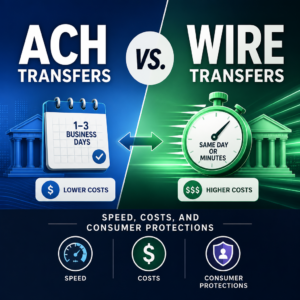
ACH Transfers vs. Wire Transfers: Speed, Costs, and Consumer Protections
Wondering which transfer method is right for your needs? This guide to ACH transfers vs wire transfers breaks down speed, fees, and consumer protections so you can choose the safest, most cost-effective option.
By: Sarah Mitchell on July 28, 2026
When you need to move money, the choice between ACH transfers vs. wire transfers can affect how fast the funds arrive, how much you pay, and how much protection you have if something goes wrong. Both payment methods are widely used in personal finance and business banking, but they serve different needs. Understanding the differences can help you avoid delays, reduce fees, and choose the safest option for the situation.
In this guide, we’ll break down how ACH transfers and wire transfers work, compare their costs and speeds, and explain the consumer protections that may apply. We’ll also share practical examples so you can decide which option makes the most sense.
What Is an ACH Transfer?
ACH stands for Automated Clearing House, a network that processes electronic payments between banks and credit unions in the United States. ACH transfers are commonly used for:
Direct deposit paychecks
Bill payments
Bank-to-bank transfers
Government benefits
Business payroll and vendor payments
ACH transfers typically move in batches rather than individually. That batching process helps keep fees low, but it can also make transfers slower than wires.
Common Types of ACH Transfers
There are two main directions for ACH transactions:
ACH credit — money is pushed into an account, such as payroll direct deposit.
ACH debit — money is pulled from an account, such as an automatic utility payment.
Businesses, employers, and government agencies rely heavily on ACH because it is efficient and cost-effective.
What Is a Wire Transfer?
A wire transfer sends money electronically from one financial institution to another, usually with less delay than an ACH transfer. Wires are often used for:
Large purchases, such as a home down payment
Same-day or urgent payments
International money transfers
Real estate closings
Business transactions that require fast settlement
Unlike ACH, wire transfers are generally processed individually. That makes them faster, but usually more expensive.
Domestic vs. International Wires
Domestic wire transfers move money within the U.S.
International wire transfers cross borders and may involve foreign banks, currency conversion, and intermediary fees
Because international wires involve more parties, they can cost more and take longer than domestic wires.
ACH Transfers vs. Wire Transfers: Key Differences
The best way to compare ACH transfers vs. wire transfers is to look at speed, cost, reversibility, and protection.
1. Speed
ACH transfers are usually slower.
ACH transfers: Often take 1 to 3 business days, though some can be same-day depending on the bank and transfer type
Wire transfers: Domestic wires are often completed the same day if initiated before the bank’s cutoff time
If you need to pay a rent deposit today or close on a house, a wire may be the better fit. If you’re sending money to your own account or paying a recurring bill, ACH may be more practical.
2. Cost
ACH transfers are generally cheaper.
ACH transfers: Often free or low-cost
Wire transfers: Typically come with higher fees, especially for outgoing wires and international transfers
Banks often charge fees for outgoing wire transfers because of the extra processing involved. Some institutions also charge for incoming wires. ACH transfers are usually less expensive because they use the batch-processing system.
3. Consumer Protections
Consumer protections vary depending on the type of transfer, the institution involved, and whether the transfer was authorized.
In general:
ACH transfers may offer more robust dispute rights in certain cases, especially for unauthorized debits
Wire transfers are often harder to reverse once sent
Fraud involving wires can be difficult to recover from because banks may treat the transfer as final after it is processed
That doesn’t mean ACH is risk-free or that wires are unsafe. It means the two systems handle errors and disputes differently.
4. Reversibility
ACH payments may sometimes be reversed or returned if:
The payment was unauthorized
The account information was incorrect
There are insufficient funds
A duplicate or erroneous transaction occurs
Wire transfers are much harder to reverse. Once a wire is sent, the money often moves quickly and may be gone before the sender notices a mistake.
5. Best Use Cases
A simple rule of thumb:
Use ACH for routine, low-urgency payments
Use wire transfers for urgent, high-value, or time-sensitive transactions
When ACH Transfers Make More Sense
ACH transfers are a strong choice when speed is helpful but not critical and you want to keep costs down.
Good Situations for ACH
Paying monthly bills
Receiving payroll
Moving money between your own bank accounts
Sending recurring business payments
Collecting customer payments
Practical Example
Suppose you transfer money from your checking account to a savings account every payday. There’s no need to pay wire fees for a routine move. An ACH transfer is usually the better option because it’s inexpensive and reliable.
Why People Prefer ACH
Many consumers like ACH because it feels simple and predictable. Once you set up direct deposit or automated payments, the transfers happen in the background. That convenience makes ACH a backbone of everyday banking.
When Wire Transfers Make More Sense
Wire transfers are best when timing and certainty matter more than cost.
Good Situations for Wires
Closing on a home
Sending a large business payment
Covering an emergency expense that must arrive quickly
Paying an overseas seller or family member, depending on the bank’s services
Transferring funds for a time-sensitive investment or purchase
Practical Example
Imagine you’re buying a car from a private seller who wants the funds before releasing the title. If the seller requires immediate payment, a wire transfer may be the safest way to complete the deal quickly.
Why People Choose Wires
Wires are often used when the sender wants funds delivered quickly and with less uncertainty about timing. That speed is valuable, especially in transactions with deadlines.
Consumer Protections: What You Should Know
Consumer protection is one of the most important parts of the ACH transfers vs. wire transfers comparison. If money is sent to the wrong place or used without permission, the outcome can differ depending on the transfer type.
ACH Transfer Protections
ACH transactions may be covered by banking rules and dispute processes that give consumers some recourse, especially for unauthorized electronic debits. If a debit appears that you did not approve, contact your bank right away.
Possible steps may include:
Reviewing account activity
Reporting the unauthorized transaction promptly
Filing a dispute with your bank or credit union
Requesting a stop payment for certain future debits
Closing or replacing an account if fraud is suspected
For recurring debits, many banks allow you to revoke authorization for future payments, though you should do so in writing and follow your bank’s procedures.
Wire Transfer Protections
Wire transfers usually offer fewer protections after the transfer is completed. That’s because wires are designed for fast settlement and finality.
If a wire transfer was sent because of fraud or a scam, the bank may try to help, but recovery is not guaranteed. This is why wire transfer scams can be so damaging. Criminals often pressure victims to send money quickly and discourage them from verifying the request.
Important Safety Tip
Never rely on a wire transfer for a payment unless you have independently confirmed:
The recipient’s name
The correct bank account number
The routing or SWIFT information
The legitimacy of the request
A single mistake can send money to the wrong person, and fixing it may be difficult.
ACH vs. Wire Transfer Fees: What to Expect
Fees vary by bank, credit union, and transfer type, but the general pattern is consistent.
ACH Transfer Fees
Many financial institutions offer:
Free ACH transfers between your own accounts
Free direct deposit and bill pay
Low or no-fee external bank transfers
Some banks may charge for expedited ACH services or special business ACH processing.
Wire Transfer Fees
Wire transfer fees are often higher and may include:
Outgoing domestic wire fees
Incoming wire fees
International wire fees
Intermediary bank or correspondent bank fees
Currency conversion costs
If you send money internationally, ask about the total cost, not just the fee shown by your bank. Exchange rates and third-party charges can make a transfer much more expensive than expected.
How to Decide Between ACH and Wire Transfers
The right choice depends on your priorities.
Choose ACH if:
Cost matters most
The transfer is not urgent
You’re paying a bill or moving money regularly
You want an easy setup for recurring payments
Choose a wire if:
The money must arrive quickly
The amount is large
The recipient requires immediate settlement
The payment is tied to a major transaction with a deadline
A Simple Decision Checklist
Before sending money, ask:
How fast does the recipient need the funds?
How much will the transfer cost?
Is this a one-time or recurring payment?
What happens if there is a mistake?
Have I confirmed the recipient’s banking details?
If the answer points to urgency and finality, a wire may be appropriate. If the payment is routine, ACH is usually the better value.
Common Mistakes to Avoid
When comparing ACH transfers vs. wire transfers, small mistakes can create big problems.
1. Sending a Wire for a Routine Payment
If you’re paying monthly tuition or transferring savings to checking, a wire is usually unnecessary. You may end up paying more than you need to.
2. Using ACH When Speed Is Critical
If a deadline is near, ACH may not move quickly enough. That can create late fees, missed closing deadlines, or failed transactions.
3. Skipping Verification
Before any transfer, confirm account details carefully. One wrong digit can cause delays or misdirect funds.
4. Ignoring Fraud Warnings
If someone pressures you to wire money immediately, pause and verify. Scammers often create urgency to prevent you from checking the facts.
Tips for Safer Money Transfers
A few habits can help you avoid trouble with both ACH and wire transfers:
Use secure banking apps or official bank websites
Double-check account and routing numbers
Confirm payment requests by calling a known phone number
Keep records of payment confirmations
Review bank statements regularly
Set up alerts for withdrawals and transfers
Contact your bank immediately if something looks wrong
These steps are especially important for businesses that send frequent payments or handle vendor invoices.
Frequently Asked Questions
1. Are ACH transfers safer than wire transfers?
Not necessarily safer in every situation, but ACH transfers often come with more built-in dispute options for certain unauthorized transactions. Wire transfers are usually harder to reverse once processed. The safer choice depends on how well you verify the recipient and protect your account information.
2. How long does an ACH transfer take?
Most ACH transfers take 1 to 3 business days, though some banks offer same-day ACH in certain situations. Timing can depend on when the transfer is initiated, the financial institutions involved, and whether weekends or holidays are in the way.
3. Can a wire transfer be reversed?
Sometimes a wire transfer can be recalled if the bank acts quickly, but there is no guarantee. Once the money is sent, recovery is often difficult. That is why it’s essential to verify every detail before authorizing a wire.
4. Why do wire transfers cost more than ACH transfers?
Wire transfers cost more because they are processed individually and often move faster, especially for same-day domestic transfers. International wires may also involve intermediary banks, currency exchange, and additional processing steps that increase the total cost.
5. Which is better for sending money to family?
It depends on urgency and cost. If you’re sending money to family within the U.S. and time is not critical, ACH is usually cheaper. If the money must arrive quickly or the recipient needs immediate access, a wire may be the better option, though it will likely cost more.
Choosing between ACH transfers vs. wire transfers comes down to balancing speed, cost, and protection. ACH is usually the smarter choice for everyday payments, recurring transfers, and situations where saving money matters more than immediate delivery. Wire transfers, on the other hand, are designed for fast, often final payment when timing is critical, such as real estate closings, urgent business deals, or other time-sensitive transactions.
The most important thing is to match the payment method to the purpose of the transfer. Before you send money, verify account information, confirm the recipient, and understand the fees and risks. That extra minute of caution can prevent expensive mistakes and frustrating delays. Whether you’re handling personal finances or business payments, knowing how ACH and wire transfers differ helps you move money more confidently and securely. The more informed your choice, the better you can protect your funds and keep transactions running smoothly.
Sarah Mitchell
Mary S, CFP®, is a Certified Financial Planner with over 12 years of experience in personal finance, retirement planning, and wealth management. She writes educational content that helps readers understand financial concepts and make informed decisions based on reliable information.