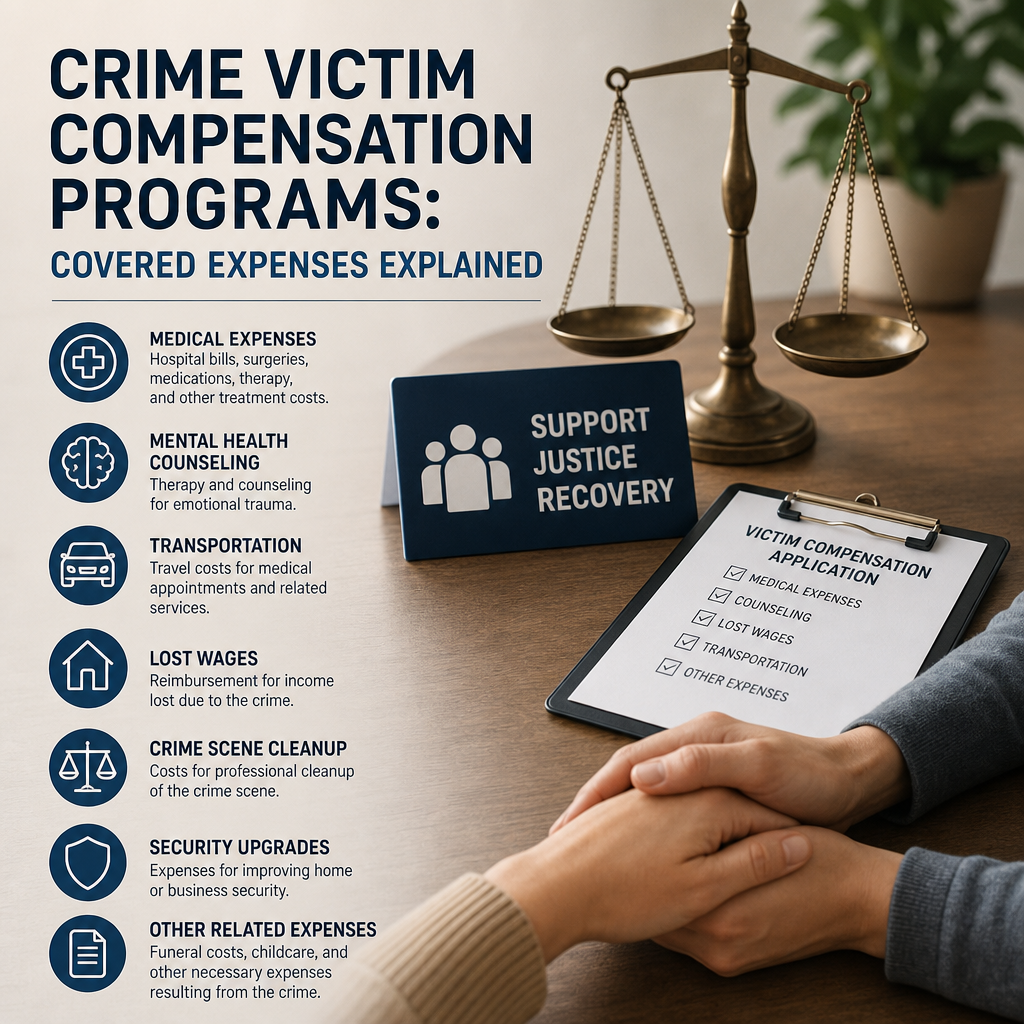
Crime victim compensation programs can help ease the financial strain after a violent crime by covering certain out-of-pocket costs, such as medical bills, counseling, lost wages, and funeral expenses. While coverage varies by state, knowing what may be included can make it easier to get the support you need.
By: Emilly Adams on July 28, 2026
Experiencing a crime can create immediate and long-lasting financial strain. Beyond the emotional impact, victims and their families may face unexpected bills for medical treatment, counseling, lost wages, funeral costs, and other urgent needs. Crime victim compensation programs are designed to help ease some of that burden.
These programs do not replace everything a victim may lose, and they are not the same as a civil lawsuit or restitution ordered from an offender. Instead, they provide financial assistance for certain out-of-pocket expenses that arise because of a violent crime. Understanding what may be covered can make the application process less overwhelming and help victims access support more quickly.
What Are Crime Victim Compensation Programs?
Crime victim compensation programs are public benefit programs, usually run at the state level, that help eligible victims of violent crime pay for qualifying expenses related to the crime. In some places, these programs are funded by court fees, fines, or other state resources rather than general tax dollars.
The exact rules vary by state, but many programs share common features:
They cover expenses directly tied to the crime
They require cooperation with law enforcement in most cases
They usually have deadlines for applying
They pay only after other sources, such as insurance, have been used
These programs are generally intended to help people who have suffered physical injury, emotional trauma, or death of a family member due to a violent act such as assault, sexual assault, domestic violence, robbery, homicide, or in some cases, human trafficking.
Common Expenses That May Be Covered
Every state sets its own list of eligible expenses, but several categories are commonly covered across many victim compensation programs.
Medical and Dental Costs
Medical bills are among the most common expenses covered. Victims may be able to receive reimbursement for treatment needed as a direct result of the crime, including:
Emergency room visits
Ambulance transportation
Hospital stays
Doctor appointments
Surgeries
Prescription medication
Medical equipment, such as crutches or braces
Physical therapy
Dental treatment for injuries to teeth or jaw
For example, if a robbery victim is injured while trying to escape and needs stitches, follow-up visits, and prescription pain medication, those medical costs may be eligible. If someone is assaulted and breaks a tooth, the cost of repairing that injury may also be covered.
Most programs require victims to use health insurance first, if available. Compensation may then help cover co-pays, deductibles, or expenses insurance did not fully pay.
Mental Health Counseling
The emotional effects of crime can be just as serious as physical injuries. Many compensation programs recognize this and provide coverage for counseling or therapy.
Eligible services may include:
Individual therapy
Family counseling
Group counseling
Trauma-focused treatment
Crisis intervention services
Psychiatric care in some cases
This type of assistance is especially important for survivors of sexual assault, child abuse, domestic violence, and violent attacks. A victim who develops anxiety, depression, or post-traumatic stress after a crime may need ongoing mental health support to recover.
Some programs place limits on the number of sessions covered or require treatment from a licensed provider. Others may allow extended counseling for children or dependents of homicide victims.
Lost Wages and Income Support
A crime can keep a victim out of work for days, weeks, or longer. Compensation programs may help replace some of the income lost because the victim was physically or emotionally unable to return to work.
Covered wage losses may include:
Time missed due to hospitalization or recovery
Time spent attending medical appointments
Days missed because of counseling or court appearances
Lost income from an inability to perform job duties
In some cases, programs also cover lost support for dependents if the victim was the primary wage earner. This may be especially important for families facing long-term disability after a violent attack.
Usually, wage-loss benefits are calculated using pay stubs, employer statements, tax records, or other proof of income. Programs often cap how much they will pay per week or per claim period.
Funeral and Burial Costs
When a crime results in death, family members may be able to seek compensation for funeral and burial expenses. These costs can be overwhelming, especially when the death is sudden and unexpected.
Potentially covered expenses may include:
Funeral home services
Cremation costs
Burial or interment expenses
Transportation of the deceased
Death certificates
Certain memorial-related costs, depending on the state
Some programs also provide assistance to surviving dependents who relied on the deceased victim financially. This may include help with basic living expenses in limited circumstances.
For homicide survivors, compensation can be a critical source of immediate support while family members grieve and manage practical arrangements.
Relocation and Safety-Related Expenses
In cases involving domestic violence, stalking, sexual assault, or threats from an offender, a victim may need to move for safety reasons. Some compensation programs help with relocation-related costs.
These may include:
Temporary shelter
Moving expenses
Security deposits
First month’s rent
Lock changes
Home security devices
Emergency relocation travel
Not every state covers these expenses, and some limit them to specific types of crime or urgent circumstances. Still, for victims who must leave a dangerous situation quickly, even short-term financial help can be life-changing.
Crime Scene Cleanup and Property Damage in Limited Cases
Most crime victim compensation programs do not cover general property loss, such as stolen jewelry, damaged phones, or a broken car window. However, some states make exceptions for certain crime-related cleanup or essential replacement costs.
For example, programs may help with:
Cleanup of a homicide or assault scene
Removing bodily fluids or dangerous materials
Replacing clothing damaged during the crime
Replacing eyeglasses, hearing aids, or medical devices
These are usually considered essential personal items rather than ordinary property. Coverage is often narrow and subject to strict limits.
Expenses That Are Often Not Covered
Just as important as knowing what may be covered is knowing what usually is not. Crime victim compensation is designed to address direct, necessary costs—not every financial loss related to the event.
Commonly excluded expenses include:
General property theft or loss
Pain and suffering
Punitive damages
Attorney’s fees in most cases
Damage to vehicles or homes unless specifically allowed
Expenses unrelated to the crime
Losses already paid by insurance or another source
Some programs are stricter than others, and a few may offer limited help for replacement of essential property. But in general, these benefits are not meant to fully compensate for all losses. They serve as a safety net for immediate and necessary expenses.
Who May Be Eligible?
Eligibility rules vary, but many programs consider factors such as:
Whether the crime was violent
Whether the victim cooperated with law enforcement
Whether the victim reported the crime within a certain time
Whether the victim applied by the deadline
Whether the claimant has other available financial resources
Whether the victim’s own conduct contributed to the injury in a disqualifying way
Victims, Family Members, and Dependents
Direct victims are not the only people who may qualify. In many cases, family members, dependents, and even certain people who help a victim during the crime may be eligible for benefits.
Examples may include:
A parent applying for counseling benefits for a child who witnessed an assault
A spouse seeking funeral assistance after a homicide
A dependent child receiving support after the death of a caregiver
A person injured while trying to help prevent a crime or stop an offender
The details depend on state law, but compensation programs often recognize that crime can affect entire households, not just one individual.
How the Claims Process Usually Works
Although each program differs, the application process often follows a similar pattern.
1. Report the Crime
Most programs require the crime to be reported to police or another authorized agency. This helps confirm that the event qualifies and provides a record for the claim.
2. Collect Documentation
Applicants usually need to show proof of expenses and evidence linking those expenses to the crime. Helpful documents may include:
Police reports
Medical records
Bills and receipts
Insurance statements
Employer wage verification
Funeral invoices
Counseling records
3. Submit the Application
Claims are generally filed with a state compensation board, victim services office, or similar agency. Many programs have online applications, but paper forms may also be available.
4. Respond to Requests for More Information
The agency may ask for additional records or clarification. Prompt responses can help avoid delays.
5. Receive a Decision
If the claim is approved, the program may reimburse the victim or pay providers directly, depending on the expense and the state’s rules. If a claim is denied, the victim may have the right to appeal.
Examples of How Compensation Can Help
To better understand how these programs work, it helps to look at a few practical examples.
Example 1: Assault and Medical Bills
A store clerk is injured during a robbery and needs emergency care, follow-up appointments, and physical therapy. The compensation program may help pay the remaining balance after health insurance is applied.
Example 2: Sexual Assault and Counseling
A college student who experiences sexual assault develops panic attacks and begins therapy. The program may cover counseling sessions and related mental health treatment.
Example 3: Homicide and Funeral Expenses
A family loses a loved one in a homicide and cannot afford the funeral costs. The compensation program may reimburse some or all of the burial expenses, depending on the state’s limits.
Example 4: Domestic Violence Relocation
A survivor of domestic violence moves to a safer apartment and needs help with a deposit, moving costs, and lock replacement. In some states, those safety-related expenses may be covered.
These examples show how compensation can provide practical support at a time when victims are least able to manage financial stress.
Important Limitations to Keep in Mind
While these programs can be extremely helpful, they have limits. Most will not cover the full value of a victim’s losses, and many require that expenses be unpaid or only partially paid by another source.
Common limitations include:
Maximum benefit caps
Deadlines for filing
Proof requirements
Exclusions for certain crimes or conduct
Reduced benefits if the victim has other resources available
In addition, approval does not always happen quickly. Some claims take time to process, especially when records must be reviewed or multiple bills are involved. For that reason, victims should apply as soon as possible and keep copies of all documents.
Why These Programs Matter
Crime victim compensation programs fill an important gap. After a violent crime, victims often face bills they never expected and expenses they cannot postpone. Compensation can help cover immediate needs so people can focus on healing rather than financial survival.
These programs are not a complete solution, but they can reduce the pressure of medical debt, counseling costs, lost income, and funeral expenses. For many victims and families, that support makes a meaningful difference during one of the hardest periods of their lives.
Frequently Asked Questions
1. Which expenses may crime victim compensation cover?
Depending on the state program, compensation may cover medical and dental treatment, mental health counseling, lost wages, funeral and burial expenses, loss of financial support, relocation, crime-scene cleanup, and other necessary crime-related costs.
2. Does crime victim compensation cover stolen or damaged property?
General property loss is usually excluded. However, some programs may cover limited replacement of essential items, such as clothing, eyeglasses, hearing aids, medical equipment, or accessibility devices damaged during the crime.
3. Must the crime be reported to law enforcement?
Most programs require the crime to be reported to law enforcement or another authorized agency within an established period. Exceptions or modified requirements may apply in certain circumstances, depending on state law and the victim’s situation.
4. Can compensation pay expenses already covered by insurance?
Crime victim compensation is generally considered a payer of last resort. Applicants must usually use available insurance, restitution, settlements, or other payment sources first. The program may then cover eligible unpaid balances, deductibles, or copayments.
5. How can a victim apply for compensation?
Victims or qualifying family members should contact the crime victim compensation program in the state or territory where the crime occurred. Applicants should review filing deadlines and gather police reports, bills, receipts, insurance statements, wage records, and other supporting documents.
Crime victim compensation programs are an important resource for people affected by violent crime. Depending on the state, they may help cover medical and dental care, mental health counseling, lost wages, funeral and burial costs, relocation expenses, and certain other necessary bills. While the rules and limits vary, these programs are designed to ease the financial strain that often follows a crime.
If you or someone you know has been affected by a violent offense, learning what expenses may be covered is a practical first step. The sooner a claim is filed and documented, the better the chances of accessing the support available.
Emily A, holds a Master's degree in Public Administration (MPA) and has over 7 years of experience researching federal and state assistance programs. She writes educational content focused on government benefits, public policy, and community resources, using information from official agencies to help readers understand available programs and eligibility requirements.