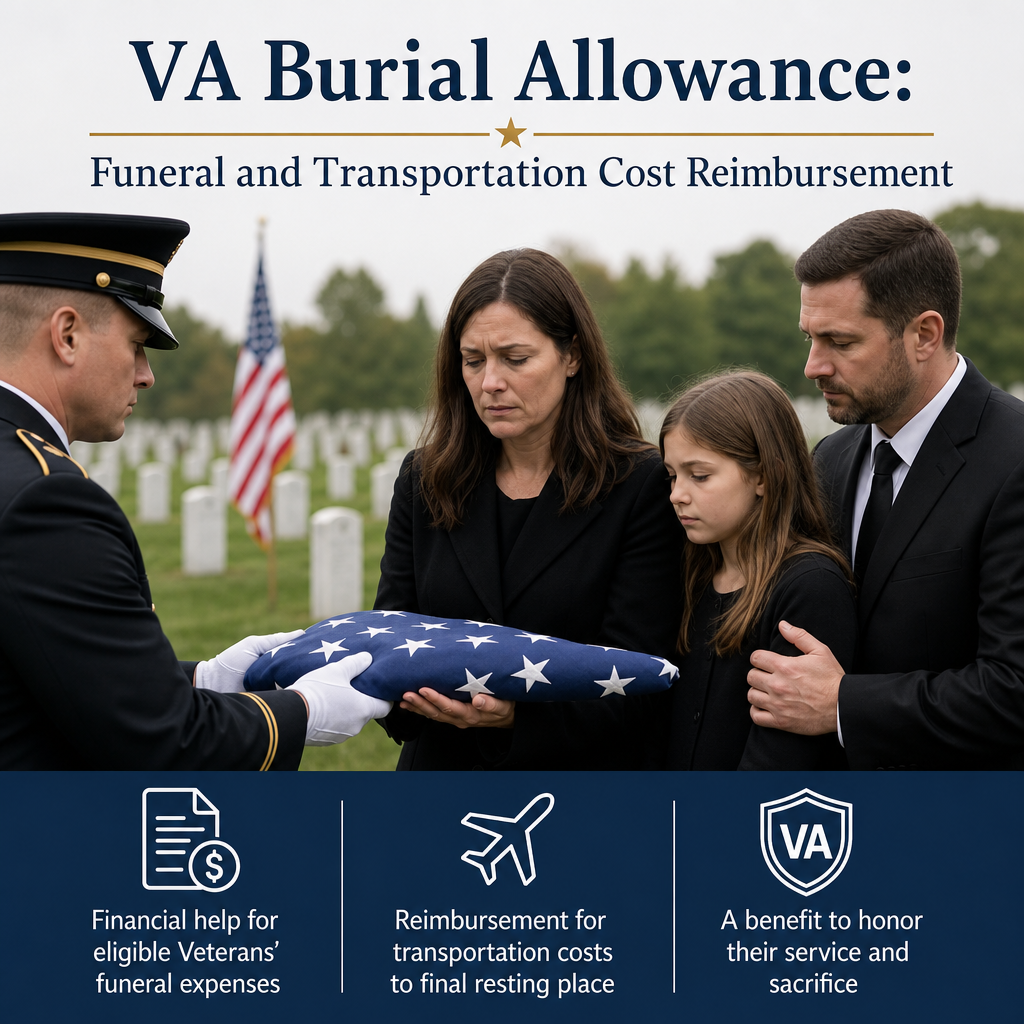
VA Burial Allowance: Funeral and Transportation Cost Reimbursement
The VA burial allowance can help ease the financial burden after a veteran’s death by reimbursing some funeral, burial, and transportation costs. Learn who qualifies, what expenses may be covered, and how to file a claim on time.
By: Emilly Adams on July 28, 2026
When a veteran dies, the family often faces not only grief but also immediate expenses. Funeral arrangements, burial or cremation fees, and transportation costs can add up quickly. The Department of Veterans Affairs (VA) offers a burial allowance that may help reimburse some of these expenses. While the benefit does not cover everything, it can provide meaningful financial relief during a difficult time.
Understanding how the VA burial allowance works is important because the rules depend on the veteran’s service, place of death, cause of death, and whether a claim is filed on time. This guide explains what the benefit covers, who may qualify, how much reimbursement may be available, and how to apply.
What Is the VA Burial Allowance?
The VA burial allowance is a reimbursement benefit that helps cover certain funeral and burial-related expenses for eligible veterans. In some cases, it can also help pay transportation costs, including the cost of transporting the veteran’s remains to a burial place.
This is not a funeral grant paid in advance. Instead, it is a reimbursement benefit. That means the person who paid the expenses must usually submit a claim and provide documentation after the veteran’s death.
The amount paid depends on the circumstances of the death and the veteran’s eligibility. There are different types of burial-related benefits, including:
Burial allowance
Plot or interment allowance
Transportation reimbursement
Burial in a VA national cemetery
Headstone or marker benefits
The burial allowance is only one part of the broader set of memorial benefits the VA offers.
What Expenses Can Be Reimbursed?
The VA burial allowance may help reimburse some funeral and burial expenses. Depending on the case, eligible expenses can include:
Funeral director services
Casket or cremation-related costs
Burial plot or interment fees
Transportation of the deceased veteran’s remains
Burial preparation costs
Other related funeral expenses
However, the VA does not reimburse every expense a family may incur. For example, memorial services, flowers, catering, obituary notices, and similar personal expenses are usually not covered.
The best way to think about the burial allowance is as partial relief for essential burial-related costs, not full funeral coverage.
Who May Be Eligible?
Eligibility for the VA burial allowance depends on several factors. In general, the veteran must have met certain service or benefit-related conditions, and the person requesting reimbursement must have paid the expenses.
Veteran Eligibility
A veteran may qualify if one or more of the following apply:
The veteran died from a service-connected disability
The veteran was receiving VA pension or compensation
The veteran was entitled to receive VA pension or compensation but was not receiving it due to military retirement pay
The veteran died while hospitalized by the VA
The veteran died while traveling under proper authorization for examination, treatment, or care
The veteran served in a way that meets VA burial benefit requirements, even if the death was not service-connected
Eligibility rules can be technical, and the amount reimbursed may differ based on whether the death was service-connected.
Who Can File the Claim?
Usually, the person who paid the funeral or burial expenses may apply. This might be:
A surviving spouse
An adult child
A parent
Another family member
A funeral home or person who covered the costs
If more than one person paid different expenses, the VA may require proof of who paid what. The claimant should keep receipts and invoices showing the amounts paid.
How Much Does the VA Pay?
The amount of the burial allowance changes over time and may differ depending on the type of death and other factors. In many cases, the VA pays a set reimbursement amount up to certain limits.
If Death Was Service-Connected
If the veteran died from a service-connected disability, the burial allowance is generally higher. This category may also include reimbursement for transportation of the remains and burial in a national cemetery if eligible.
If Death Was Not Service-Connected
If the veteran’s death was not service-connected, the amount is typically lower and may be subject to additional limitations. The VA may still reimburse burial and funeral expenses if the veteran met certain service requirements and the claim is filed properly.
Plot or Interment Allowance
In some situations, the VA also pays a plot or interment allowance. This is meant to help cover the cost of the burial plot or burial space, or the interment fee charged by a cemetery.
This can be especially useful if the veteran is buried in a private cemetery rather than a VA national cemetery.
Transportation Reimbursement
Transportation costs may be reimbursed in certain situations, especially if:
The veteran died of a service-connected condition
The remains had to be transported to a burial site
The veteran died while under VA care or travel authorization
Transportation reimbursement may cover moving the remains from the place of death to the funeral home, cemetery, or another final resting place, depending on the specific rules.
Examples of When the Benefit May Apply
To understand the burial allowance more clearly, it helps to look at a few examples.
Example 1: Service-Connected Death
A veteran dies from a condition that the VA had already recognized as service-connected. The family pays for funeral home services, cremation, and transportation of the remains to a cemetery in another state. Because the death was service-connected, the family may be eligible for a higher burial allowance and transportation reimbursement.
Example 2: Non-Service-Connected Death with VA Pension
A veteran dies of natural causes and was receiving VA pension at the time of death. The spouse pays for burial and cremation expenses. In this case, the spouse may qualify for a burial allowance even though the death was not service-connected.
Example 3: Veteran Died in a VA Hospital
A veteran dies while hospitalized by the VA. The adult child who paid the funeral home may be able to seek reimbursement for burial expenses and possibly transportation, depending on the facts of the case.
Example 4: No Immediate VA Benefits
A veteran dies, but there was no service-connected disability, no VA pension or compensation, and no VA hospitalization. In that situation, burial allowance eligibility may be limited or unavailable. Even so, the family should review the veteran’s service record and death circumstances carefully, because some benefits may still apply.
Important Filing Deadlines
One of the most important parts of the burial allowance process is the filing deadline. Claims are time-sensitive, and missing the deadline can result in denial.
In general, the person requesting reimbursement should file as soon as possible after the veteran’s death. The VA has deadline rules that depend on the type of burial benefit requested and the date of death. Because timing rules can be strict, it is wise to gather documents and submit the claim without delay.
Waiting too long can make it harder to prove who paid the bills or to obtain required records from funeral homes, cemeteries, or medical providers.
How to Apply for the VA Burial Allowance
The application process is fairly straightforward, but documentation matters. The claimant must show both eligibility and payment of the expenses.
Step 1: Gather Key Documents
Before filing, collect the following if available:
Veteran’s death certificate
DD Form 214 or other proof of military service
Funeral home invoice
Receipts showing who paid the expenses
Transportation bills
Burial or cemetery receipts
Proof of the veteran’s service-connected status, if applicable
VA pension or compensation award letters, if relevant
Step 2: Complete the Claim Form
The VA uses a specific claim form for burial benefits. The form asks for the veteran’s information, the claimant’s information, and details about the expenses paid.
Be sure to list all covered expenses clearly and attach supporting documents. If a funeral home paid some costs and a family member paid others, explain that clearly.
Step 3: Submit the Claim
Claims can usually be submitted through the VA’s online systems, by mail, or with assistance from a veterans service organization, funeral director, or accredited representative. The VA may ask for additional documentation if anything is missing.
Step 4: Track the Decision
After submission, the VA reviews the claim and determines whether the veteran and claimant qualify for payment. If approved, reimbursement is issued according to VA procedures.
If the claim is denied, the claimant may be able to appeal or submit additional evidence.
Common Reasons Claims Are Delayed or Denied
Even when a family believes they qualify, claims can be delayed or denied for avoidable reasons. Common issues include:
Missing receipts or invoices
Incomplete claim forms
Filing after the deadline
No proof the claimant paid the expenses
Insufficient evidence of service-connected death
Confusion about who is eligible to receive payment
Missing death certificate or military records
To reduce problems, it helps to keep all funeral-related paperwork organized from the beginning.
Burial in a VA National Cemetery
The burial allowance is separate from burial in a VA national cemetery, but the two benefits often overlap in planning. Eligible veterans may be buried in a national cemetery at no cost for the gravesite, opening and closing of the grave, and perpetual care.
In some cases, this can significantly reduce expenses. Families may still need to pay for items outside the cemetery’s services, such as the funeral home, cremation, flowers, or transportation of remains. The burial allowance may help offset some of those remaining costs.
If the veteran is eligible for burial in a national cemetery, the family may also be able to request a government headstone or marker and a burial flag.
Plot Allowance vs. Burial Allowance
The plot or interment allowance and the burial allowance are related but different.
Burial allowance: Reimburses funeral and burial expenses
Plot or interment allowance: Helps cover the cost of the burial plot or burial space
Some families may qualify for one, both, or neither, depending on the veteran’s service and the location of burial. For example, a veteran buried in a private cemetery may qualify for a plot allowance in addition to burial reimbursement, if the requirements are met.
Transportation of Remains: When It Matters
Transportation costs can be a major burden, especially when a veteran dies away from home or when family members want burial in a different city or state. The VA may reimburse transportation in certain cases, but usually not in every situation.
Transportation reimbursement is most likely to apply when:
The death was service-connected
The veteran died while receiving VA hospital care
The veteran died while traveling under VA authorization
The burial takes place in a national cemetery under qualifying conditions
Families should keep all transport invoices and specify whether the charges were for transfer from the place of death to the funeral home, from the funeral home to the cemetery, or for another leg of transportation.
Practical Tips for Families
Applying for burial benefits can feel overwhelming at an already stressful time. A few simple steps can make the process easier:
Request multiple copies of the death certificate
Save every receipt and invoice
Keep the veteran’s military records in one folder
Ask the funeral home whether they have experience with VA claims
Note who paid each bill
File the claim as soon as possible
Follow up if the VA requests more information
If a family is unsure whether the veteran qualifies, it is still worth checking. Many families overlook benefits that may be available because the rules are not widely understood.
Frequently Asked Questions
1. Who can apply for a VA burial allowance?
A surviving spouse, child, parent, estate representative, funeral home, or another person who paid or is legally responsible for the Veteran’s burial and funeral expenses may apply. The Veteran and claimant must meet VA eligibility requirements.
2. What expenses may the VA burial allowance cover?
The benefit may help with funeral and burial costs, plot or interment expenses, and transportation of the Veteran’s remains. The available benefits depend on the circumstances of the death and burial.
3. Is there a deadline for filing a burial allowance claim?
A non-service-connected burial allowance claim generally must be filed within two years after the Veteran’s permanent burial or cremation. Certain claims, including service-connected burial allowances, plot or interment allowances, and transportation reimbursements, may not have a filing deadline.
4. What documents are needed to apply?
Applicants may need the Veteran’s death certificate, military discharge documents, and itemized transportation receipts. Additional medical or service records may be required when claiming that the death was caused by a service-connected condition.
5. How can a family apply for VA burial benefits?
Eligible claimants can apply online or submit VA Form 21P-530EZ by mail with the required supporting documents. Families may also obtain assistance from an accredited Veterans Service Organization representative.
The VA burial allowance can provide helpful reimbursement for funeral and transportation costs after a veteran’s death. Although it usually does not cover all expenses, it may reduce the financial strain on surviving family members. Eligibility depends on the veteran’s service, the cause and circumstances of death, and timely filing with proper documentation.
For families coping with loss, understanding these benefits can make a difficult process a little easier. By keeping records, applying promptly, and reviewing all available VA burial-related benefits, families can better ensure they receive the support they have earned.
Emily A, holds a Master's degree in Public Administration (MPA) and has over 7 years of experience researching federal and state assistance programs. She writes educational content focused on government benefits, public policy, and community resources, using information from official agencies to help readers understand available programs and eligibility requirements.