How Biometric Border Systems Are Changing International Travel
Biometric border systems are reshaping international travel by making identity checks faster, more secure, and increasingly automated. As airports and border crossings adopt facial scans, fingerprints, and other biometrics, travelers are seeing smoother journeys alongside new questions about privacy and data protection.
By: Peter on July 27, 2026
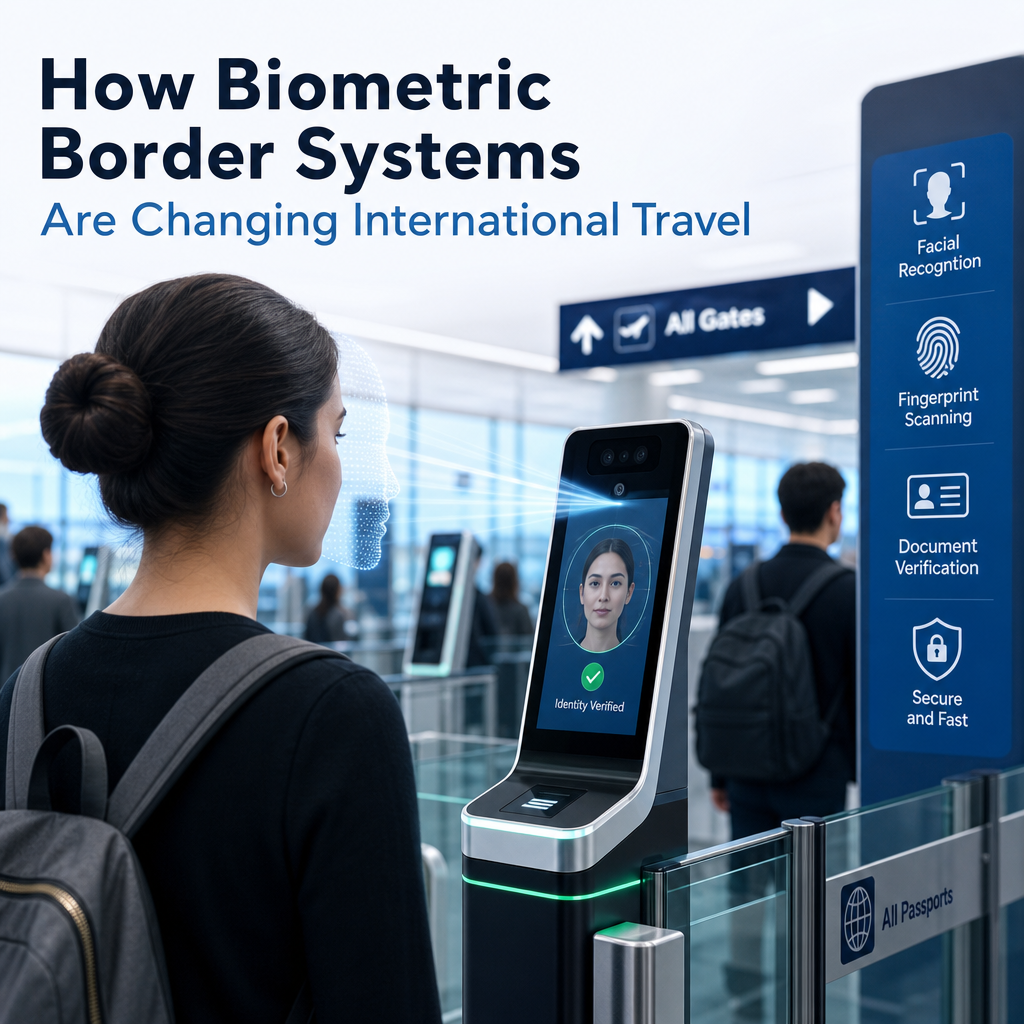
International travel has always been shaped by technology, from the invention of the passport to the rise of e-tickets and self-check-in kiosks. Today, one of the biggest changes at airports, seaports, and land crossings is the adoption of biometric border systems. These systems use unique physical or behavioral traits—such as fingerprints, facial geometry, iris patterns, or voice—to verify identity. Instead of relying only on documents and manual inspection, border agencies are increasingly using biometrics to speed up processing, improve security, and reduce fraud.
For travelers, this shift can mean shorter lines and smoother journeys. For governments, it promises stronger identity verification and better control over who enters and exits a country. But biometric border systems also raise questions about privacy, data protection, and fairness. Understanding how they work and what they mean for international travel can help travelers and policymakers alike navigate this changing landscape.
What Are Biometric Border Systems?
Biometric border systems are identity verification systems that use biological characteristics to confirm a person’s identity. At borders, they are typically used to match a traveler to a passport, visa, or travel record.
Common biometric methods include:
Facial recognition
Fingerprint scanning
Iris or eye scanning
Palm or hand geometry
Voice recognition in some specialized environments
These systems may be used at different points in the travel process, including:
Visa application
Airport check-in
Security screening
Immigration control
Exit checks
Automated gates or e-gates
In many cases, the biometric data is collected before travel begins and then compared against the traveler’s face or fingerprint at the border. This allows officials to verify that the person presenting the document is the same person who was approved to travel.
Why Governments Are Adopting Biometrics
Border agencies face a difficult task: they need to move large numbers of people efficiently while also preventing illegal entry, document fraud, and security threats. Traditional manual checks can be slow and are vulnerable to human error. Biometric systems are seen as a way to modernize the process.
Improved Identity Verification
One of the main advantages of biometrics is that they are tied to the individual rather than to a document. Passports can be lost, stolen, or forged. A face or fingerprint is much harder to fake convincingly. This makes it easier for officials to confirm that a traveler is who they claim to be.
Faster Processing
At busy airports, lines at immigration can create stress for travelers and staffing challenges for border agencies. Biometric kiosks and e-gates can reduce the time needed for routine checks. Travelers who have already pre-enrolled in a biometric system may pass through border control much faster than with traditional manual verification.
Better Fraud Prevention
Biometric border systems can help detect people using false identities, altered passports, or duplicate applications. They can also flag travelers who have overstayed visas or tried to enter using multiple identities. This makes biometrics an important tool in preventing immigration fraud.
Greater Border Security
Governments also view biometrics as part of a broader security strategy. By linking travel records to unique physical traits, authorities can build more reliable databases and improve screening against watchlists or known threats.
How Biometric Travel Works in Practice
The exact process varies by country, but a typical biometric travel journey often looks like this:
1. Pre-Enrollment
Before or during the visa application process, a traveler may submit biometric information such as fingerprints or a digital facial image. This data becomes part of a secure government database.
2. Arrival at the Airport or Border
When the traveler arrives, they may first scan their passport or boarding pass at a kiosk. The system then captures a live biometric sample, usually a face scan or fingerprint.
3. Identity Matching
The system compares the live biometric sample with the stored biometric record. If the match is successful, the traveler is cleared for the next step.
4. Manual Review if Needed
If the system cannot confidently verify the traveler, a border officer may step in to inspect documents manually or ask additional questions.
5. Automated Entry or Exit
At some borders, verified travelers can use e-gates to pass through without speaking to an officer, at least for routine processing.
This process can be especially useful for frequent travelers, families, and business passengers who cross borders regularly.
Real-World Examples of Biometric Borders
Many countries already use biometric systems in some form, and their use is expanding.
Airports with Facial Recognition
Several major airports around the world now use facial recognition for boarding and immigration. Travelers may walk through a camera-equipped gate that matches their face to the passport photo and travel record. In some cases, the same biometric record is used from check-in all the way to boarding.
Fingerprint-Based Entry Systems
Some countries have long used fingerprint scanning at arrival and departure points. This can be especially effective for visa programs where travelers must register fingerprints before entering. Border officers then compare the fingerprints collected at the border with the stored visa data.
Biometric Exit Programs
Traditionally, some countries have focused more on entry than exit. Newer biometric systems are changing that by recording when travelers leave as well as when they arrive. This helps authorities track visa compliance, detect overstays, and maintain more accurate travel histories.
Digital Travel Corridors
A growing number of international agreements are exploring “digital travel corridors,” where airlines, airports, and border agencies share biometric data to create a more seamless trip. In these systems, travelers may not need to repeatedly show documents at every stage of the journey.
The Benefits for Travelers
Although biometric systems are often discussed in terms of border control, they can also improve the traveler experience.
Shorter Waiting Times
One of the most obvious benefits is speed. Instead of waiting in long lines for manual inspection, travelers can often use automated kiosks or e-gates. This is especially valuable during peak travel periods or at major international hubs.
Less Repetition
In many airports, travelers have to show their passport multiple times: at check-in, security, exit immigration, and boarding. Biometric systems can reduce the number of times documents need to be checked, making travel less frustrating and less repetitive.
Fewer Paper Documents
With more digital identity verification, travelers may not need to rely as heavily on printed documents. That can be helpful when connecting through multiple airports or handling large amounts of travel paperwork.
Potentially Better Accessibility
For some travelers, especially those with mobility or language challenges, biometric kiosks can simplify border interactions. A quick face scan or fingerprint check may be easier than navigating a lengthy verbal interview.
The Challenges and Concerns
Despite their advantages, biometric border systems are not without controversy. Their use raises important questions about data security, privacy, and accuracy.
Privacy and Data Protection
Biometric data is highly sensitive. Unlike a password, it cannot be changed if compromised. If a database is breached, the consequences can be serious. This makes it essential for governments and private partners to use strong encryption, strict access controls, and clear retention policies.
Travelers often want to know:
What data is being collected?
How long is it stored?
Who can access it?
Is it shared with other agencies or countries?
Transparent answers are critical for trust.
Accuracy and False Matches
No biometric system is perfect. Factors like lighting, camera quality, facial coverings, age changes, or fingerprints worn down by manual labor can affect performance. False matches may lead to delays or additional questioning. False rejections can be even more frustrating, especially if a traveler is mistakenly flagged as a security concern.
Bias and Fairness
Some biometric technologies have been criticized for uneven performance across different demographics. For example, facial recognition systems may be less accurate for certain skin tones, ages, or genders if they are not properly trained and tested. This can create unfair treatment at borders if systems are not carefully validated.
Consent and Control
Travelers often have limited ability to opt out of biometric processing if they want to enter a country. That raises concerns about informed consent. In some cases, opting out may mean longer processing times or manual checks, but in others it may not be possible at all. Governments need to balance convenience with the right to privacy and due process.
How Biometrics Are Changing the Travel Experience
Biometric border systems are not just changing the technical side of border control; they are reshaping the overall experience of international travel.
A More Seamless Journey
Travel is becoming more integrated. A traveler may use the same biometric identity from the moment they check in online until they board the plane and clear immigration at the destination. This can make the journey feel more connected and less document-heavy.
More Self-Service
Airports are increasingly designed around self-service. Biometric kiosks, automated bag drop, and e-gates reduce dependence on staff for routine tasks. This allows border officers and airline workers to focus on higher-risk or exceptional cases.
Greater Use of Digital Identity
Biometric systems are part of a broader movement toward digital identity in travel. In the future, a traveler’s face or fingerprint may be linked to a digital passport wallet, visa status, and flight records. That could make international travel faster and more interoperable across countries.
More Surveillance Concerns
At the same time, the use of biometrics can make travel feel more monitored. Some travelers worry about being constantly scanned, recorded, and analyzed. As border systems become more connected, debates about surveillance and civil liberties are likely to grow.
What Travelers Should Know
If you travel internationally, it helps to understand how biometric systems may affect your trip.
Check Entry Requirements Early
Different countries have different biometric rules. Some require pre-enrollment before arrival, while others collect biometrics on arrival. Always check the official travel guidance before departure.
Keep Your Travel Documents Consistent
Because biometric systems often compare your live image to the photo in your passport, make sure your passport is valid and your documents are consistent. Small discrepancies in name spelling or travel history can cause delays.
Be Prepared for Additional Screening
If a biometric scan fails or is incomplete, you may be asked for manual verification. That does not necessarily mean something is wrong. It may simply mean the system needs a human review.
Understand Your Rights
In some countries, travelers may have rights related to data access, correction, or deletion. These rights vary widely depending on local law and the type of travel program involved. Knowing the basics can help you ask the right questions if needed.
The Future of Biometric Border Control
Biometric border systems will likely continue to expand as countries seek faster, smarter, and more secure ways to manage travel. The future may include:
More contactless processing
Mobile biometric enrollment
Integration with digital travel credentials
Greater use of artificial intelligence for identity verification
Cross-border data sharing agreements
However, the success of these systems will depend on more than technology. Public trust, legal safeguards, and international cooperation will all play a major role. Governments will need to prove that biometric systems are secure, accurate, and respectful of individual rights if they want travelers to accept them widely.
Frequently Asked Questions
1. How does facial comparison work at an international border?
A camera captures a live image of the traveler and compares it with an existing photograph from a passport, visa, or government travel record. If the images match, the system helps confirm the traveler’s identity.
2. Do biometric systems eliminate the need to carry a passport?
No. Travelers should continue carrying all required passports, visas, and supporting documents. Biometric processing supplements document verification but has not universally replaced physical travel documents.
3. Can travelers decline facial recognition at a U.S. airport?
TSA facial comparison technology is voluntary, and travelers may request the standard identity-verification process instead. Biometric requirements at immigration and international borders may differ according to citizenship, destination, and applicable law.
4. What happens when a biometric system cannot verify a traveler?
The traveler is generally referred for manual inspection by an officer. A failed match does not automatically mean that the person has committed fraud or is prohibited from traveling.
5. What biometric information may border systems collect?
Depending on the country and program, systems may collect facial images, fingerprints, passport information, and entry or exit records. Data-retention periods, access rules, and privacy rights vary by jurisdiction.
Biometric border systems are changing international travel by making identity checks faster, more secure, and increasingly digital. For travelers, the benefits can include shorter lines and smoother airport experiences. For governments, biometrics offer stronger tools to verify identities and prevent fraud.
At the same time, these systems bring real concerns around privacy, fairness, and data security. As biometric technology becomes more common at borders, the challenge will be finding the right balance between convenience and control, efficiency and oversight, security and personal rights.
International travel is entering a new era, and biometrics are at the center of that transformation.
Peter B holds a degree in Journalism and has 5 years
of experience covering U.S. economic policy, labor markets, and
financial news. He writes data-driven news content on topics
like inflation, interest rates, and employment trends.