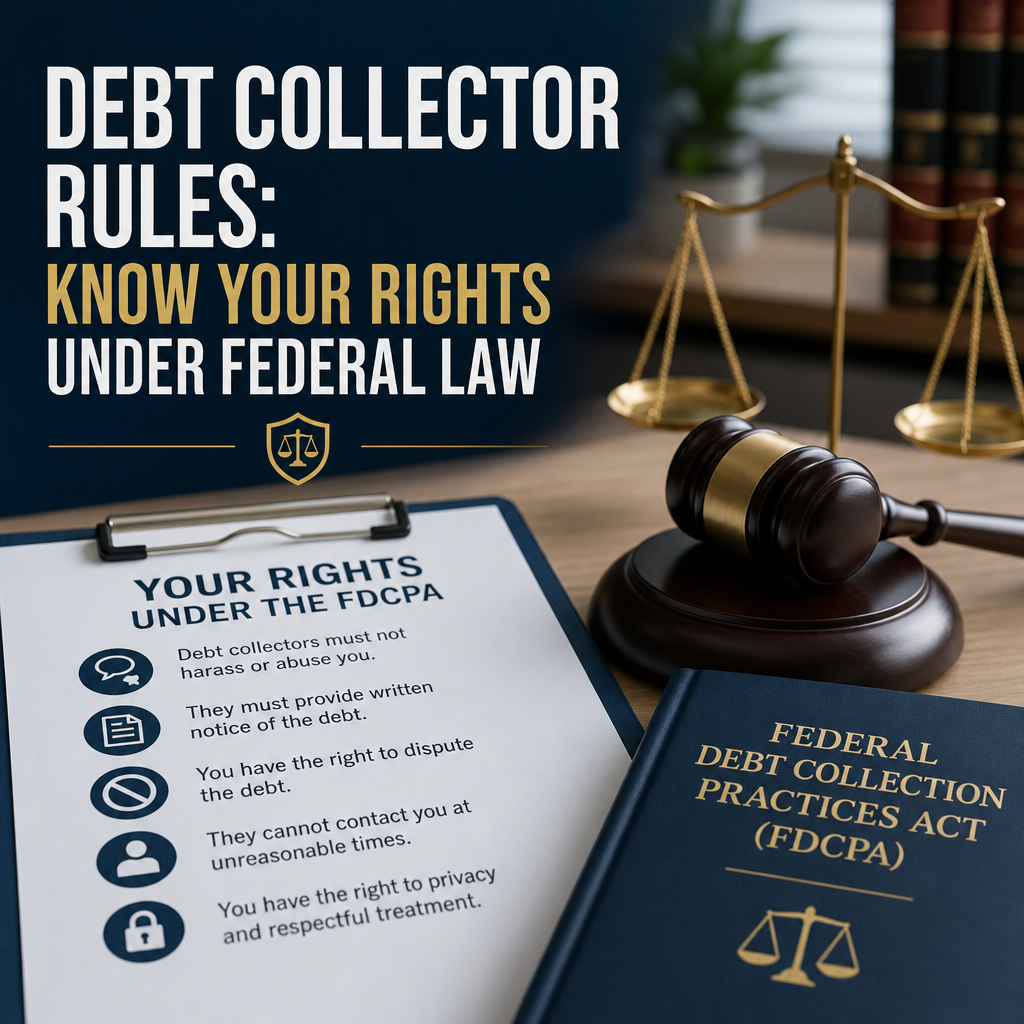
Debt Collector Rules: Know Your Rights Under Federal Law
Debt collector rules give you powerful protections when a collector contacts you about an unpaid debt. Knowing what collectors can and cannot do can help you respond confidently, protect your rights, and avoid costly mistakes.
By: Sarah Mitchell on July 28, 2026
Getting a call or letter from a debt collector can feel stressful, confusing, and even intimidating. But you are not powerless. The debt collector rules under federal consumer protection law give you important rights, and knowing them can help you respond confidently and avoid costly mistakes.
Whether the debt is legitimate, outdated, disputed, or unfamiliar, the law sets clear limits on what collectors can say and do. In this guide, you’ll learn how the rules work, what debt collectors can and cannot do, and how to protect yourself if you believe a collector has crossed the line.
What Are Debt Collector Rules?
The term debt collector rules usually refers to the federal protections created under the Fair Debt Collection Practices Act (FDCPA) and related consumer protection laws. These rules apply to many third-party debt collectors, collection agencies, and debt buyers who contact consumers about unpaid debts.
The FDCPA was designed to stop abusive, deceptive, and unfair collection practices. It does not erase a valid debt, but it does create boundaries that collectors must follow.
Who the rules protect
These protections generally apply when:
A third-party debt collector contacts you
A collection agency tries to collect a consumer debt
A debt buyer purchases an old debt and seeks payment
A lawyer regularly collects consumer debts
The rules often apply to personal, family, and household debts such as:
Credit card balances
Medical bills
Auto loans in certain situations
Personal loans
Utility balances in some cases
They do not always cover every type of obligation. For example, many business debts are treated differently.
Key Debt Collector Rules You Should Know
Understanding the basic debt collector rules makes it easier to spot violations and protect your rights.
1. Collectors cannot harass you
Debt collectors may contact you, but they cannot use harassment or abuse. That includes:
Repeated or annoying phone calls intended to wear you down
Threats of violence or harm
Profanity or insulting language
Calling you just to annoy, abuse, or harass you
A collector can be persistent, but persistence is not the same as harassment.
2. They cannot lie or mislead you
Collectors must be truthful. They cannot:
Pretend to be lawyers or government officials if they are not
Falsely claim you committed a crime by not paying
Misrepresent the amount you owe
Say you will be arrested for ordinary debt nonpayment
Claim they can take action they have no legal right to take
Misleading statements are a common issue, especially when collectors pressure consumers to pay quickly.
3. They must identify themselves
A debt collector should clearly state who they are and that they are contacting you to collect a debt. They cannot conceal their identity or pretend the call is about something else.
4. They have to respect certain communication limits
Federal rules limit when and how collectors can contact you. In general, they may not call:
Before 8 a.m. or after 9 p.m. in your local time
At work, if you tell them your employer does not allow such calls
In a way that disregards your request to stop contacting you
You can also tell a collector to contact you only in writing. Once you make a written request, they must generally honor it, with some exceptions.
5. They must stop if you ask for debt verification
If you dispute a debt or ask for more information, the collector must provide verification before continuing collection efforts. This is one of the most important consumer protections in the FDCPA.
Your Right to Debt Validation
One of the strongest tools in the debt collector rules is the right to request debt validation or verification.
What validation means
If a collector contacts you, they must send a written notice containing key information about the debt, including:
The amount owed
The name of the creditor
A statement that you can dispute the debt
Instructions on how to request more information
If you dispute the debt in writing within the required time period, the collector must pause collection activity until they provide verification.
Why this matters
Debt validation helps you determine whether:
The debt is actually yours
The amount is accurate
The collector has the legal right to collect it
The debt is too old to sue on in your state, depending on the circumstances
This is especially important if:
You don’t recognize the debt
The bill is from years ago
The debt was sold to a new collection company
The amount seems wrong
Example
Suppose a collection agency says you owe a credit card balance from several years ago. Before paying, you send a written dispute asking for validation. If the agency cannot properly verify the debt, it should not continue collection efforts as if the debt were confirmed.
How Debt Collector Rules Limit Phone Calls and Messages
Modern collection efforts often include calls, texts, emails, and voicemail messages. The debt collector rules also address these communication methods.
Call frequency and conduct
Collectors cannot bombard you with calls in a way that suggests harassment. While the law does not give a magic number for every situation, repeated calls intended to pressure you can violate federal law.
Workplace calls
If you tell a collector that you are not allowed to receive calls at work, they must stop calling your workplace.
Texts and emails
Collectors may use digital communication, but they still must follow the law. They cannot send messages that are deceptive, excessive, or otherwise unlawful. You also have rights to limit communication channels.
Third-party contact
Collectors generally cannot discuss your debt with friends, neighbors, or coworkers. They may contact third parties only to find your location, and even then, they are limited in what they can say.
For example, they may ask for your address, phone number, or workplace, but they cannot reveal that you owe a debt.
What Debt Collectors Cannot Do
The debt collector rules make several actions off-limits. Here are some of the most important.
They cannot threaten illegal action
A collector cannot threaten to sue, garnish wages, seize property, or report you to authorities unless those steps are lawful and the collector actually intends to take them.
They cannot add unauthorized charges
Collectors generally cannot add interest, fees, or charges unless the original agreement or the law allows them to do so.
They cannot contact you at inconvenient times or places
Besides the standard time limits, they must avoid contacting you in a way that is unreasonable or oppressive.
They cannot ignore your written request to stop
You can send a written notice asking a collector to stop contacting you. After that, they may only contact you to confirm they will stop or to inform you of a specific legal action, such as filing a lawsuit.
They cannot misrepresent legal status
Collectors cannot falsely claim:
They have filed a lawsuit when they have not
A lawyer reviewed your case when they did not
Your debt is from a government agency if it is not
You will lose your job, benefits, or license without legal basis
What to Do If a Debt Collector Contacts You
If a collector reaches out, try to stay calm and avoid reacting impulsively. A careful response can protect your rights.
Step 1: Don’t admit the debt immediately
You do not have to confirm that the debt is yours on the first call. Ask for written information instead.
Step 2: Request written validation
Ask the collector to send the debt details in writing. Compare the information to your records.
Step 3: Review the details carefully
Look for:
The original creditor’s name
The amount owed
Account numbers that match your records
Dates that make sense
Any signs of identity errors or mixed files
Step 4: Check whether the debt is time-barred
Some debts may be too old for a collector to sue on, depending on state law and the type of debt. This is often called a statute of limitations issue. Be careful: making a payment or acknowledging the debt in writing may affect legal timelines in some states.
Step 5: Keep records
Save:
Letters
Voicemails
Call logs
Screenshots of texts or emails
Notes from phone conversations
Documentation helps if you need to file a complaint or defend yourself.
How to Dispute a Debt the Right Way
If you believe the debt is wrong, dispute it in writing.
Include these points
Your dispute letter should be clear and concise. You can include:
Your name and mailing address
The collector’s name and account number
A statement that you dispute the debt
A request for validation or supporting documents
Any specific reason you believe the debt is inaccurate
Send it by a trackable method
Use certified mail or another delivery method that gives you proof of sending. Keep copies of everything.
Be specific when possible
Examples of dispute reasons:
The debt is not mine
The amount is incorrect
I already paid this account
The debt was discharged in bankruptcy
The collector is contacting the wrong person
The more specific you are, the easier it is to explain the issue later if needed.
What to Do If a Collector Breaks the Rules
If you believe a collector violated federal law, you have several options.
File a complaint
You can file complaints with:
The Consumer Financial Protection Bureau (CFPB)
Your state attorney general
The Federal Trade Commission (FTC)
These agencies may not resolve your individual case immediately, but complaints can help create a record and trigger investigations.
Send a cease communication letter
If the calls are overwhelming, you can request that the collector stop contacting you. This does not erase the debt, but it can reduce pressure and create a clearer paper trail.
Consider legal help
If the collector harassed you, threatened you, or sued you improperly, you may want to speak with a consumer law attorney. In some cases, consumers can bring claims under the FDCPA.
Watch for lawsuit deadlines
If you are sued, do not ignore the court papers. Missing a deadline can lead to a default judgment, even if the debt is disputed or invalid.
Practical Tips for Protecting Yourself
A few simple habits can make a big difference when dealing with collection activity.
Do this
Ask for everything in writing
Keep calm and avoid making rushed payments
Compare the debt to your own records
Check your credit reports for matching accounts
Save all communication
Respond to lawsuits quickly
Avoid this
Giving bank details over the phone to an unverified caller
Agreeing to pay before validating the debt
Ignoring collection letters
Assuming a debt is valid just because someone says so
Making random partial payments without understanding the consequences
When the Debt Is Real but You Still Need a Plan
Sometimes the debt is legitimate, and the question becomes how to handle it responsibly. Even then, the debt collector rules remain important.
You may be able to:
Negotiate a settlement
Ask for a payment plan
Request a written agreement before paying
Verify whether the collector has authority to settle the debt
Confirm how payment will be reported
Before agreeing to anything, get the terms in writing. If possible, make sure the agreement states what happens after payment and whether the account will be considered settled in full.
Frequently Asked Questions
1. Can a debt collector call me at any time?
No. Under federal debt collector rules, collectors generally cannot call before 8 a.m. or after 9 p.m. in your local time. They also cannot call at work if you tell them your employer does not allow it.
2. Do I have to pay a debt collector right away?
No. You should first ask for written validation and review the information carefully. Paying too quickly can lead to mistakes, especially if the debt is old, inaccurate, or not yours.
3. What if I do not recognize the debt?
Request validation in writing. Ask for the creditor’s name, the amount owed, and supporting information. If the debt still does not look familiar, continue disputing it and keep copies of all records.
4. Can a collector sue me?
Yes, but only if they have the legal right to sue and the claim is within the applicable time limits. If you are served with court papers, respond by the deadline. Ignoring a lawsuit can lead to a default judgment.
5. Will sending a dispute letter hurt my credit?
A dispute letter itself does not hurt your credit. In fact, disputing an inaccurate debt can help you correct errors and create a record that you challenged the account.
Understanding debt collector rules is one of the best ways to protect yourself when a collection company contacts you. Federal consumer protection law gives you meaningful rights: the right to be treated fairly, the right to request debt validation, the right to limit how collectors contact you, and the right to challenge inaccurate or abusive collection activity.
The most important thing is to slow down and gather information before making decisions. Ask for the debt in writing, check your records, keep a paper trail, and dispute anything that seems wrong. If a collector crosses the line, you are not stuck—you can report the conduct, stop unwanted contact, and, when needed, seek legal guidance.
Debt collection can be stressful, but it becomes more manageable when you know the rules. With the right approach, you can protect your finances, avoid common mistakes, and take control of the situation one step at a time.
Sarah Mitchell
Mary S, CFP®, is a Certified Financial Planner with over 12 years of experience in personal finance, retirement planning, and wealth management. She writes educational content that helps readers understand financial concepts and make informed decisions based on reliable information.