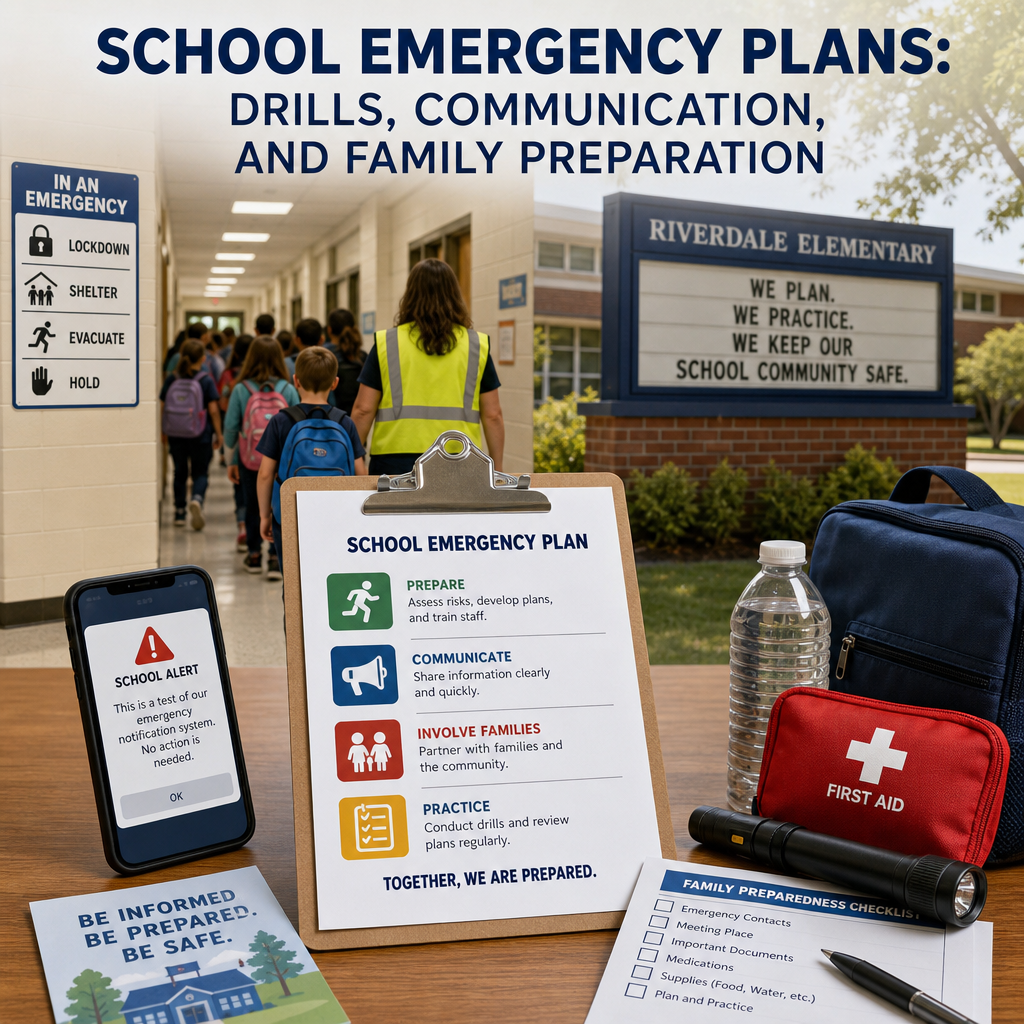
School Emergency Plans: Drills, Communication, and Family Preparation
A strong school emergency plan gives students, staff, and families clear steps to follow when the unexpected happens. From regular drills to reliable communication, preparation helps schools respond quickly, calmly, and safely.
By: Jennifer Collins on July 27, 2026
Every school hopes for an ordinary day: lessons begin on time, children settle into routines, and everyone goes home safely at the end of the day. But schools also have a responsibility to prepare for the unexpected. Fires, severe weather, lockdowns, power outages, medical emergencies, and other crises can happen with little warning. A strong school emergency plan helps protect students, staff, and visitors by making sure everyone knows what to do before, during, and after an emergency.
A good plan is not just a document stored in an office drawer. It is a coordinated system that includes regular drills, clear communication, trained staff, and family preparation. When these pieces work together, schools can respond quickly and calmly in stressful situations.
Why School Emergency Planning Matters
Children depend on adults to keep them safe, especially during moments of uncertainty. In an emergency, panic can spread quickly if people are unprepared. Planning reduces confusion and helps everyone act with confidence.
A well-designed emergency plan can:
Protect students and staff from harm
Reduce response time during an incident
Improve coordination with emergency responders
Limit fear and confusion
Help families know how to respond
Support recovery after the event
Emergency planning is not only about worst-case scenarios. It also strengthens everyday school operations by creating better communication and clearer procedures.
Core Elements of a School Emergency Plan
Every school should have an emergency plan tailored to its building, student population, location, and local risks. While details vary, most effective plans include several core elements.
Risk Assessment and Hazard Review
The first step is identifying likely emergencies. A school in a region with severe storms may prioritize shelter procedures, while a school in a dry area may focus on fire safety. Other common risks include:
Fires
Tornadoes and hurricanes
Earthquakes
Flooding
Intruders or security threats
Power outages
Chemical spills nearby
Medical emergencies
Transportation incidents
The goal is to understand what could happen and how the school would respond.
Clear Roles and Responsibilities
In an emergency, everyone should know their job. That includes:
Administrators coordinating the overall response
Teachers supervising and accounting for students
Office staff managing communication and visitor control
Custodial staff assisting with building safety
Nurses supporting medical needs
Security personnel helping with access and evacuation
Written role assignments prevent delays and confusion.
Evacuation and Shelter Procedures
A plan should explain exactly where people go during different emergencies. This includes:
Evacuation routes and exits
Shelter-in-place locations
Lockdown rooms
Severe weather shelters
Areas for reunification with families
Maps should be posted throughout the school, and routes should be reviewed regularly.
Student Accounting and Reunification
One of the most important parts of emergency planning is knowing where every student is. Schools should have reliable methods for attendance tracking during class changes, lunch, recess, field trips, and after-school programs.
Reunification procedures are equally important. If students must be moved to a safe location, families need a structured way to pick them up without causing confusion or security problems.
The Role of Drills in School Safety
Emergency drills turn written plans into action. They help students and staff practice what to do so the response becomes more automatic during a real event.
Why Drills Work
Drills help people:
Learn routes and procedures
Practice staying calm under pressure
Identify weak spots in the plan
Build muscle memory for quick action
Reduce fear by making the process familiar
For young children especially, practice matters. A fire drill or lockdown drill may feel unsettling the first time, but repeated, age-appropriate training helps students understand that adults are prepared.
Common Types of Drills
Schools typically use several types of drills, depending on local requirements and hazards:
Fire Drills
Fire drills teach students and staff how to exit the building quickly and safely. They should include:
Using the nearest safe exit
Walking quietly and efficiently
Meeting at designated assembly points
Taking attendance after evacuation
Lockdown Drills
Lockdown drills prepare schools for security threats or situations requiring rooms to be secured. Key steps often include:
Locking doors
Moving away from windows and doors
Turning off lights
Remaining quiet
Waiting for official all-clear instructions
Severe Weather Drills
In regions with tornadoes, hurricanes, or extreme storms, schools may practice moving to interior safe areas away from glass and exterior walls.
Earthquake Drills
Earthquake procedures often include “Drop, Cover, and Hold On,” followed by evacuation if needed.
Medical Emergency Drills
Some schools also rehearse responses to severe allergic reactions, seizures, cardiac events, or other urgent health situations.
How to Make Drills Effective
A drill is only useful if it is taken seriously and reviewed afterward. Best practices include:
Practicing multiple times per year
Varying times and conditions when appropriate
Using age-appropriate explanations
Training new staff before they begin working
Debriefing after each drill to identify improvements
For example, if a classroom took too long to evacuate because a hallway door was blocked, that problem should be addressed immediately. Small adjustments can make a big difference in a real emergency.
Communication: The Backbone of Emergency Response
During a crisis, communication can either calm a situation or make it worse. Schools need systems that are fast, reliable, and easy to understand.
Internal Communication
Staff must be able to reach one another quickly. This may involve:
Intercom systems
Two-way radios
Text alerts
Emergency phones
Designated communication chains
Internal communication should be simple and clear. Staff should know what terms are used and what each alert means.
External Communication
Families, emergency responders, and local authorities also need timely information. A school communication plan should explain:
Who notifies police, fire, or medical services
Who contacts district leaders
Who sends family updates
Who speaks to the media, if needed
Limiting communication to authorized personnel helps prevent misinformation.
What Good Emergency Messages Include
When sending updates to families or staff, messages should be short and specific. A strong message includes:
What happened, if it is known
What action the school is taking
Whether students are safe
Whether families should come to the school
Where and when to expect the next update
For example, a message might say:
“The school is currently sheltering due to severe weather. Students are safe and supervised. Please do not come to the building at this time. We will send another update in 20 minutes.”
This kind of message is calm, direct, and useful.
Multiple Communication Channels
Not everyone receives information the same way, so schools should use more than one communication method. Options may include:
Automated phone calls
Text messages
Emails
School apps
Website announcements
Social media updates
Printed notices for families without digital access
Using several channels increases the likelihood that important information reaches everyone.
Preparing Students for Emergencies
Students need to understand emergency procedures without being frightened by them. Age-appropriate instruction helps create confidence.
For Younger Students
Young children benefit from simple language and repetition. Teachers might say:
“When the bell rings, we line up and follow the teacher.”
“If we hear the announcement, we move quietly to the safe room.”
“During a drill, we practice so we know what to do.”
Visual cues, songs, and practice routines can help young learners remember steps.
For Older Students
Middle and high school students can handle more detailed explanations. Schools can teach them:
Why certain procedures exist
How to assist younger students
How to stay calm and follow directions
How to avoid sharing rumors during an emergency
Older students may also benefit from basic first aid and bystander safety education.
Supporting Students With Special Needs
Emergency plans must include accommodations for students with disabilities, medical conditions, language barriers, or emotional support needs. This may involve:
Evacuation assistance
Mobility aids
Communication cards or visual supports
Medication access
Quiet spaces for students with sensory sensitivities
Individualized emergency plans when needed
Planning ahead ensures that every student can be protected.
Family Preparation: Extending Safety Beyond the School Day
School safety does not end when the final bell rings. Families play an essential role in emergency readiness, especially when a crisis affects pickup, transportation, or communication.
Keep Contact Information Current
Schools can only reach families quickly if contact information is accurate. Parents and guardians should update:
Phone numbers
Emails
Emergency contacts
Authorized pickup names
Medical information
Home addresses
Families should also make sure the school knows who can legally pick up a child in an emergency.
Understand the School’s Emergency Procedures
Parents should know:
How the school communicates during emergencies
Where reunification will occur
What identification may be required for pickup
Whether they should come to the school or wait for instructions
Reading the school handbook and emergency updates helps families respond appropriately.
Create a Family Emergency Plan
A school emergency plan is strongest when families have one too. A family plan should include:
A list of emergency contacts
Meeting locations if family members are separated
Backup childcare arrangements
Medical information for each child
Copies of important documents
A plan for communication if phone service is limited
For example, if a snowstorm closes roads and students must remain at school longer than expected, families with a plan will know whom to contact and where to wait for updates.
Talk to Children About Safety
Children should know that emergency planning is a normal part of staying safe. Conversations can be reassuring rather than alarming. Parents might explain:
“Your teachers practice drills so everyone knows what to do.”
“If the school sends a message, we will follow the instructions.”
“If you ever feel scared, tell an adult.”
The goal is to build trust, not fear.
Building a Culture of Readiness
Emergency planning works best when it becomes part of the school culture. That means safety is not treated as a one-time project. It is an ongoing practice.
Train and Refresh Regularly
Staff turnover, building changes, and updated safety guidance can all affect a school’s response plan. Regular training ensures that everyone stays informed.
Review and Improve After Incidents
Even small emergencies or drill problems can reveal important lessons. Schools should review what worked, what didn’t, and what should change.
Partner With Local Agencies
Schools often benefit from working with fire departments, police, emergency management offices, and public health agencies. These partnerships can improve planning, training, and response coordination.
Keep Plans Accessible
Emergency plans should be easy to find, understand, and use. Staff should not have to search through outdated files during a crisis. Important documents, maps, and contact lists should be reviewed and updated regularly.
Examples of Good Emergency Preparation in Action
Consider a school facing a severe thunderstorm warning during the afternoon. Because the school has practiced weather drills, students and staff move quickly to interior hallways away from windows. Teachers take attendance, administrators monitor weather alerts, and families receive a clear message telling them that students are safe and that dismissal will be delayed until conditions improve.
Or imagine a fire alarm sounding in a primary school. Because students have practiced, they know to line up quietly, follow their teacher, and meet at the designated area. Staff account for every child, and the fire department confirms there is no danger. The routine drill has helped make a potentially frightening situation manageable.
These examples show how preparation reduces chaos and protects people.
Frequently Asked Questions
1. What is a school Emergency Operations Plan?
An Emergency Operations Plan is a coordinated document that explains how a school will prevent, prepare for, respond to, and recover from emergencies. It identifies procedures, staff responsibilities, communication methods, evacuation routes, and reunification processes.
2. Why do schools conduct emergency drills?
Drills allow students and staff to practice emergency procedures, understand their responsibilities, identify weaknesses in the plan, and respond more effectively during an actual incident.
3. How will families receive information during a school emergency?
Schools may communicate through text messages, automated calls, emails, applications, websites, or social media. Families should keep their contact information current and follow official school instructions instead of relying on rumors.
4. How does emergency student reunification work?
If students cannot be released from the school normally, the district may move them to a designated reunification location. Parents or guardians may need identification, and the school must verify that each student is released to an authorized person.
5. How should emergency plans support students with disabilities?
Plans should address mobility, communication, medical, sensory, behavioral, and other individual needs. Schools may use accessible alerts, evacuation assistance, medication procedures, specialized equipment, and individualized emergency arrangements.
School emergency plans are about more than compliance. They are about readiness, confidence, and care. Drills teach students and staff how to act. Communication keeps everyone informed. Family preparation extends safety beyond the classroom and helps create a shared response.
When schools, families, and communities work together, emergencies become more manageable and recovery becomes smoother. A thoughtful plan cannot prevent every crisis, but it can make all the difference in how safely and effectively a school responds when one occurs.
Jennifer, M.Ed., holds a degree in Higher Education Administration, with
a focus on U.S. college financial aid, admissions policy, and student
support systems. She researches and writes about scholarships, federal
aid programs, and the college planning process to help students and
families make informed, well-supported decisions.