Ready to Learn Program 2026: Early Literacy and Educational Media Support
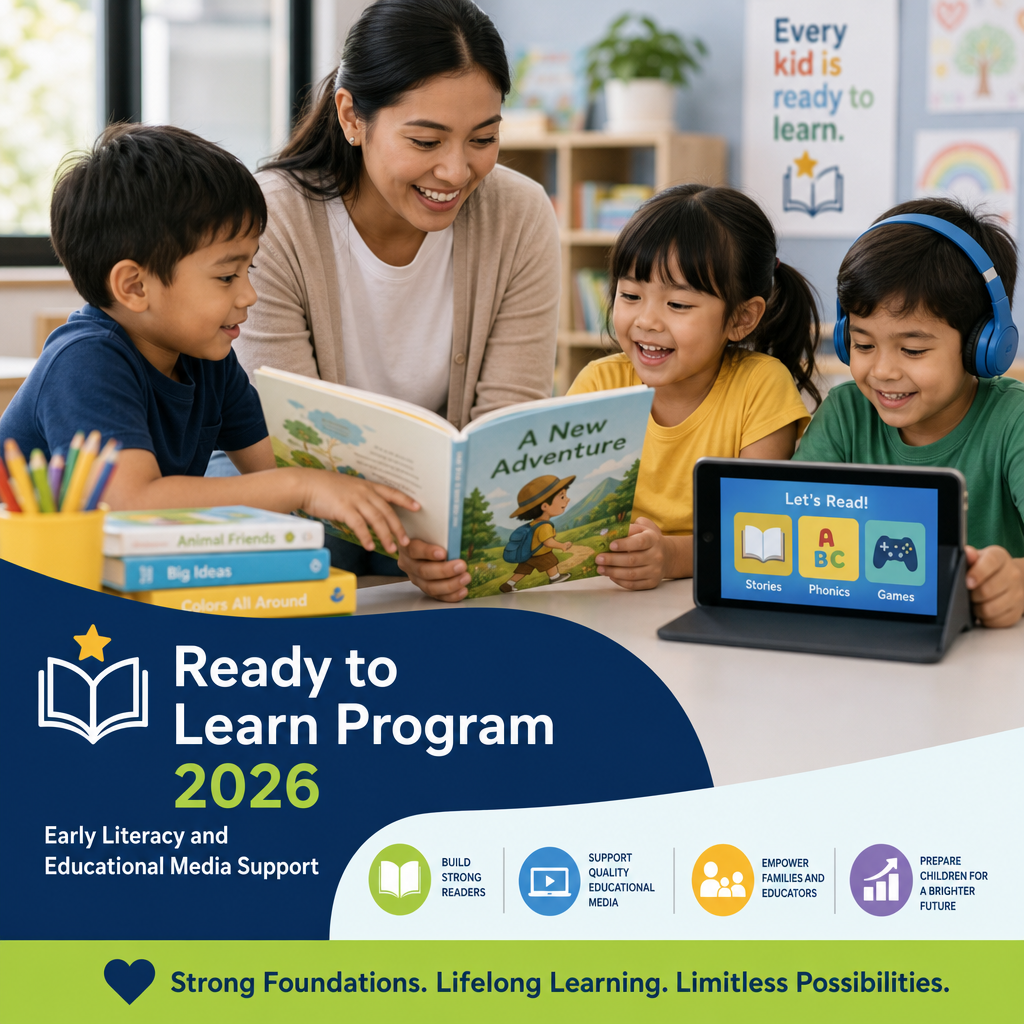
The Ready to Learn Program 2026 uses educational media to give young children engaging, research-based early literacy support that helps build language, print awareness, and reading readiness. By reaching families and educators with accessible tools, it helps more children start school prepared to learn and succeed.
By: Jennifer Collins on July 27, 2026
Early literacy is one of the strongest predictors of later school success. When children enter kindergarten with a solid foundation in language, vocabulary, print awareness, and storytelling, they are better prepared to read, write, and learn across subjects. Yet not every child has equal access to books, enrichment, or adult support at home. That is where the Ready to Learn Program 2026 stands out.
The program continues a long-standing national effort to use educational media as a bridge to learning, especially for young children from underserved communities. In 2026, its focus remains clear: combine engaging media with research-based early literacy support so that children can build essential skills in ways that are fun, accessible, and effective.
What Is the Ready to Learn Program?
The Ready to Learn Program is a federal education initiative that supports the development of high-quality educational media for children. It is designed to help young learners, particularly those in low-income households, gain access to learning tools that strengthen academic readiness.
At its core, the program funds the creation of:
Educational television and digital media
Interactive learning games and apps
Printable and multimedia literacy resources
Family engagement tools
Teacher and caregiver support materials
In 2026, the program continues to focus on children from birth through elementary school, with a particular emphasis on early literacy, math readiness, and school readiness skills. Educational media produced under the program is often distributed through public broadcasting, online platforms, and classroom-friendly resources that families can use at home.
Why Educational Media Matters for Early Literacy
Young children learn language best through repetition, interaction, and meaningful exposure. Educational media can support this process by presenting stories, songs, conversations, and print concepts in engaging ways. When used well, it can reinforce what children are already learning from parents, caregivers, and teachers.
Key literacy benefits of educational media
Educational media can help children:
Learn new vocabulary words
Recognize letters and sounds
Understand story structure
Build listening comprehension
Develop print awareness
Practice rhyme and phonological awareness
Strengthen memory and attention
For example, a child watching a program that pauses to ask, “What sound does this word start with?” is not just being entertained. They are being invited to actively process language. If the program includes repetition, songs, and interactive prompts, the learning becomes even stronger.
Media is most effective when it is interactive
The best educational media is not passive. It encourages children to respond, repeat, predict, sing, move, or talk back to the screen. Research has shown that children learn more when adults join in, ask questions, and connect media content to everyday life.
A simple example:
A child watches a short animated story about a dog at the park.
The caregiver asks, “What did the dog do first?”
The child answers and points to pictures in a printed activity sheet.
The caregiver then encourages the child to find words that begin with the same sound as “dog.”
This kind of interaction turns media into a literacy experience rather than a screen-time activity.
What’s New in Ready to Learn Program 2026?
While the program’s mission remains consistent, the 2026 version reflects the changing ways children and families access learning. More families now use streaming content, mobile devices, and hybrid learning platforms, so the program is designed to meet them where they are.
1. Expanded digital access
One major update is the continued emphasis on cross-platform access. Educational content is no longer limited to television. In 2026, many Ready to Learn-supported resources are available through:
Streaming video libraries
Educational apps
Mobile-friendly websites
Downloadable activity guides
Classroom companion tools
This flexibility matters because families have different schedules, technology access, and learning preferences. A parent may use a tablet during a commute, while a teacher may use the same content on a classroom smartboard.
2. Stronger family engagement tools
The program recognizes that children learn best when families are involved. Many 2026 materials are built to support caregivers who want to help but may not know where to start.
These tools often include:
Simple talking points for parents
Questions to ask during and after viewing
Printable activities linked to episodes
Tips for extending learning through daily routines
For instance, a literacy video about grocery shopping might come with a printable list activity. Caregivers can point out signs, labels, and beginning sounds while shopping, helping children connect media to the real world.
3. Inclusive and culturally relevant content
Another important direction in 2026 is representation. Children are more likely to engage with stories and lessons that reflect their own experiences, languages, and communities. Ready to Learn-funded content increasingly features diverse characters, multilingual support, and culturally relevant examples.
This matters for early literacy because children build stronger language connections when they see familiar names, places, foods, and traditions in the materials they use.
How the Program Supports Early Literacy Development
The Ready to Learn Program supports early literacy through a combination of content design, research, and accessibility. Its goal is not merely to entertain children, but to teach foundational skills in developmentally appropriate ways.
Print awareness
Print awareness is the understanding that print carries meaning. Children learn that books are read from left to right, that words are separated by spaces, and that letters make up words.
Educational media can reinforce print awareness by:
Highlighting words on the screen
Showing text matched to spoken words
Demonstrating how to follow a story page by page
Using captions and labels
Phonological awareness
Phonological awareness is the ability to hear and manipulate the sounds in spoken language. This includes recognizing rhymes, syllables, and beginning sounds.
Programs supported by Ready to Learn often use:
Rhyming songs
Word play
Sound matching games
Repetition of target sounds
A child who hears repeated words like “cat, cap, cup” starts to notice shared beginning sounds. That awareness later supports decoding when they begin reading independently.
Vocabulary growth
Young children need rich language exposure to build vocabulary. Educational media often introduces words that may not appear in everyday conversation.
Examples might include:
Opposite words like “heavy” and “light”
Descriptive words like “shiny,” “curvy,” or “gigantic”
Academic words like “compare,” “observe,” or “predict”
When these words appear in context, children are more likely to understand and remember them.
Comprehension and narrative skills
Listening to stories is only the first step. Children also need to understand the characters, sequence, problem, and solution in a narrative.
Educational media helps by:
Asking children to predict what happens next
Summarizing key story events
Repeating story structure
Encouraging retelling
For example, after watching a short animated story, a child might be asked to explain who the main character was and what problem they solved. These skills support both reading comprehension and oral language development.
Examples of Effective Ready to Learn Activities
One of the strengths of the program is that it often extends beyond the screen. The most effective resources combine viewing, playing, speaking, and doing.
Story-based episodes with activities
A short story episode might introduce a letter sound, a new word family, or a sequencing challenge. After the episode, children can complete an activity such as:
Cutting and pasting story pictures in order
Matching letters to sounds
Drawing their favorite scene
Retelling the story aloud
Interactive games
Digital games can support early literacy when they are designed with clear learning goals. For example, a game might ask children to:
Tap the picture that starts with the /m/ sound
Help a character find rhyming words
Arrange pictures in story order
Trace letters on a touchscreen
These games work best when they are short, focused, and paired with adult support.
Music and movement
Songs can be powerful literacy tools. Rhythmic repetition helps children hear syllables and language patterns. Movement also keeps young learners engaged.
A song about the alphabet can become a movement game:
Clap for each syllable
Jump when hearing a certain sound
Act out vocabulary words
Point to letters on a poster while singing
Print-and-play materials
Many Ready to Learn resources include worksheets, story cards, and family guides. These materials are useful because they can be used offline and repeated as often as needed.
Examples include:
Letter scavenger hunts
Word family cards
Story sequence strips
Color-and-label pages
How Families Can Use Educational Media Well
Educational media is most effective when adults use it intentionally. Families do not need a teaching background to support early literacy. Small habits can make a big difference.
Watch or play together
Co-viewing and co-playing help children stay focused and deepen understanding. Adults can pause a video to ask questions, repeat a sound, or connect the content to daily life.
Ask simple questions
Good questions do not need to be complicated. Try prompts like:
What do you see?
What happened first?
Can you find the letter?
Which word rhymes?
What do you think will happen next?
Repeat favorite content
Repetition is helpful for young children. Watching or listening to a favorite episode multiple times can strengthen memory and vocabulary. Each viewing can focus on a different skill.
For example:
First viewing: enjoy the story
Second viewing: notice vocabulary words
Third viewing: talk about beginning sounds
Fourth viewing: retell the story in order
Use media to spark real-world learning
If a program features animals, take a walk and talk about animal sounds. If it features shopping, point out labels and signs in the store. If it highlights letters, look for those letters in books, magazines, or street signs.
The goal is to connect digital learning to everyday literacy experiences.
Why 2026 Matters for Early Literacy Support
The learning landscape has changed. Families face busy schedules, limited preschool access, and uneven technology resources. At the same time, children are growing up in a media-rich environment. That makes the Ready to Learn Program especially important in 2026.
It helps ensure that educational content is not just available, but thoughtfully designed to support learning. It also closes gaps by giving children high-quality exposure to language, stories, and learning routines that may not otherwise be accessible.
In practical terms, this means:
Children can learn foundational literacy skills through fun, familiar formats
Families can participate without needing expensive materials
Teachers can reinforce classroom goals with trusted media
Communities can access content that is research-based and developmentally appropriate
The Lasting Value of Educational Media
Educational media works best when it is part of a larger learning environment. It should not replace books, conversation, play, or classroom instruction. Instead, it should complement them.
The Ready to Learn Program 2026 succeeds because it understands that early literacy is built through many small moments:
Hearing a story read aloud
Singing a rhyme
Naming pictures
Recognizing a letter
Retelling a sequence
Asking and answering questions
When media supports those moments, it becomes a powerful tool for school readiness.
Frequently Asked Questions
1. What is Ready to Learn Programming?
Ready to Learn Programming is a federal discretionary grant program that supports accessible educational television, video programming, digital content, family resources, community outreach, and research for preschool and elementary school children.
2. Can parents or individual teachers apply for Ready to Learn funding?
No. Only qualifying public telecommunications entities, such as public broadcast stations and certain nonprofit telecommunications organizations, may apply directly for the federal grants.
3. What changed in the 2026 grant competition?
The 2026 competition is the first for new Ready to Learn awards since 2020. The application period opened on May 8 and closed on July 8, 2026. The Department estimated that one to three cooperative agreements could be awarded for five-year projects.
4. Does the 2026 program specifically support early literacy?
Evidence-based literacy is an invitational priority in the 2026 competition. Applicants may propose projects that expand systematic instruction in areas such as phonological awareness, phonics, vocabulary, language structure, fluency, comprehension, and writing.
5. Where can families currently find Ready to Learn resources?
Families and educators can access media and activities created through previous Ready to Learn initiatives on PBS LearningMedia. Newly funded resources from the 2026 competition will take time to develop after awards are made.
The Ready to Learn Program 2026 continues to show how educational media can support early literacy in meaningful, accessible ways. By combining engaging content, family-friendly tools, and research-backed learning strategies, the program helps young children build the language and reading foundations they need for future success. In a world where screens are everywhere, this kind of intentional media use offers something valuable: learning that is both accessible and effective.
Jennifer, M.Ed., holds a degree in Higher Education Administration, with
a focus on U.S. college financial aid, admissions policy, and student
support systems. She researches and writes about scholarships, federal
aid programs, and the college planning process to help students and
families make informed, well-supported decisions.