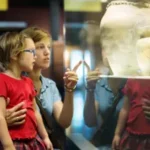
How National Parks Help Students Learn American History
National parks offer students a powerful way to explore American history by connecting lessons to the real places where key events happened. From battlefields to historic homes, these sites make the past more vivid, memorable, and meaningful.
By: Jennifer Collins on July 28, 2026
When many people think of national parks, they picture mountain trails, waterfalls, forests, and wildlife. But across the United States, national parks also preserve something just as important: the places where American history happened. Battlefields, historic homes, presidential sites, museums, memorials, and cultural landscapes all tell the story of how the nation grew, struggled, and changed.
For students, these places can turn history from a list of dates and names into something real and memorable. Instead of only reading about the Civil War, the Civil Rights Movement, westward expansion, or the experiences of Indigenous peoples, students can stand in the places where these events unfolded. National parks make American history visible, tangible, and personal.
Why National Parks Are Powerful Learning Spaces
History can sometimes feel distant in a classroom. Textbooks explain events, but they cannot fully show what a place looked like, how large it was, or why it mattered. National parks fill that gap.
They connect students to real locations
A classroom lesson on the American Revolution becomes more meaningful when students can visit a battlefield, a fort, or a historic meeting place. Seeing the landscape helps them understand the challenges people faced and the decisions they made.
For example:
At Independence National Historical Park in Philadelphia, students can visit Independence Hall, where the Declaration of Independence and the Constitution were debated and signed.
At Gettysburg National Military Park, students can walk the grounds of one of the most important battles of the Civil War.
At Selma to Montgomery National Historic Trail, they can learn about the marches that helped push the nation toward voting rights for all.
These visits help students understand that history happened in real places, not just in books.
They support hands-on learning
National parks often provide ranger talks, guided tours, museum exhibits, interactive displays, and educational programs. These activities help students learn by doing, observing, and asking questions.
Hands-on learning helps students:
remember key facts better
understand cause and effect
build stronger critical thinking skills
connect emotional and intellectual learning
A student who hears a ranger describe the lives of soldiers at a battlefield may remember much more than one who only reads a summary in class.
They encourage curiosity
A national park visit often sparks questions: Who lived here? What happened at this site? Why was this place preserved? Those questions naturally lead to deeper learning.
This curiosity is one of the biggest strengths of using parks to teach history. Students are not just receiving information; they are actively exploring it.
National Parks as Living History Classrooms
National parks are often called “outdoor classrooms,” and for good reason. They provide access to authentic historical evidence: buildings, artifacts, monuments, landscapes, and stories from different voices.
Historic sites show the human side of history
Textbooks may focus on major events and famous leaders, but parks often show the everyday people whose lives shaped history.
For instance:
At Martin Luther King, Jr. National Historical Park, students can learn about Dr. King’s life, his family, and the neighborhood that influenced his leadership.
At Harriet Tubman Underground Railroad National Historical Park, they can explore the life of a woman who risked everything to help others escape slavery.
At Little Bighorn Battlefield National Monument, students can study the complex and painful history of conflict between the U.S. military and Native peoples.
These sites help students see history from multiple perspectives, including those often left out of traditional lessons.
The landscape itself is part of the lesson
In many parks, the land tells a story. Hills, rivers, roads, and coastlines shaped historical events. Understanding the geography helps students better understand the history.
For example, the terrain at a battlefield can explain why one side had an advantage. A harbor can show why a port city became important in trade and war. A mountain pass can reveal why westward expansion followed certain routes.
This is especially useful for students who learn visually or spatially. Seeing the landscape makes abstract ideas more concrete.
Key Topics in American History Taught Through National Parks
National parks help students study many major topics in American history. These places can bring entire units to life.
The American Revolution and the Founding of the Nation
Sites linked to the Revolution help students understand how the colonies became an independent nation. Parks preserve battlefields, meeting halls, homes of founders, and important documents.
Students can learn about:
the causes of revolution
debates over independence
the creation of the Constitution
the early challenges of building a new government
At places like Boston National Historical Park or Valley Forge National Historical Park, students can explore the sacrifices and uncertainty of the Revolutionary era.
Westward Expansion
National parks also show how the United States expanded across the continent, often at great cost to Native peoples and other communities.
Parks and historic trails help students study:
migration and settlement
the Oregon Trail and other overland routes
the Gold Rush
conflicts over land and sovereignty
the impact of expansion on Indigenous nations
This topic is especially important because it encourages students to think critically about who benefited from expansion and who was harmed by it.
Slavery and the Civil War
Many parks preserve the history of slavery, emancipation, and the Civil War. These sites help students understand one of the most defining chapters in American history.
Students can examine:
the realities of enslaved life
the causes of the Civil War
major battles and military strategies
the Emancipation Proclamation
the long struggle for freedom and equality after the war
Parks make it possible to discuss these issues in a grounded, respectful way. They also show that history is not only about generals and presidents; it is also about enslaved people, abolitionists, soldiers, and families whose lives were changed forever.
Immigration and Industrialization
Some national parks preserve the stories of immigration, labor, and growing cities. These places help students see how the United States changed during the 19th and early 20th centuries.
Students can learn about:
workers in factories and mills
the rise of railroads and transportation networks
immigrant communities
the struggle for safer working conditions
the growth of urban America
Historic industrial sites and cultural parks can help students understand how economic change shaped everyday life.
The Civil Rights Movement
National parks play a crucial role in teaching the Civil Rights Movement. These sites preserve the places where people organized, marched, spoke out, and fought for justice.
Important lessons include:
nonviolent protest
voting rights
school desegregation
grassroots organizing
the role of youth and community leaders
For students, visiting a civil rights site can make the movement feel immediate and human. It reminds them that ordinary people helped create social change.
How Teachers Can Use National Parks in History Lessons
Teachers do not need to take students on a long field trip to use national parks in the classroom. Many parks offer digital resources, lesson plans, virtual tours, and online archives.
Use park websites and virtual tours
Most national parks have websites with maps, photographs, historical summaries, and educational materials. Some even offer virtual tours or recorded ranger programs.
Teachers can use these resources to:
introduce a unit
compare different historical sites
assign independent research
support at-home learning
A virtual visit to a historic site can still make a lesson more engaging than a standard textbook reading.
Build lessons around primary sources
Many parks preserve letters, speeches, photographs, military records, and artifacts. These are excellent primary sources for student analysis.
Teachers can ask students to:
identify the source
determine who created it and why
compare it with textbook accounts
discuss what it reveals about the time period
Primary sources help students practice historical thinking instead of simply memorizing facts.
Connect parks to local history
Even if students cannot visit a famous national park, there may be a historic site nearby that tells a story connected to American history. Local connections make the subject more meaningful.
For example, a school in the Northeast might study the Revolution through a nearby fort or historic home. A school in the South might connect lessons on slavery or civil rights to local memorials or trail sites. A school in the West might study migration, Native history, or conservation through a local national monument.
When students see history in their own region, they better understand that the past is part of the world around them.
Encourage reflection and discussion
After visiting or studying a park, students should have time to reflect. They might write a journal entry, create a presentation, or discuss what surprised them.
Useful prompts include:
What did you learn that was not in the textbook?
How did the place help you understand the event?
Whose stories were represented here?
What questions do you still have?
Reflection helps students process what they have seen and connect it to bigger historical themes.
Benefits Beyond the History Curriculum
National parks do more than teach facts about the past. They also help students develop broader skills and values.
They improve observation skills
Students learn to notice details in buildings, landscapes, markers, and exhibits. This careful observation strengthens both historical analysis and general critical thinking.
They build empathy
When students learn about people who lived in very different times, they begin to understand struggles, choices, and perspectives beyond their own experience. This can deepen empathy and civic awareness.
They strengthen civic understanding
American history is also the story of democracy, rights, conflict, and public responsibility. National parks show students how those ideas developed over time and why they still matter today.
They inspire stewardship
National parks teach students that historical sites are worth preserving. That message can encourage respect for public lands, cultural heritage, and shared national memory.
Examples of National Parks That Support History Learning
Here are a few well-known examples of places that can enrich American history instruction:
Independence National Historical Park — The nation’s founding documents and early government
Gettysburg National Military Park — The Civil War and its turning point
Petersburg National Battlefield — Military strategy and the final phase of the Civil War
Harriet Tubman Underground Railroad National Historical Park — Slavery, resistance, and liberation
Martin Luther King, Jr. National Historical Park — The Civil Rights Movement and leadership
Manzanar National Historic Site — Japanese American incarceration during World War II
Trail of Tears National Historic Trail — Forced removal of Native peoples and its lasting impact
Boston National Historical Park — Revolutionary-era protest and independence
Each site offers a different lens on American history. Together, they show that the nation’s story is broad, complicated, and still being understood.
Making History Feel Real
The best history lessons help students do more than remember dates. They help students understand people, choices, conflicts, and consequences. National parks are powerful because they turn history into something students can experience, not just study.
A historic place can show how one decision changed a battle. A preserved home can reveal what a family valued. A memorial can invite reflection on sacrifice and justice. A trail can reveal movement, hardship, and hope. These experiences stay with students long after a test is over.
Frequently Asked Questions
1. Why are national parks useful for teaching American history?
National parks allow students to study history through the actual landscapes, buildings, artifacts, and communities connected to important events. This place-based approach can make historical topics more concrete and memorable.
2. Can teachers use national park resources without organizing a field trip?
Yes. The National Park Service provides virtual field trips, lesson plans, maps, photographs, primary sources, videos, and ranger-led distance-learning programs that can be used in the classroom.
3. What is Teaching with Historic Places?
Teaching with Historic Places is a National Park Service program that offers place-based lessons using historic locations, maps, readings, images, and primary-source documents to teach American history and related subjects.
4. How can students analyze history during a national park visit?
Students can examine the landscape, historic structures, monuments, artifacts, and primary sources while comparing different perspectives. Teachers can use observation questions, worksheets, discussions, and evidence-based writing activities.
5. How should teachers prepare for a national park field trip?
Teachers should contact the park in advance to confirm reservations, program availability, accessibility, costs, transportation requirements, and group policies. Students should also receive historical background and clear learning objectives before the visit.
National parks are more than scenic destinations. They are living classrooms that help students learn American history in a vivid and meaningful way. By connecting lessons to real places, primary sources, and human stories, these parks make the past easier to understand and harder to forget.
Whether through a field trip, a virtual tour, or a classroom lesson built around park materials, students can use national parks to explore the nation’s founding, expansion, conflict, and progress. In doing so, they gain not only historical knowledge but also perspective, empathy, and a deeper appreciation for the people and places that shaped the United States.
Jennifer, M.Ed., holds a degree in Higher Education Administration, with
a focus on U.S. college financial aid, admissions policy, and student
support systems. She researches and writes about scholarships, federal
aid programs, and the college planning process to help students and
families make informed, well-supported decisions.