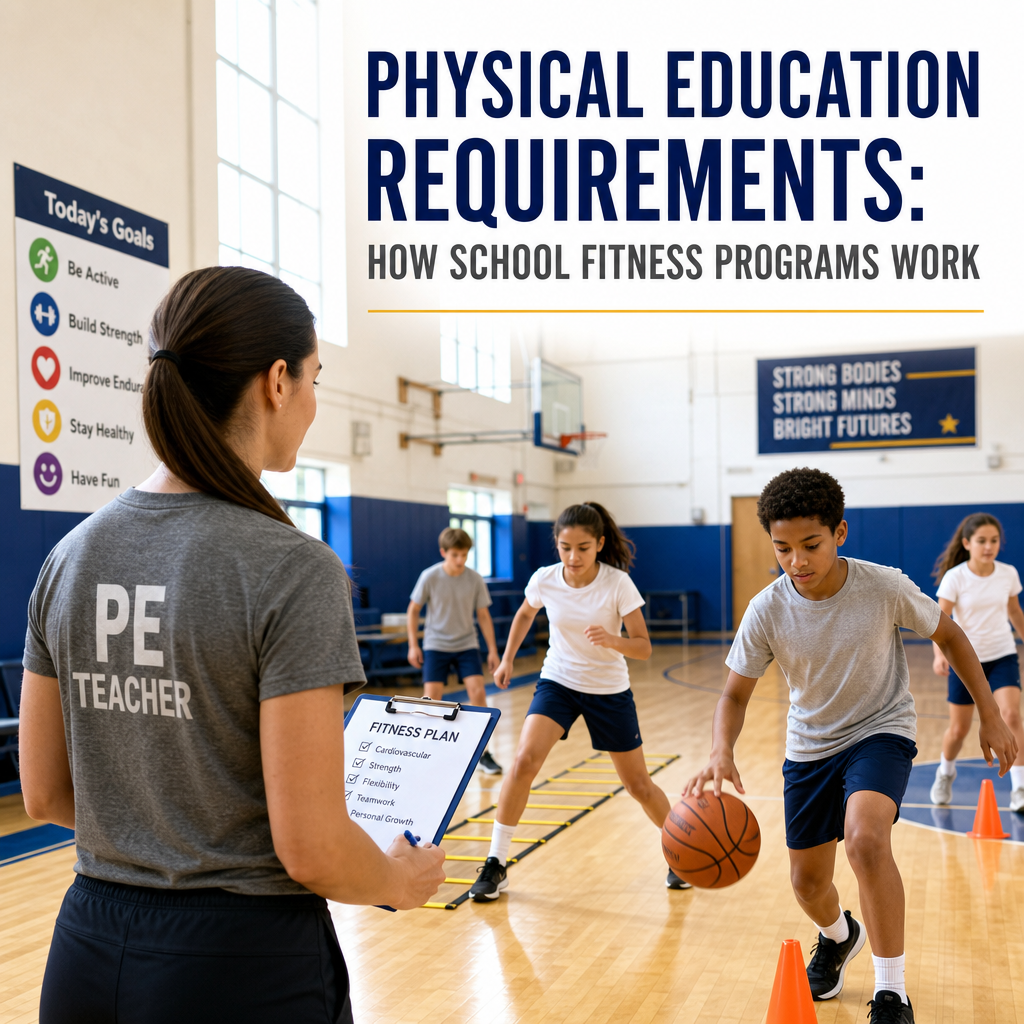
Physical Education Requirements: How School Fitness Programs Work
Physical education requirements help schools turn movement into a meaningful part of learning, giving students the skills, knowledge, and habits they need for lifelong health. From fitness activities to safety and teamwork, PE programs are designed to support both physical development and overall well-being.
By: Jennifer Collins on July 27, 2026
Physical education, often called PE, is more than just a break from classroom learning. It is a structured part of many school systems designed to help students build physical skills, understand health and wellness, and develop habits that can last into adulthood. While some students see PE as a chance to play games or get moving, school fitness programs usually follow specific requirements and goals that vary by grade level, district, and country.
Understanding how physical education requirements work can help parents, students, and educators see the value of these programs. From daily activity goals in elementary school to graduation requirements in high school, PE is shaped by curriculum standards, safety rules, and broader public health concerns. It is not simply about exercise; it is about giving students the tools to lead active lives.
What Is Physical Education?
Physical education is an instructional subject focused on movement, physical fitness, motor skills, and health-related knowledge. It typically includes activities such as:
Team sports like basketball, soccer, or volleyball
Individual fitness exercises
Dance and rhythm activities
Running, stretching, and conditioning
Games that build coordination and teamwork
A strong PE program does more than keep students active. It teaches students how to move correctly, how to stay safe during exercise, and why physical activity matters. In some schools, PE also includes lessons on nutrition, stress management, and personal fitness planning.
Unlike recess, which is usually unstructured free time, PE is planned and guided by an instructor. Lessons often have learning objectives, performance assessments, and participation expectations. Students may be graded on effort, skill development, attendance, or written knowledge of fitness concepts.
Why Schools Require Physical Education
Schools include physical education requirements for several important reasons. These requirements are based on both educational and health goals.
Supporting student health
Regular physical activity helps reduce the risk of obesity, heart disease, diabetes, and other long-term health problems. Since many children and teens spend much of the day sitting in classrooms, school PE provides a built-in opportunity to move.
Improving focus and learning
Exercise is linked to better concentration, mood, and memory. Students who participate in physical activity often return to academic classes feeling more alert and ready to learn. In this way, PE can support overall academic performance rather than compete with it.
Building lifelong habits
One of the main goals of PE is to help students develop habits that continue outside school. When children learn how to enjoy movement, set fitness goals, and stay active in different ways, they are more likely to remain healthy as adults.
Teaching social and emotional skills
Many physical education activities require teamwork, communication, cooperation, and resilience. Students learn how to win gracefully, handle failure, and work with others toward a shared goal. These are valuable life skills that extend far beyond the gym or playing field.
How Physical Education Requirements Are Set
Physical education requirements are usually determined at several levels, including national, state, district, and school policy levels. The exact rules vary widely, but most follow a common pattern: younger students need regular movement, and older students often need a set number of PE credits or class hours to graduate.
State and local standards
In many places, state education departments set minimum PE requirements. These may include:
A certain number of minutes per week
Required PE classes each year
Fitness assessments
Health education components
Adaptations for students with disabilities
School districts then decide how to meet those requirements through scheduling, staffing, and curriculum design. A district may offer PE every day in elementary school but only one semester per year in middle school or high school.
Grade-level differences
PE expectations change as students grow older.
Elementary school
At the elementary level, PE usually focuses on basic motor skills, coordination, and fun movement activities. Children might learn how to:
Run, jump, skip, and throw
Balance and coordinate movements
Follow simple rules in games
Understand personal space and safety
Elementary PE is often frequent and activity-based, with the goal of making movement a normal part of the school day.
Middle school
Middle school PE introduces more structured fitness concepts and a wider range of activities. Students may begin learning about:
Cardiovascular fitness
Strength and flexibility
Team strategy
Personal goal setting
Healthy habits and self-assessment
This is often the time when students are encouraged to take more responsibility for their own effort and progress.
High school
High school physical education requirements can be more formal, especially if they count toward graduation. Students may need to earn a certain number of PE credits or complete specific courses. These might include:
General fitness
Lifetime sports
Health and wellness
Weight training
Outdoor recreation
At this stage, PE often shifts toward helping teens build independence and choose activities they can continue after graduation.
What School Fitness Programs Usually Include
School fitness programs are often broader than a single gym class. They may include several parts that work together to promote healthy living.
Activity-based lessons
These are the most visible part of PE. Students participate in games, drills, workouts, or movement exercises designed to improve fitness and skill. Lessons may be competitive, cooperative, or individualized.
For example, a class might rotate through stations such as:
Jump rope
Shuttle runs
Medicine ball exercises
Stretching and yoga
Partner throwing drills
Fitness education
Many PE programs also teach students the science behind exercise. This can include topics like:
How heart rate changes during activity
The importance of warming up and cooling down
How muscles work
The role of nutrition and hydration
The difference between aerobic and anaerobic exercise
This knowledge helps students understand why movement matters, not just how to do it.
Assessment and tracking
Schools may assess student progress through:
Skill demonstrations
Participation records
Written quizzes
Fitness tests
Personal fitness logs
Some schools use formal fitness assessments, such as timed runs, push-up counts, or flexibility tests. These are usually meant to measure improvement over time, not to compare students unfairly against one another.
Adapted physical education
Students with disabilities may participate in adapted PE, which modifies activities so they can join safely and meaningfully. Adaptations may include:
Adjusted equipment
Modified rules
Smaller group settings
Extra support from teachers or aides
The goal is inclusion, ensuring that every student has access to movement and physical learning.
Common Challenges in PE Programs
Even when schools value physical education, delivering effective programs can be difficult. Several challenges often affect how PE requirements are implemented.
Limited time in the school day
One of the biggest challenges is schedule pressure. Schools must balance PE with math, reading, science, and other academic subjects. As a result, some schools reduce PE minutes or schedule it only a few times per week.
This can be frustrating because children often need regular activity to stay healthy and focused. When PE time is limited, teachers may try to make each lesson more active and efficient.
Lack of facilities or equipment
Not every school has a gym, track, athletic field, or enough equipment for large classes. In some schools, PE takes place in multipurpose rooms, hallways, or outdoor spaces that may be affected by weather.
Even basic equipment shortages can affect program quality. Cones, balls, jump ropes, and fitness mats all help create a more effective learning environment.
Large class sizes
When PE classes are too large, it can be harder to give students individual feedback or keep everyone active. Teachers must manage safety, participation, and classroom behavior at the same time.
Large groups can also limit the variety of activities offered. A teacher may need to choose simpler, lower-risk games that are easier to supervise.
Student attitudes
Some students love PE, while others feel anxious, self-conscious, or uninterested. Students who struggle with sports or fitness may worry about embarrassment or comparison with peers.
Good PE programs try to reduce this stress by emphasizing personal improvement, effort, and participation rather than only athletic ability. A student who is not naturally sporty can still succeed through consistent engagement and progress.
How PE Teachers Make Programs Effective
A well-run PE program depends on thoughtful teaching. PE teachers do much more than supervise games; they design lessons that meet educational standards and help all students participate safely.
Creating inclusive lessons
Teachers often plan activities so students of different abilities can join in. This may involve:
Offering multiple skill levels
Using teamwork instead of only competition
Changing rules to increase participation
Providing visual demonstrations and clear instructions
Inclusive teaching helps students feel successful and keeps classes active for everyone.
Focusing on skill development
Strong PE programs do not only reward athletic talent. They help students improve over time. For example, a student may learn how to throw a ball more accurately, run with better form, or hold a plank longer by the end of a term.
Skill development gives students a sense of progress and builds confidence.
Encouraging lifelong fitness
Teachers often aim to connect class activities with real-life exercise options. A lesson on cardio might lead into a discussion of walking, cycling, dancing, or swimming as activities students can do outside school. A strength unit may introduce bodyweight exercises that require little equipment.
By showing that fitness can be practical and accessible, PE teachers help students see movement as something useful in everyday life.
Examples of School Fitness Programs in Action
Different schools may organize PE in different ways, but the goals are often similar. Here are a few common examples.
Elementary movement rotation
A lower elementary class might rotate through stations that focus on locomotor skills, balance, and coordination. Students could spend part of the lesson hopping through hoops, part practicing underhand throws, and part doing guided stretching. The lesson is active, playful, and designed to build confidence.
Middle school fitness circuits
A middle school PE class might use timed fitness circuits. Students move through stations such as jumping jacks, lunges, step-ups, and rope climbing. Each station targets a different part of fitness, and students record their effort or repetitions.
High school wellness and lifetime sports
A high school might offer a semester of general PE and a semester of wellness or lifetime sports. Students could learn how to use gym equipment safely, practice heart-rate monitoring, and try activities like tennis, walking programs, or fitness training. This helps prepare them for exercise beyond school sports.
The Role of Families and Communities
School fitness programs work best when families and communities support them. Parents can encourage healthy routines by making time for active play, walking, biking, sports, or family outings. Community centers, parks, and youth organizations can also provide safe opportunities for movement outside school.
When students see that physical activity matters at home and in the community, PE becomes part of a larger healthy lifestyle rather than just another class.
Frequently Asked Questions
1. Is physical education the same as recess?
No. Physical education is a planned instructional subject with learning objectives, teacher guidance, and assessments. Recess is generally unstructured time that allows students to play, move, and socialize.
2. Who determines school physical education requirements?
PE requirements are primarily established through state laws, state education standards, and local district policies. Requirements may specify instructional minutes, required courses, graduation credits, assessments, or grade levels.
3. How much physical activity should children and teenagers receive?
Federal health guidelines recommend that young people ages 6 through 17 receive at least 60 minutes of moderate-to-vigorous physical activity each day. PE can contribute to this goal but may not provide the entire recommended amount.
4. Can students with disabilities participate in physical education?
Yes. Eligible students must have access to appropriate physical education services. When necessary, activities, equipment, instruction, or rules may be adapted, and specially designed physical education may be included in the student’s IEP.
5. How should schools use student fitness assessments?
Fitness assessments should help students understand their physical fitness and measure personal progress. Results should be handled confidentially and should not be used to embarrass students or create unfair comparisons.
Physical education requirements are an important part of school fitness programs because they help students stay active, learn healthy habits, and develop skills for life. While the details vary from place to place, most PE programs aim to do more than fill time in the schedule. They support physical health, academic focus, social growth, and long-term wellbeing.
When schools provide quality PE, students gain much more than exercise. They learn how to move confidently, work with others, and take responsibility for their own health. That makes physical education one of the most valuable parts of a well-rounded education.
Jennifer, M.Ed., holds a degree in Higher Education Administration, with
a focus on U.S. college financial aid, admissions policy, and student
support systems. She researches and writes about scholarships, federal
aid programs, and the college planning process to help students and
families make informed, well-supported decisions.