Object-Based Learning: Using Museum Collections in the Classroom
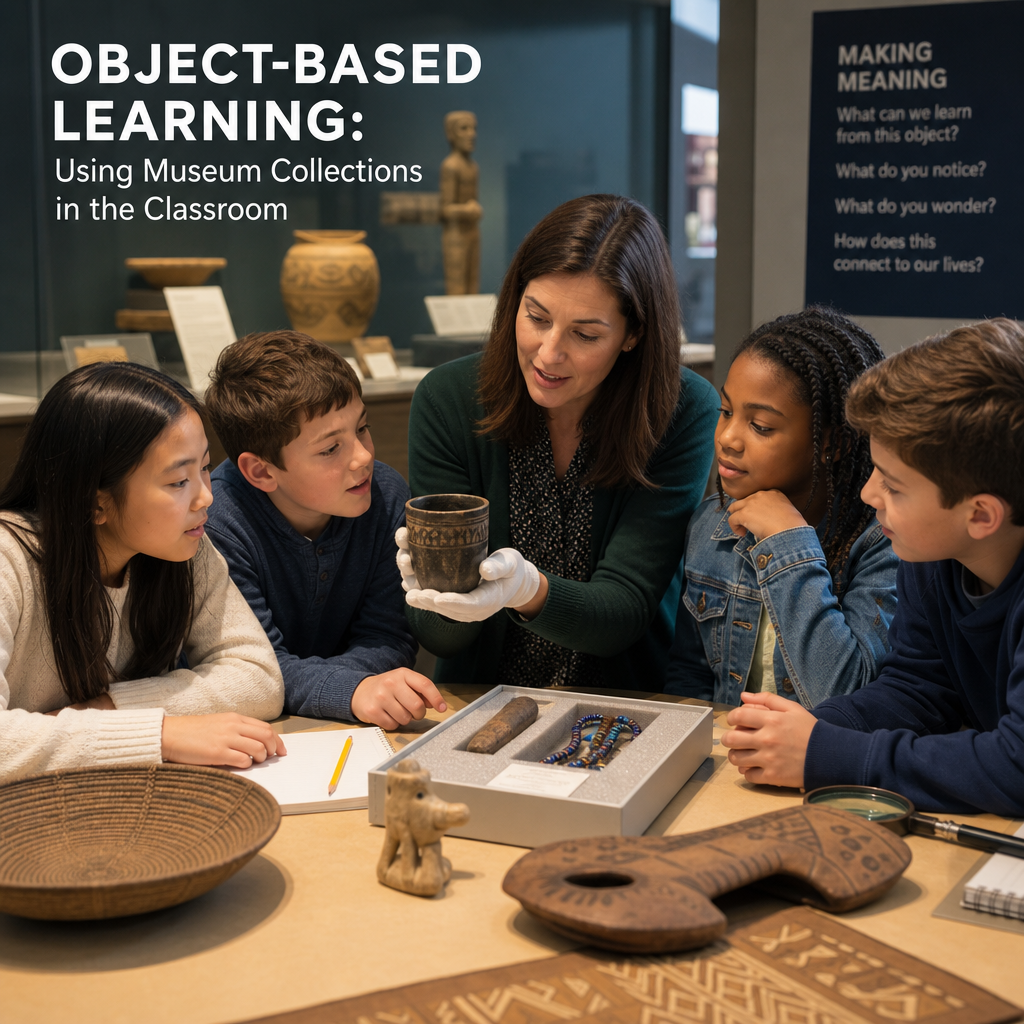
Object-based learning brings museum collections into the classroom in a hands-on way, helping students explore real objects, ask better questions, and connect with history, science, and culture more deeply. By starting with something tangible, teachers can spark curiosity and turn abstract ideas into memorable learning experiences.
By: Jennifer Collins on July 28, 2026
Museum collections are more than display cases and labels. They are windows into history, science, culture, and human creativity. In the classroom, they can become powerful teaching tools that spark curiosity, deepen understanding, and help students think critically about the world around them. This approach, known as object-based learning, uses real or replica objects as the starting point for inquiry and discussion.
Whether it is a fossil, a handwritten letter, a ceramic bowl, a piece of clothing, or a digital image of an artifact, objects can make learning tangible. They encourage students to observe closely, ask questions, and build connections between the item in front of them and larger ideas in the curriculum. For teachers, museum collections offer a rich way to bring lessons to life.
What Is Object-Based Learning?
Object-based learning is a teaching method that centers on the close study of physical objects. Instead of beginning with a lecture or textbook explanation, the lesson starts with an item. Students examine the object, describe what they notice, and infer its purpose, origin, or significance.
The object may come from a museum collection, a classroom collection, a local archive, or even a family heirloom brought in by a student. The key idea is that the object is not just an illustration of content; it is the content. Learning unfolds through observation, interpretation, and discussion.
This approach works especially well because objects are concrete. They can make abstract topics easier to understand. A photograph of a 19th-century factory may show industrial life, but a worker’s tool, uniform, or lunch pail can make that world feel immediate and real.
Why It Matters in Education
Object-based learning supports several important educational goals:
It develops observation and inference skills.
It encourages curiosity and independent thinking.
It helps students make evidence-based claims.
It supports interdisciplinary learning.
It offers an inclusive entry point for different learning styles.
Because objects invite interpretation, there is rarely just one correct answer. That makes them ideal for discussion-based classrooms where students are encouraged to explore ideas and support them with evidence.
Why Museum Collections Work So Well
Museum collections are especially well suited to classroom use because they contain a wide variety of materials from different time periods, places, and disciplines. A museum object can connect history, art, geography, science, and social studies in a single lesson.
For example, a clay tablet from ancient Mesopotamia can introduce students to early writing systems, trade, governance, and daily life. A preserved bird specimen can lead to lessons on adaptation, habitats, classification, and conservation. A protest poster can open conversations about civic action, design, rhetoric, and social change.
Museum objects also carry a sense of authenticity. Students often respond strongly to the idea that they are looking at something real, something used, worn, created, or preserved by people from another time or place. That emotional and intellectual connection can make learning more memorable.
Museum Collections Offer Range and Depth
Museum collections provide:
Historical artifacts such as tools, documents, clothing, and household items
Scientific specimens such as fossils, plants, animals, and minerals
Art objects such as paintings, sculptures, prints, and textiles
Cultural materials such as ceremonial objects, music instruments, and textiles
Digital access to items that may be too fragile or rare to handle in person
This range allows teachers to tailor lessons to different age groups and subject areas. A primary school class might study a toy from the past, while older students might analyze a political artifact or archaeological object.
The Educational Benefits of Learning Through Objects
Using museum collections in the classroom offers a number of benefits beyond content knowledge.
1. It Builds Close Observation
When students examine an object carefully, they begin to notice details they might otherwise overlook. They may identify materials, signs of wear, decoration, shape, color, or evidence of repair. These details become clues.
This kind of attention to detail is useful across subjects. In science, students observe patterns and differences. In language arts, they interpret evidence. In history, they consider context. Observation becomes a foundation for deeper thinking.
2. It Encourages Inquiry
Objects naturally raise questions. Who made this? What was it used for? Why was it preserved? What does it tell us about the people who used it?
These questions shift students from passive receivers of information to active investigators. Instead of waiting for facts to be delivered, they explore possibilities and test ideas against evidence.
3. It Supports Memory and Understanding
People often remember objects more vividly than abstract concepts. A lesson about immigration can become more meaningful when students study a suitcase, passport, or piece of luggage. A lesson about ancient trade can become clearer when students examine a coin, jar, or bead.
Objects help anchor knowledge. They provide a concrete reference point that students can return to when discussing broader themes.
4. It Promotes Discussion and Collaboration
Object-based learning works well in pairs, small groups, or whole-class discussions. Students can compare observations, debate interpretations, and build on one another’s ideas. This collaborative process helps students learn not only from the object but also from each other.
5. It Makes Learning More Inclusive
Not all students respond equally well to reading-heavy or lecture-based instruction. Objects can provide an alternative route into learning through visual, tactile, and discussion-based engagement. They can also support multilingual learners by offering a shared reference point that does not depend solely on language.
How to Use Museum Collections in the Classroom
Museum collections can be used in many different ways, from a single object at the start of a lesson to a full inquiry unit built around artifacts. The best approach depends on your goals, your students, and the resources available.
Start With Observation
A simple but effective strategy is to present an object without explanation and ask students to observe it closely. Encourage them to answer questions such as:
What do you notice?
What do you think it is made of?
How old do you think it is?
What might it have been used for?
What clues support your ideas?
At this stage, the goal is not to guess correctly but to think carefully and support ideas with evidence. Teachers can guide students to move from description to interpretation.
Use Structured Questioning
A helpful classroom routine is to move through three stages:
See — What do you notice?
Think — What do you think is happening or what might this object mean?
Wonder — What questions do you still have?
This structure helps students slow down, reflect, and connect observations to deeper questions.
Connect Objects to Curriculum
Objects should not be isolated curiosities. They work best when linked to existing learning goals. A Victorian teacup might support a unit on trade, empire, or social class. A mineral sample could fit into a geology lesson. A wartime ration book could connect to lessons on home front life and economic change.
The object becomes a gateway to the curriculum rather than a distraction from it.
Compare and Contrast
Teachers can deepen analysis by introducing multiple objects. Students might compare:
Two versions of the same tool from different time periods
An original object and a modern equivalent
Objects from different cultures with similar uses
Artifacts that show changing technology or design
Comparison helps students notice change, continuity, and difference. It also develops analytical thinking by encouraging them to explain why objects vary.
Use Digital Museum Resources
Many museums now provide high-quality online collections, virtual galleries, 3D models, and downloadable educational materials. These resources make object-based learning more accessible, especially for schools that cannot visit in person.
Digital collections can be used in several ways:
Projecting objects on a screen for class discussion
Assigning students to research an artifact online
Creating virtual scavenger hunts
Building presentations around selected items
Using zoomable images to inspect fine details
These tools are especially useful when the object is fragile, rare, or located far from the classroom.
Practical Examples Across Subjects
Object-based learning is flexible and can be adapted for many subjects.
History
A teacher might bring in a replica Roman coin, a wartime letter, or a migration trunk. Students can investigate what the object reveals about trade, conflict, travel, or everyday life.
For example, a letter from a soldier can help students understand not just military history but also personal experience, emotion, and communication during wartime.
Science
A fossil, shell, or specimen can support lessons on classification, adaptation, or environmental change. Students can compare a set of animal skulls to infer diet, or examine rocks to identify composition and formation processes.
An object like a preserved seed pod can lead to questions about plant reproduction, dispersal, and ecosystems.
Art and Design
Students can study materials, shape, pattern, and craftsmanship. A carved mask, textile, or ceramic vessel can open discussions about aesthetics, symbolism, and function. They can also analyze how form and function work together.
English and Literacy
Objects can inspire descriptive writing, storytelling, argument, and creative interpretation. A worn shoe, for instance, might prompt students to imagine the life of its owner. A historical toy could serve as the basis for a narrative or a persuasive piece about childhood and play.
Geography and Social Studies
Maps, travel objects, commercial goods, and cultural artifacts can help students explore movement, exchange, identity, and place. A shipping container label, for example, can lead to lessons on global trade and supply chains.
Tips for Teachers
Using museum collections effectively requires planning, but it does not have to be complicated.
Choose Objects with Clear Learning Value
Select objects that connect meaningfully to your lesson objectives. An object should do more than catch attention; it should support analysis, discussion, or application.
Give Students Time
Students need time to look carefully and think. Resist the urge to explain the object too quickly. Let students build ideas first, then provide background information.
Encourage Evidence-Based Talk
When students make a claim, ask them to point to specific features of the object that support it. This habit strengthens reasoning and keeps discussions grounded in observation.
Make Room for Multiple Interpretations
Objects can be ambiguous. That ambiguity is useful. Different students may notice different things, and their interpretations may all be reasonable. Encourage open discussion and show that uncertainty is part of inquiry.
Use Accessible Language
Some museum labels contain advanced vocabulary. Adapt descriptions to suit your students’ age and language levels. You can introduce key terms gradually after students have examined the object.
Combine Objects with Other Sources
Objects are most effective when paired with images, maps, texts, timelines, or oral histories. This helps students place the object in context and deepen their understanding.
A Classroom Example
Imagine a middle school history class studying the Industrial Revolution. Instead of beginning with a textbook chapter, the teacher presents a series of objects: a child-sized factory badge, a spinning shuttle, a coal miner’s lamp, and a mass-produced tin container.
Students work in groups to examine each item. They describe what they see, speculate about use, and discuss what the objects suggest about work, technology, and daily life. One group notices that the badge is worn and faded, suggesting long use. Another group infers that the lamp may have been essential for safety in dark working conditions.
After the discussion, the teacher introduces historical context: factory labor, mechanization, urbanization, and working conditions. Students now have concrete objects to connect with those ideas. The lesson becomes more vivid, and the historical changes feel less distant.
Challenges and Considerations
Object-based learning is powerful, but teachers should also be thoughtful about how they use museum collections.
Context Matters
Objects can be misunderstood without context. A tool, religious item, or cultural artifact may have meanings that are not obvious to outside viewers. Teachers should take care to present objects accurately and respectfully.
Cultural Sensitivity Is Essential
Some museum objects come from communities with living cultural traditions. Teachers should avoid treating such items as mere curiosities. It is important to respect provenance, cultural significance, and ethical questions around collection and display.
Not Every Object Is Appropriate for Every Class
Teachers should consider age, maturity, and relevance. Some objects may be too complex, sensitive, or upsetting for certain age groups. Selection should always be guided by educational purpose and student wellbeing.
Frequently Asked Questions
1. What is object-based learning?
Object-based learning is an instructional approach in which students closely examine an object, document, specimen, artwork, or artifact and use their observations to ask questions, form interpretations, and make evidence-based claims.
2. Do teachers need original museum objects for this approach?
No. Teachers can use replicas, photographs, digital scans, three-dimensional models, primary-source documents, or objects from online museum collections when original artifacts are unavailable or too fragile to handle.
3. What questions should students ask when examining an object?
Students can identify what they observe, consider what the object is made from, infer how it may have been used, examine evidence of age or wear, and ask what additional information is needed to understand its origin and significance.
4. How can teachers place museum objects in the correct context?
Teachers should combine objects with museum records, maps, timelines, photographs, written documents, oral histories, and other reliable sources. This additional evidence helps students test their initial interpretations and avoid unsupported conclusions.
5. How should teachers address culturally sensitive museum objects?
Teachers should research the object’s provenance, cultural meaning, original community, and restrictions on display or discussion. Objects connected to sacred practices, human remains, trauma, or living cultural traditions should be presented accurately and respectfully.
Object-based learning turns museum collections into active tools for teaching and discovery. By studying objects closely, students learn to observe, question, interpret, and connect ideas across subjects. Museum collections bring authenticity, curiosity, and depth to the classroom, helping learners engage with history, science, art, and culture in meaningful ways.
When used thoughtfully, objects do more than illustrate lessons. They invite students into the process of inquiry itself. That is what makes them such valuable resources for education.
Jennifer, M.Ed., holds a degree in Higher Education Administration, with
a focus on U.S. college financial aid, admissions policy, and student
support systems. She researches and writes about scholarships, federal
aid programs, and the college planning process to help students and
families make informed, well-supported decisions.