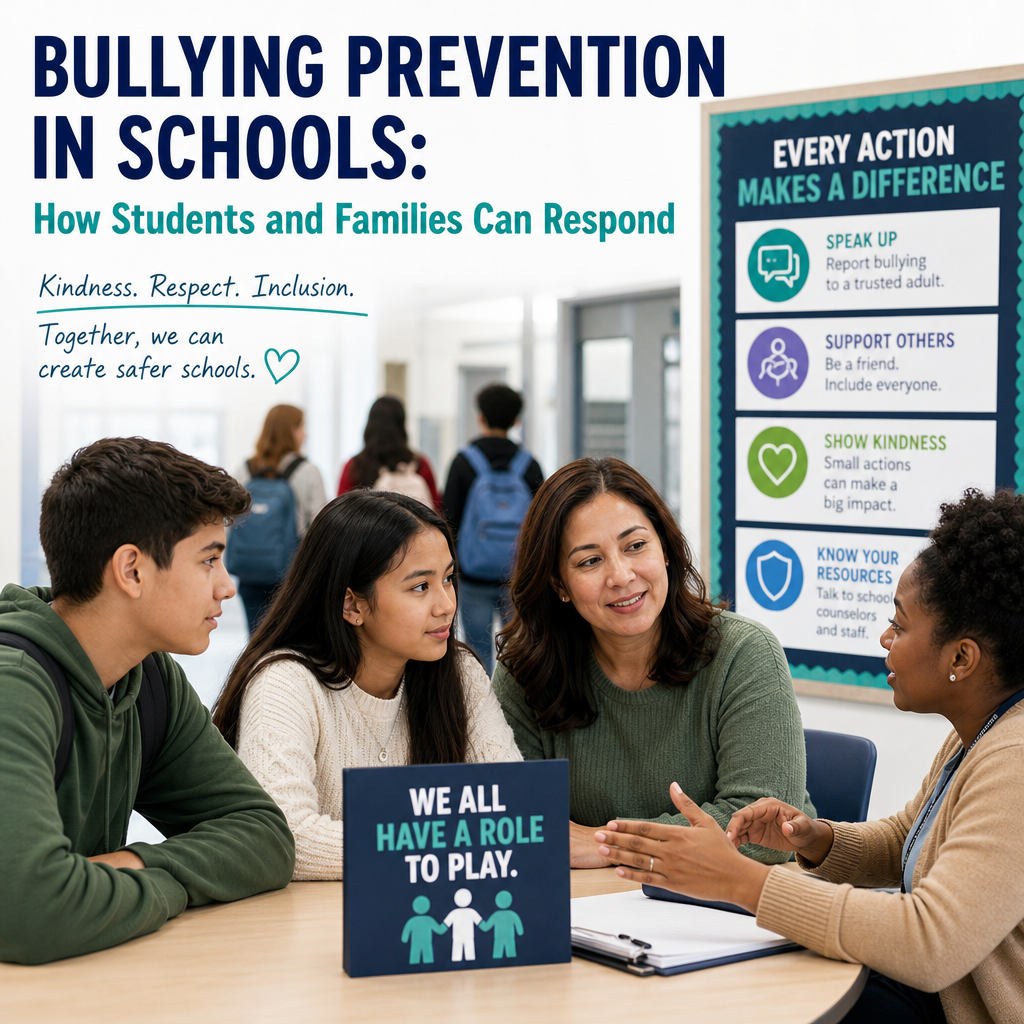
Bullying Prevention in Schools: How Students and Families Can Respond
Bullying prevention starts with recognizing the signs early and building a school culture where students feel safe speaking up. When families, educators, and peers work together, they can help stop harmful behavior before it causes lasting damage.
By: Jennifer Collins on July 28, 2026
Bullying can have a serious impact on a child’s safety, confidence, academic performance, and overall well-being. It can happen in hallways, classrooms, cafeterias, school buses, sports teams, and online spaces connected to school life. Because bullying often thrives in silence, prevention depends on the combined efforts of students, families, educators, and school communities.
The good news is that bullying is not inevitable. When students know how to respond, families know how to support, and schools build a culture of respect and accountability, bullying can be reduced significantly. This article explores what bullying looks like, how to recognize warning signs, and what students and families can do to help prevent it and respond effectively.
What Bullying Is and Why It Matters
Bullying is more than occasional conflict or a disagreement between classmates. It involves repeated behavior intended to hurt, control, or embarrass another person. It often includes a power imbalance, where the student doing the bullying has more social influence, physical strength, confidence, or access to information.
Discriminatory bullying: targeting someone because of race, religion, disability, gender identity, appearance, or other traits
Bullying can lead to anxiety, depression, lowered self-esteem, attendance problems, sleep disturbances, and difficulty concentrating in class. In severe cases, it can affect long-term mental health and school engagement. That is why prevention matters so much.
Recognizing the Warning Signs
Children and teens do not always report bullying right away. They may feel ashamed, fear retaliation, or believe adults will not help. Families and educators should pay attention to behavioral and emotional changes that may signal a problem.
Possible signs a child is being bullied:
Unexplained injuries or damaged clothing/items
Frequent stomachaches, headaches, or requests to stay home
Sudden changes in mood, sleep, or appetite
Avoidance of school, buses, or specific activities
Declining grades or trouble concentrating
Lost interest in friends, hobbies, or sports
Unusual anxiety after using a phone or social media
Increased secrecy about online activity
Possible signs a child may be bullying others:
Frequent disciplinary issues
Strong need to dominate or control peers
Blaming others for problems
Lack of empathy when others are hurt
Increasing aggression at home or school
These signs do not prove bullying on their own, but they are important reasons to start a conversation.
How Students Can Respond to Bullying
Students have real power in bullying prevention. While no child should be expected to handle bullying alone, there are practical strategies that can help them stay safe and seek support.
1. Stay calm and avoid escalating the situation
When possible, responding with anger, insults, or threats can make the situation worse. A calm, short response may be more effective:
“Stop.”
“I’m not interested.”
“Leave me alone.”
If the person continues, the priority should be leaving the situation and getting help from an adult.
2. Walk away and move toward others
Bullying often works best when a child is isolated. Moving toward a teacher, coach, school staff member, or group of peers can reduce risk. Walking away is not “weak”; it is a smart safety choice.
3. Tell a trusted adult
Students should tell someone they trust as soon as possible. This could be:
A parent or caregiver
A teacher
A school counselor
A coach
A principal or assistant principal
A bus driver or lunch monitor
If the first adult does not help, students should keep telling until someone takes action.
4. Save evidence of cyberbullying
For online harassment, students should:
Take screenshots
Save messages, usernames, dates, and times
Do not reply impulsively
Block the person if safe to do so
Report the content on the platform
Evidence helps families and schools respond more effectively.
5. Stick with friends or supportive peers
Bullies are less likely to target students who are surrounded by supportive classmates. Encouraging peer inclusion can make a big difference. Students can also check in with trusted friends if they are worried about being targeted.
6. Practice assertive communication
Assertive communication is clear and confident without being aggressive. Students can rehearse phrases such as:
“That’s not okay.”
“I want you to stop.”
“I’m going to report this.”
Role-playing at home can make it easier to use these phrases under stress.
How Bystanders Can Help
Not every student involved in bullying is a target or aggressor. Bystanders—students who see bullying happen—can play an important role in stopping it.
Safe ways bystanders can respond:
Speak up if it is safe: “That’s not funny.”
Invite the target to join a group or activity
Walk with the student being targeted
Report what happened to an adult
Avoid laughing, sharing, or forwarding harmful content online
Bystanders should not put themselves in danger. The goal is to support the target and alert adults who can intervene.
How Families Can Support Children
Families are essential partners in bullying prevention. A child who feels heard and believed at home is more likely to report problems early. Parents and caregivers can create that safety through regular, open conversations.
1. Start with calm, direct questions
Instead of asking, “Is anyone bullying you?” try more specific questions like:
“Who do you sit with at lunch?”
“How are things going on the bus?”
“Has anyone made you feel left out lately?”
“What happens online after school?”
Specific questions often feel easier for children to answer.
2. Listen without overreacting
If a child shares that they are being bullied, the first response matters. Try to stay calm and say:
“I’m glad you told me.”
“This is not your fault.”
“We’re going to figure this out together.”
Children may shut down if they feel blamed or if they fear they will lose privileges such as phone access or social activities.
3. Document what is happening
Families should keep a record of:
Dates and times
Names of students involved
What was said or done
Screenshots of digital messages
Names of witnesses
Any injuries or school impact
Documentation makes it easier to speak with school staff and track patterns over time.
4. Contact the school promptly
If bullying affects school safety or learning, families should reach out to the appropriate school staff member. This may include:
Classroom teacher
School counselor
Dean or assistant principal
Principal
District support staff
When possible, communicate in writing so there is a record. Be clear about the problem, the impact on the child, and the outcome you want.
5. Teach children not to suffer in silence
Many children believe reporting bullying will make things worse or label them as “tattling.” Families can explain the difference between tattling and getting help:
Tattling aims to get someone in trouble for something small.
Reporting is about safety and stopping harmful behavior.
This distinction helps children understand that telling is a responsible choice.
6. Support emotional recovery
Even after bullying stops, a child may feel scared, embarrassed, or angry. Families can help by:
Restoring routines
Encouraging sleep, exercise, and healthy meals
Making time for enjoyable activities
Watching for ongoing anxiety or withdrawal
Seeking counseling if needed
Some children benefit from short-term therapy or school-based counseling to rebuild confidence.
What Schools Can Do to Prevent Bullying
Although families and students play a major role, schools have the strongest power to shape daily behavior. Effective bullying prevention is not just about reacting to incidents; it is about creating a school climate where respect, inclusion, and accountability are the norm.
1. Create and enforce clear policies
Students need to know what behavior is not acceptable and what will happen when bullying occurs. Policies should define bullying clearly, include cyberbullying, and outline reporting and investigation procedures.
2. Train staff to recognize and respond
Teachers, aides, bus drivers, cafeteria staff, and coaches all need training. Bullying often happens in places where adult supervision is lower, so every staff member should understand how to spot warning signs and intervene appropriately.
3. Build a culture of belonging
Prevention improves when students feel seen and valued. Schools can encourage belonging through:
Inclusive classroom discussions
Positive behavior expectations
Peer mentoring
Student leadership opportunities
Celebrations of diversity
Students who feel connected to school are less likely to engage in bullying and more likely to seek help.
4. Teach social-emotional skills
Lessons in empathy, self-control, conflict resolution, and digital citizenship can help students manage relationships respectfully. These skills are not “extras”; they are foundational to a healthy school climate.
5. Respond consistently and fairly
When bullying is reported, schools should investigate quickly and take appropriate action. Inconsistent or dismissive responses can discourage future reporting. Students need to see that adults take their safety seriously.
Digital Bullying: A Growing Concern
Much bullying now extends beyond school hours through phones, social media, gaming platforms, and group chats. Cyberbullying can feel relentless because it follows students into their homes and can spread quickly.
Families and students should remember:
Keep accounts private when appropriate
Review privacy settings regularly
Save evidence before deleting harmful messages
Avoid responding in anger
Report abuse through the platform
Notify the school if online behavior affects school safety or learning
Families should also discuss healthy digital habits early, including what to post, who can see it, and how to handle online conflict.
When Additional Help Is Needed
Sometimes bullying causes significant emotional distress, or the child being bullied may begin to talk about hopelessness, self-harm, or not wanting to live. These statements should always be taken seriously. If a child shows signs of severe depression, panic, or self-harm, families should seek immediate professional help and contact emergency services or a crisis line if there is immediate danger.
Even when the situation is less urgent, counseling can help children develop coping skills, rebuild self-esteem, and process what happened.
Putting It All Together
Bullying prevention works best when students know how to speak up, families listen carefully, and schools act with consistency. No single conversation or policy will solve the problem entirely, but a coordinated approach can make a real difference.
Students can learn to recognize unsafe behavior, document incidents, and ask for help. Families can create trust at home, support emotional healing, and work with schools to resolve problems. Schools can lead by setting clear expectations, training staff, and promoting inclusion every day.
Frequently Asked Questions
1. What is the difference between bullying and an ordinary conflict?
Bullying involves unwanted aggressive behavior, a real or perceived power imbalance, and repetition or the potential for repetition. An ordinary conflict generally involves people with relatively equal power who disagree without a continuing pattern of intimidation.
2. What should a student do after experiencing bullying?
The student should move to a safe location, tell a trusted adult, explain what happened clearly, and continue reporting the behavior if the first person does not provide effective help. The student should not be expected to handle the situation alone.
3. How should families document and report bullying?
Families should record dates, locations, descriptions, witnesses, injuries, and effects on attendance or schoolwork. They should preserve relevant messages or screenshots and report the situation to the appropriate teacher, counselor, principal, or district official.
4. What should students do about cyberbullying?
Students should avoid responding or forwarding harmful messages, preserve screenshots and other evidence, block the account when appropriate, report the content to the platform, and inform a trusted adult or school official.
5. When can bullying become a federal civil rights concern?
Bullying may raise federal civil rights concerns when it is based on characteristics such as race, color, national origin, sex, or disability and becomes serious enough to interfere with a student’s access to educational services, activities, or opportunities.
Bullying prevention in schools is not just about stopping bad behavior after it starts. It is about creating communities where students feel respected, supported, and safe enough to learn. When children know that adults will listen and peers will stand with them, bullying loses the silence it depends on. With early action, steady support, and a shared commitment to kindness and accountability, students and families can help make schools safer for everyone.
Jennifer, M.Ed., holds a degree in Higher Education Administration, with
a focus on U.S. college financial aid, admissions policy, and student
support systems. She researches and writes about scholarships, federal
aid programs, and the college planning process to help students and
families make informed, well-supported decisions.